
Orlando Pride Defeats Bay FC 3-1: A Tactical Analysis
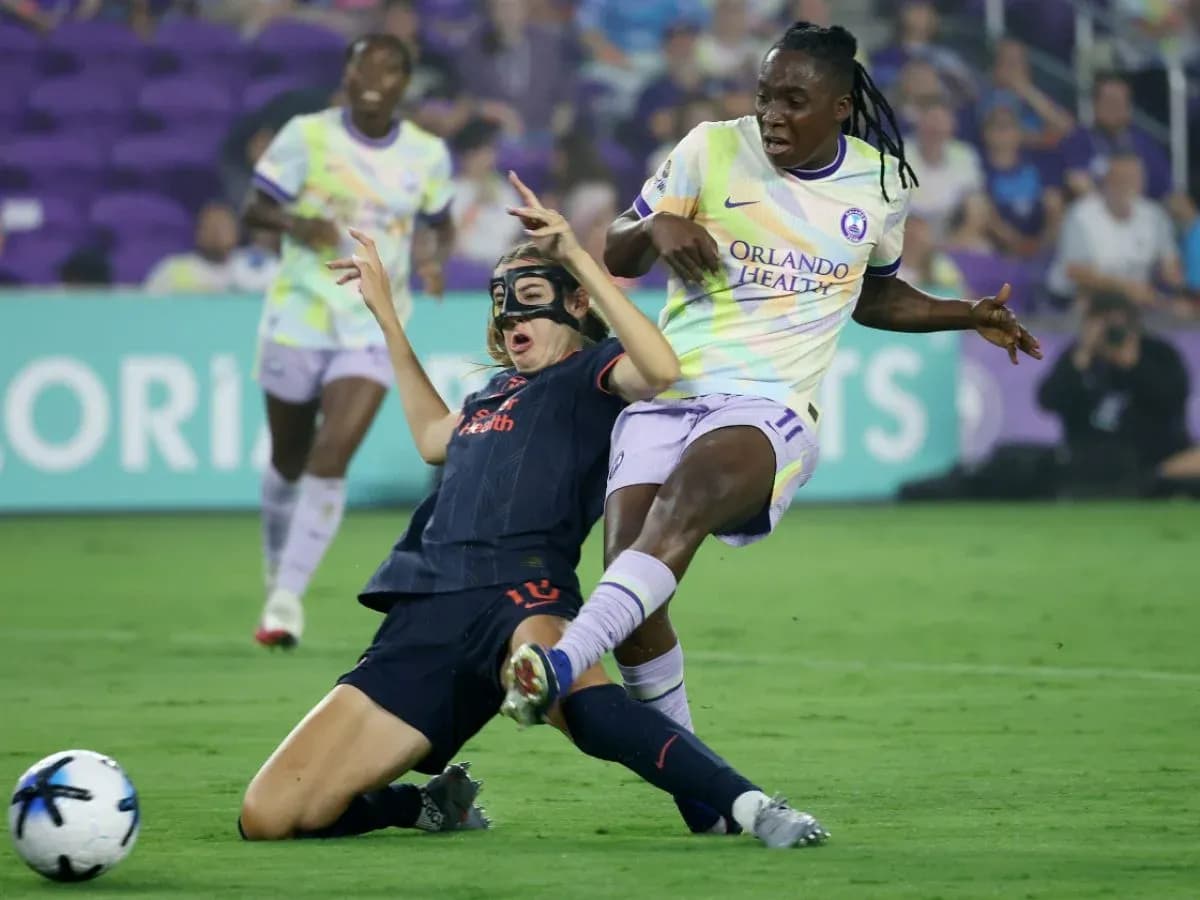
Under the Orlando lights at Inter&Co Stadium, this NWSL Women group-stage contest finished with a statement: Orlando Pride W 3–1 Bay FC W. Following this result, Orlando consolidate a push from mid-table, sitting 7th with 17 points from 12 matches, while Bay remain 13th on 11 points from 11 games, still searching for stability.
I. The Big Picture – Orlando’s rising edge, Bay’s fragile climb
This was a meeting of two sides built on the same structural idea – both lined up in a 4-2-3-1 – but at very different points in their development. Overall this campaign, Orlando have been a balanced if streaky outfit: 5 wins, 2 draws, 5 defeats, with 18 goals for and 17 against. The goal difference of 1 underlines a team that tends to live on fine margins, but their attacking trend is encouraging. At home they now have 3 wins from 6, with 10 goals scored and 9 conceded, reflecting an average of 1.7 goals for and 1.5 against at Inter&Co Stadium.
Bay, by contrast, arrive as a side whose early optimism has stalled. Overall they have 3 wins, 2 draws and 6 defeats, scoring 9 and conceding 17 for a goal difference of -8. On their travels, they have been bold but brittle: 2 away wins, 3 losses, 5 goals scored and 9 conceded, with an away average of 1.0 goals for and 1.8 against. The ambition is there, but the defensive platform has not kept pace.
This match crystallised those season-long patterns. Orlando’s attacking ceiling, powered by the league’s top scorer Barbra Banda, was too much for a Bay back line still learning to cope with elite movement and tempo.
II. Tactical Voids – Discipline, rotation and what was missing
With no formal list of absentees, the tactical voids were more about selection choices and discipline trends than outright injuries.
Seb Hines doubled down on continuity for Orlando, rolling again with the 4-2-3-1 that has started all 12 league fixtures. Anna Moorhouse anchored the side in goal, protected by a back four of Oihane Hernández, Coriana Dyke, Hailie Mace and Rafaelle Souza. In front, the double pivot of Ally Lemos and Haley Hanson provided a platform for an energetic trio – Luana Bertolucci, Nicole Payne and Kerry Abello – to rotate behind Banda as the lone striker.
This structure suits Orlando’s season profile: overall they average 1.5 goals for and 1.4 against per match, and they have failed to score only once all season. The cost of that front-foot approach is a spiky disciplinary record. Their yellow cards cluster heavily after the break, with 28.57% of bookings arriving between 61–75 minutes and another 21.43% between 76–90. There is also a red-card flashpoint: their only dismissal has come in the 61–75 window. Orlando can tilt toward chaos as legs tire.
Bay’s tactical void is more structural. Emma Coates has alternated between 4-2-3-1 and 4-3-3 this season, but here reverted to the double pivot. Emmie Allen started in goal, behind a youthful back four of Madeline Moreau, Brooklyn Jean Courtnall, Joelle Anderson and Sydney Collins. In midfield, Hanna Bebar and Claire Hutton sat deeper, with Taylor Huff, Caroline Conti and Racheal Kundananji supporting Cristiana Girelli up front.
The selection underlined Bay’s attempt to rebuild defensive confidence after a run of three straight league defeats. Yet their disciplinary history hints at a side often defending on the edge: 23.81% of their yellow cards arrive in the 76–90 period, and they have seen red in three different time bands (0–15, 61–75, 91–105). Aldana Cometti and Jordan Silkowitz, both high on the league’s red-card chart, were not in this starting XI, but their previous dismissals speak to a broader pattern of pressure-induced errors.
III. Key Matchups – Hunter vs Shield, Engine Room wars
Hunter vs Shield was always going to be Barbra Banda against Bay’s goals-against profile. Banda enters this fixture as the league’s leading scorer with 8 goals in 12 appearances, built on 41 shots and 23 on target. Her 7.58 rating and 12 key passes underline that she is not just a finisher but a constant reference point, drawing 25 fouls and winning one penalty (even if she has yet to convert from the spot).
Set against that, Bay’s defence overall has conceded 17 goals in 11 matches, at a rate of 1.5 per game, rising to 1.8 on their travels. Their biggest away defeat, 3–0, foreshadowed the kind of evening they endured in Orlando: once the first line of pressure was broken, the back four struggled to track runners between the lines. Banda’s movement off the shoulder, combined with Payne and Abello attacking half-spaces, repeatedly forced Bay’s centre-backs into backpedalling duels they were ill-suited to win.
In the Engine Room, the duel was more nuanced: Orlando’s double pivot of Lemos and Hanson against Bay’s enforcer-playmaker hybrid, Claire Hutton. Hutton’s season numbers are quietly outstanding: 418 passes at 77% accuracy, 11 key passes, 29 tackles, 2 blocked shots and 23 interceptions. She has won 64 of 112 duels and drawn 15 fouls, but also committed 14, collecting 4 yellow cards. She is both metronome and disruptor.
Here, however, the context worked against her. Orlando’s midfield has been designed to feed a prolific attack that averages 1.7 goals at home, and with Luana Bertolucci drifting inside, Hutton was forced into wider defensive zones. That stretched Bay’s compactness and left Bebar exposed when Orlando broke lines. As the match wore on, Bay’s familiar late-game disciplinary spike loomed; their tendency to collect cards in the final quarter-hour limited how aggressively Hutton and Huff could step into tackles, allowing Orlando to manage the tempo and protect their lead.
IV. Statistical Prognosis – xG story without the numbers
Even without explicit xG values, the season data and match pattern point to a clear underlying story. Orlando, who overall concede only 1.4 goals per game while scoring 1.5, produced something close to their home attacking ceiling with 3 goals. Given Bay’s away average of 1.8 goals against, a multi-goal concession was statistically probable; the 3–1 scoreline feels aligned with pre-match probabilities rather than an outlier.
Bay’s attack, which overall averages just 0.8 goals per match and has failed to score in 5 of 11 games, did find the net once – a relative overperformance against Orlando’s home defence. But their inability to sustain pressure, combined with a history of late yellow and red cards, meant that any xG advantage they might have carved out in isolated moments was unlikely to translate into control.
Following this result, Orlando look every inch a playoff-chasing side whose 4-2-3-1 and star striker give them a repeatable attacking blueprint. Bay remain a team of promising pieces – Hutton’s engine, Kundananji’s dynamism, Huff’s box-to-box energy – trapped inside a fragile defensive shell. Until that shield strengthens, hunters like Banda will continue to feast.
Related News
Portland Thorns W vs Houston Dash W: NWSL Women Clash

Kansas City W vs Denver Summit W: NWSL Women Showdown
Portland Thorns W vs Houston Dash W Prediction: Key Stats and Tips
Washington Spirit W vs Angel City W Prediction: Key Stats and Betting Tips
Racing Louisville W vs San Diego Wave W Predicted Lineups and Team News
Kansas City W vs Denver Summit W Prediction: Key Stats and Betting Tips