
Bayern Munich Claims Supercup Amid Neuer's Risky Play
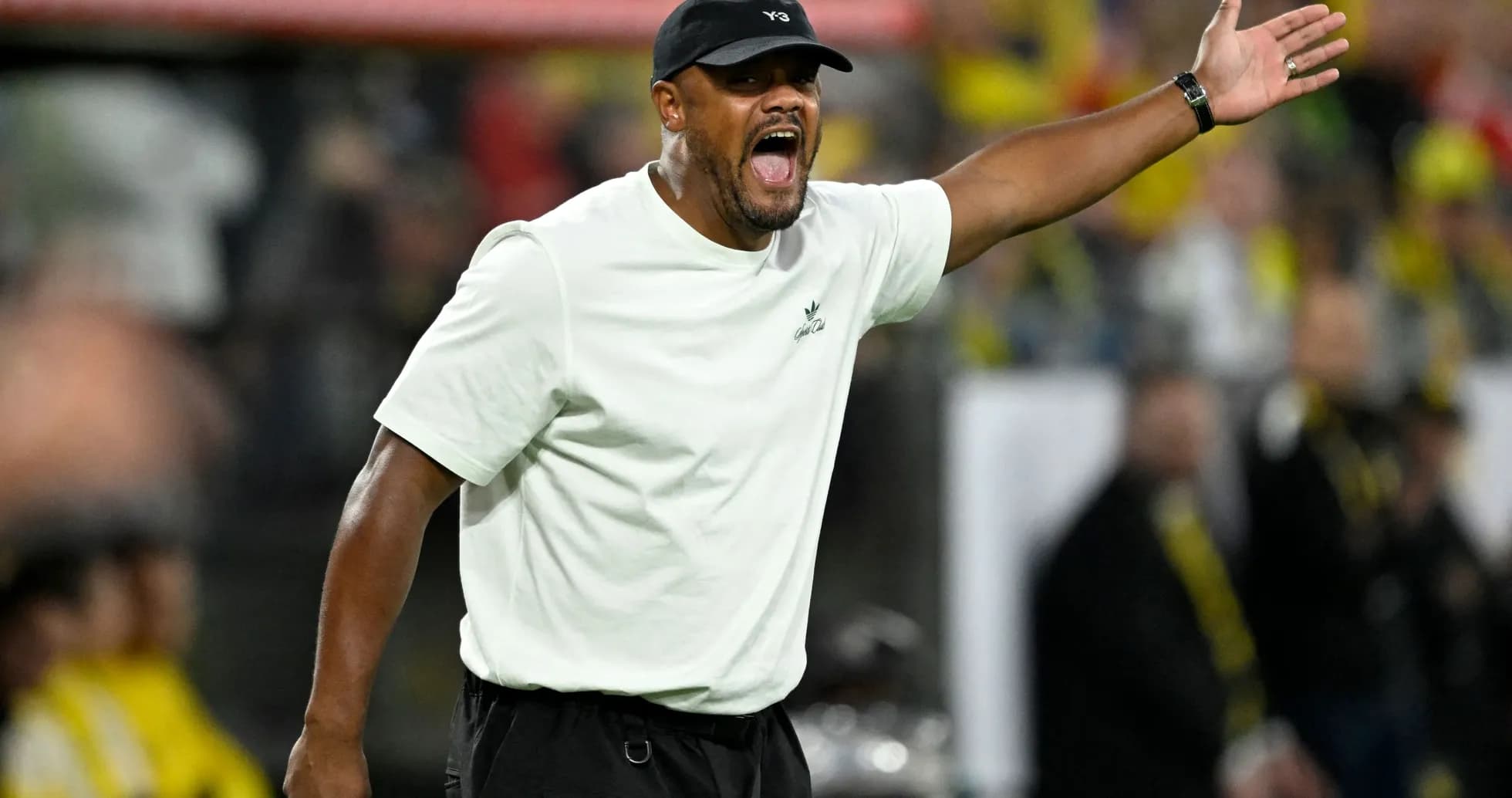
Bayern Munich walked out of Signal Iduna Park with the first piece of silverware of 2026/27 and something more valuable: a pointed reminder that, for all their control, there are still fault lines running through this team.
A 2-1 win over Borussia Dortmund in the Franz Beckenbauer Supercup sounds tight. For 45 minutes, it wasn’t. Nathaniel Brown and Michael Olise put Bayern 2-0 up by the break, and it felt like a statement. Fabio Silva’s reply on 75 minutes turned it into a contest again, but not enough to rip the trophy out of Bayern’s hands.
Under the surface, though, the night told a few bigger stories.
Neuer: still world class, still a live wire
Risk has always been Manuel Neuer’s calling card. It’s part of why he changed his position and part of why Bayern and Germany built eras around him. But the balance between genius and jeopardy is shifting.
The Champions League reminder in Madrid is still fresh: that fatal pass straight to Arda Güler in April that gifted Real an early lead. In Dortmund, the pattern flickered again.
After 15 minutes, Neuer tried to fizz a pass into Min-jae Kim. It was loose, short and inviting. BVB almost pounced. Only Kim’s sharp reaction spared his goalkeeper another high-profile clip on the end-of-season blooper reels.
Late on, Neuer went even closer to disaster. A simple backpass from Kim, a charging Jobe Bellingham, and the veteran decided to be cute. He tried to let the youngster run into empty space with a feint behind his standing leg. It went wrong. Suddenly Bellingham had the ball, the angle and the moment for a dramatic equaliser.
Neuer bailed himself out with a superb diving block. The save was brilliant. The situation was needless.
This is where Bayern now live with their captain: every game comes with at least one sharp intake of breath when he has the ball at his feet. He has hinted again that this could be his final season. Bayern are already planning for that world, grooming 23-year-old Jonas Urbig as the heir and preparing to drip-feed him more minutes.
On nights like this, the question writes itself: how long can Bayern accept this level of risk in big games when the successor is already in the dressing room?
What hasn’t changed is Neuer on his line. His reflexes remain outrageous. Early in the second half, Konstantinos Karetsas looked certain to drag Dortmund back into it from close range. Neuer exploded across his goal and clawed the effort away. That, still, is pure world class. And it keeps buying him time.
Brown the surprise No. 10 – and a weapon for Kompany
Nathaniel Brown arrived in Munich as a left-back. On Saturday, he left Dortmund as Bayern’s match-winning No. 10.
With Jamal Musiala absent as he deals with neurological issues that caused worrying collapses in recent friendlies, and new signing Ismael Saibari not yet ready to start, most expected Tom Bischof to slot in behind Harry Kane. Vincent Kompany had other ideas.
He pushed Brown into the central pocket, just off Kane, and trusted his reading of space. The decision paid off.
Brown’s performance wasn’t flawless. That would have been unrealistic in a role he’s barely played at this level, in a team he joined only weeks ago. There were a few loose combinations, a couple of runs that didn’t quite sync with those around him. But he constantly popped up between the lines, showed for the ball and offered Bayern a vertical threat.
His opening goal did more than settle the Supercup. It underlined why Bayern wanted him in the first place: athletic, technically clean, and brave enough to shape a big game.
Kompany’s logic is clear. The zones his full-backs occupy in possession often mirror the pockets a No. 10 finds. Brown has the intelligence to operate in both. That flexibility adds a fresh layer to a squad already rich in multipurpose players.
Konrad Laimer can cover both defensive flanks and slide through the spine as a 6, 8 or even a 10. Josip Stanisic can play either full-back role or tuck into central defence. Now Brown joins that group as a left-back who can anchor midfield or unlock defences higher up.
For a coach who wants fluidity and overloads in key areas, that kind of versatility is gold. For Brown, it’s already a medal.
Kovac’s inverted wing-backs: brave idea, mixed reality
On the opposite bench, Niko Kovac used the Supercup to push an idea he has been toying with all summer: inverted wing-backs.
Daniel Svensson, a left-footer, started on the right. Julian Ryerson, a right-footer, began on the left. The plan was simple enough. With the “wrong” foot on each flank, Dortmund would have more players cutting inside, combining and shooting – more like classic wingers in a 4-3-3.
At times in the first half, it looked promising. Ryerson, from the left, bent a deep cross with his stronger right foot to the far post. Ramy Bensebaini flicked it into the net with the slightest of touches, only to see the flag go up for a narrow offside. The idea had worked; the margin was inches.
But the flip side quickly appeared. With both wing-backs inverted, Dortmund lost some of their natural drive to the byline. Crossing positions felt a touch unnatural, and the timing of runs into the box occasionally looked off.
One moment summed up the drawback. Bensebaini drove down the left and drilled a low ball into the area. Svensson, having drifted inside from the right, arrived near the penalty spot. The chance was there. But he had to hit it with his weaker right foot, looked uncomfortable, mistimed the swing and completely missed the ball. If that falls to Ryerson’s right foot, the outcome is probably different.
At half-time, Kovac reversed course. Svensson and Ryerson switched back to their natural sides. The effect was immediate. Dortmund’s attacks carried more directness, the flanks had more bite, and Bayern were pushed deeper.
The goal that halved the deficit came from exactly that kind of classic wing-back play: Svensson bursting down the left, hitting the byline and cutting the ball back smartly for Fabio Silva to finish. It was the sort of move that is far harder to produce when your wing-backs are constantly looking to come inside.
Kovac’s tweak is intriguing and clearly has a place in certain game states. But the Supercup showed the cost as well as the upside.
Fabio Silva’s cameo: audition or farewell?
While Serhou Guirassy’s transfer noise has faded, his performance echoed the more difficult stretches of last season. He worked, he battled, but he barely left a mark. No real threat, no big moment.
Kovac acted after just over an hour, turning to Fabio Silva to sharpen Dortmund’s penalty-box play. The 24-year-old responded exactly as a challenger has to.
He dropped a little deeper for his goal, found the pocket, then burst into the right space and finished coldly from close range. It was the same composure he had flashed in his first year at BVB, but this time on a bigger stage, against Bayern, with a trophy on the line.
That finish will strengthen his case for more minutes. It might also complicate his future.
Several clubs are pushing for him, with Real Betis the most strongly linked. Silva is not locked in emotionally to staying, and BVB’s hierarchy would consider a sale if the right offer landed. Until now, that felt like a relatively straightforward call.
This cameo changes the equation a little. With the window entering its final stretch, Dortmund have to ask themselves a hard question: can they really afford to let a striker with this kind of impact walk out the door and still find a proper replacement in time?
On a night Bayern collected the first trophy of the season, Dortmund may have discovered that one of their biggest decisions of the summer is still waiting for an answer.
Related News
Transfer Buzz: Haaland's Two Paths; Real Madrid Eyes £75M Premier League Star
Manchester United Targets Premier League Striker Jean-Philippe Mateta for January Reinforcement
Liverpool Eyes 17-Year-Old Mexican Midfielder Gilberto Mora for Summer Transfer
Summer Transfer Window 2026: Manchester United and Tottenham Miss the Mark
Liverpool Maintains Interest in Real Madrid Midfielder Despite Transfer Challenges
Barcelona Watches as Estevao Grows Frustrated with Chelsea Role Under Xabi Alonso