
Borussia Dortmund Season Review: Players' Performances and Ratings
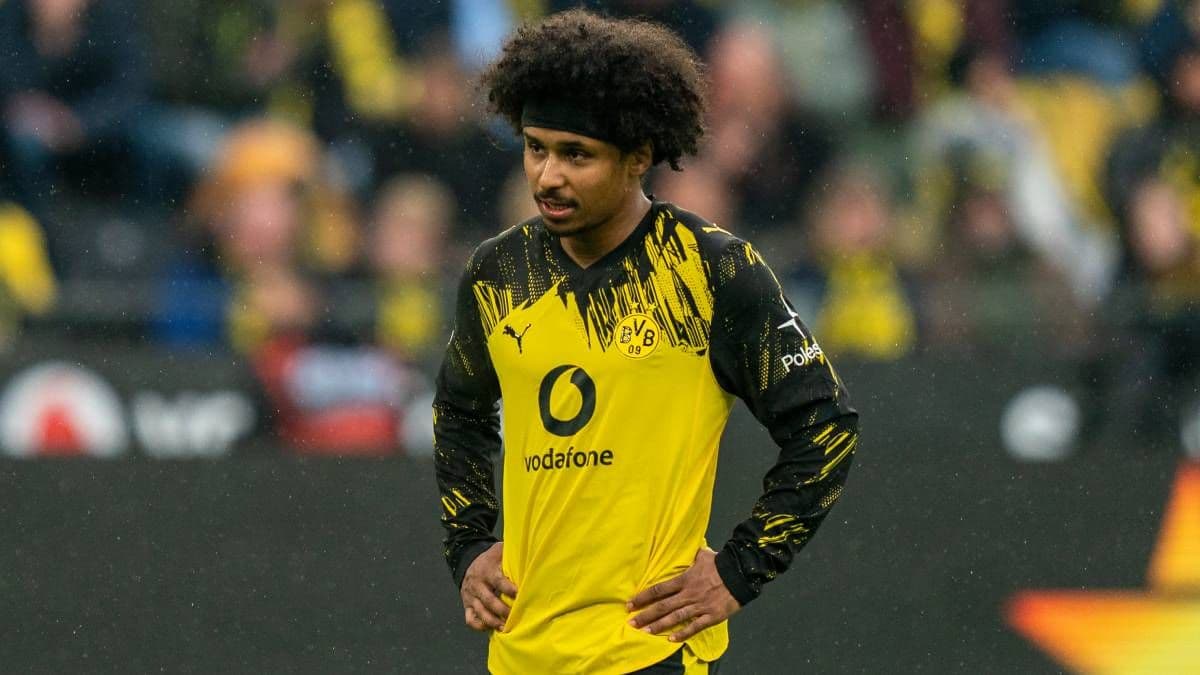
Borussia Dortmund’s season never quite settled into a single story. It lurched between revival and relapse, between breakout campaigns and costly stagnation. Strip it down, and you get a squad report card that reads like a club still deciding what it wants to be.
At the back, one man knew exactly who he was.
Kobel the constant, Anton the anchor
In goal, Gregor Kobel carried Dortmund through long stretches of the season. Across 47 competitive matches he faced 57 goals against, yet still produced 18 clean sheets and more minutes than anyone in the squad. The numbers only tell part of it. Time and again, he bailed his side out with those elastic, highlight-reel saves that change the tone of a match. In the cup tie in Frankfurt, he went beyond that: he became the hero in the shoot-out, the calmest man in the stadium when everything else crackled with tension.
His year was not flawless. One needless pass against Freiburg triggered Jobe Bellingham’s red card and left a smudge on an otherwise outstanding campaign. But a rating of 2 reflects his status: Dortmund’s most reliable pillar.
In front of him, the hierarchy shifted. Nico Schlotterbeck returned from long-term injury in September and initially looked sharp, only for his form to wobble. He was directly involved in several goals conceded, and the ongoing uncertainty over his future clearly weighed on him. Even so, 37 matches, 3,290 minutes and a personal-best five goals underline his value at both ends of the pitch. Reasonable, yes. But everyone at the club knows he has a higher ceiling than a solid 3.
While Schlotterbeck wrestled with form and focus, Waldemar Anton quietly became the defensive reference point. The former Stuttgart defender logged the second-most minutes in the squad (3,927 across 44 games) and rarely put a foot wrong. He tackled with conviction, stayed switched on, and threw himself into every duel. Three goals were a bonus; his real contribution was turning chaos into structure. It is Anton, not Schlotterbeck, who now feels like Dortmund’s defensive linchpin. A firm 2.
Between them, a short, sharp cameo hinted at what might have been. Chelsea loanee Aaron Anselmino arrived rusty, made an impressive debut, then vanished with injury. When he returned, he looked anything but tentative: aggressive in the tackle, intelligent in his positioning, composed on the ball. Ten matches, 585 minutes, one goal, one assist – and then gone, recalled in winter when Chelsea triggered their buy-back. A 2.5 and a lingering sense of lost potential.
On the left, Ramy Bensebaini finally found his feet. After a period of adaptation, the Algerian pieced together a solid season: 32 matches, 2,396 minutes, seven goals and three assists, making him the most prolific player behind the attacking quartet of Serhou Guirassy, Julian Brandt, Maximilian Beier and Karim Adeyemi. Long regarded as one of the most technically gifted in the squad, he sharpened his defensive work and became a steady presence in the build-up. Not spectacular, but clearly useful. A 2.5 feels right.
On the opposite side of the age spectrum, young Italian defender Reggiani slipped into the team almost by accident, pushed forward by injuries. He settled quickly, scored in his fourth Bundesliga game and earned his first professional contract. As the right-sided defender in a back three, he understandably played it safe, often leaning on Anton’s guidance. Nine games, 603 minutes, one goal – a decent start to life at this level and a 3.5 to show for it.
Not everyone in the defensive unit moved forward. Marius Wolf’s season captured the frustration of a player stuck between potential and delivery. After calling out his own shortcomings last year, he backed up his words in the first half of the campaign with clear progress and full commitment. Defensive duels still weren’t his strength, but his error rate dropped. Then came the winter break. Julian Ryerson surged, Wolf faded to the bench, and the €25 million right-back again failed to justify his fee. Three goals, three assists in 27 games is respectable, but a 4.5 underlines the gap between output and expectation.
For some, the season barely got going. The 20-year-old centre-back who debuted in the cup tie at Essen started with a decent showing, only to concede a late penalty and see red in his first Bundesliga appearance five days later. That moment changed his trajectory. Reggiani moved ahead of him, he dropped to the U23s, and six appearances, 311 minutes and no goal contributions go unrated – a bitter learning curve instead of a breakthrough.
Midfield: Nmecha rises, others drift
If the back line was reshuffled, midfield saw one clear winner. Felix Nmecha delivered his best season yet in black and yellow. Across 42 appearances and 3,137 minutes, he imposed himself on games with authority: five goals, three assists, but more importantly, control. He dictated tempo, accelerated play, and saw passes others missed. On the rare occasions he dipped, Dortmund’s midfield noticeably sagged. His absence through injury underlined his importance. A deserved rating of 2.
Around him, the picture grew murkier. Emre Can, the captain, lost months to injury at the start of the season and never truly found rhythm. His form swung up and down, and a cruciate ligament tear forced him to shut down his campaign early. Sixteen games, 980 minutes, three goals – a 3.5 that reflects a stop-start year rather than a decline in status.
The Swede in midfield, a model of endurance in the first half of the season, also had a mixed story. He played almost non-stop, finishing with 45 matches and 3,462 minutes – third-highest in the squad. He covered ground, followed instructions, and showed tactical discipline. Yet he stayed too quiet going forward: four goals, two assists, and a 2026 calendar year that felt like a step sideways. A rating of 4 underlines the need for more influence, not just industry.
Salih Özcan’s campaign barely registered. Left out of the Champions League squad, blocked from a summer transfer by injury, he was promised more minutes after the winter break but received only 53. Twelve appearances, 74 minutes, no goals, no assists. His contract has now expired and he will leave on a free, without a rating and without a real chance to change the narrative.
Marcel Sabitzer, by contrast, had plenty of time – and did too little with it. After a poor pre-season, the Austrian briefly found some rhythm, only to slip away again. At 32, with his experience and technical ability, the bar is higher than one goal and four assists in 34 appearances. Too often he disappeared from matches, unable to shape the game from midfield. A 4.5 reflects a season that never matched his reputation.
On the flanks and between the lines, Dortmund wrestled with value for money. Carney Chukwuemeka arrived for a hefty fee and delivered modest returns: 38 matches, but only 1,225 minutes and an average of 32 minutes per outing. He started just ten times, completing 90 minutes in the Bundesliga for the first time only in mid-April at Hoffenheim. Three goals, two assists, and a recurring problem: fitness. His talent is not in question; his stamina and availability are. Another 4.5 on the balance sheet.
Jobe Bellingham’s adjustment from England’s second tier took time. Early on, he played conservatively and looked shaky defensively. Gradually, he grew into the role, claimed a regular starting spot and opened 29 of his 45 games. He stayed goalless, like Ryerson, but contributed four assists and gave the team reliable energy. A 3.5 rating speaks to a season of adaptation rather than arrival.
Further forward, the story of one of the club’s most gifted players remained frustratingly familiar. Julian Brandt posted 15 goal contributions from just 24 starts – 11 goals and four assists in 41 games – and only Guirassy scored more. Yet the seventh season in Dortmund colours still lacked the consistency expected of a player of his quality. Some performances sparkled, others vanished without trace. The club opted not to extend his contract, and now must replace his output. A 2.5 captures both his impact and the nagging sense of what he still left on the table.
On the periphery, one of the club’s most creative veterans never truly got going. The 34-year-old German international, second among outfielders with 15 assists in the 2024/25 campaign, was reduced to a bit-part role. Sixteen appearances, 732 minutes, no goals, two assists, and just eight starts. When chances did come, he failed to seize them. The frustration ended with a winter return to Brighton. A harsh but fair 4.5.
Then there was the glimpse of the future. Inacio, just 18, drew a telling line from coach Niko Kovac: “sees things that others don’t see even at 30.” Across seven appearances and 383 minutes, with one goal, he showed why. Constantly finding space between the lines, working hard off the ball, drifting into dangerous pockets, he looked like a player on the brink of a breakout. With a little more precision he could already have three or four goals. No rating yet – just the clear expectation that he will matter next season.
Attack: goals, droughts and a second-half star
Up front, Dortmund’s season was defined by streaks – both hot and cold.
Serhou Guirassy remained the main man in front of goal. His numbers dipped from the previous campaign (43 goal contributions in 45 games down to 28 in 46), yet he still scored 22 times and added six assists. No one else came close; his tally was double that of Brandt in second place. The problem was the gap in the middle: a brutal run of just one goal in 13 Bundesliga matches sucked the oxygen out of Dortmund’s attack. On top of that came off-field flashpoints – a penalty dispute in Turin, a refusal to shake Kovac’s hand, and poor body language. A 2.5 reflects both his importance and his volatility.
Alongside him, Maximilian Beier emerged as Dortmund’s star of the second half of the season. Six goals and seven assists in 44 matches – ten goals and ten assists overall – tell only part of the story. He rarely played in his favourite role as part of a front two or as a central second striker. Often he was shunted to the left of midfield, yet still found ways to tilt games. His form has likely pushed him into contention for Germany’s World Cup squad. To stay there, he has to prove this was not a half-season purple patch. For now, a 2.5 underlines a breakthrough few saw coming this quickly.
Karim Adeyemi’s year ran in the opposite direction. The first half of the season brought nine goal contributions and the sense that he was finally turning promise into production. Then 2026 arrived and his form collapsed. Injuries limited him to six starts in the second half of the campaign, and disciplinary issues on and off the pitch earlier in the year cast a long shadow. Even so, he finished with ten goals and six assists in 39 games, joint third-top scorer with Beier. A rating of 4 mirrors the disappointment of a player whose talent and World Cup expectations demand far more.
The new striker, tasked with adding depth and variety, never quite caught fire. Arriving injured, he spent much of the season chasing full fitness and was often limited to short cameos. When he did start, he lacked the ruthless edge in front of goal and went a long stretch without scoring in the league. Three goals and seven assists in 39 games hint at a useful all-rounder, but not yet a decisive one. A 3.5 says there is something to work with – if he can sharpen his finishing.
On the flanks, the Norwegian creator delivered a season of quiet excellence without the glamour of goals. He failed to score in 42 games but produced 18 assists, 15 of them in the Bundesliga. Only Michael Olise (22) and Luis Díaz (17) bettered him in the league. His work rate never dipped, his fight never wavered, and he constantly knitted attacks together. In Europe, his limitations were exposed at times, but a 2.5 reflects a campaign that any wide playmaker would be proud of.
The supporting cast
Beneath the headline names, the squad’s depth told its own story. Nine players – Alexander Meyer, Patrick Drewes, Silas Ostrzinski, Yannik Lührs, Danylo Krevsun, Elias Benkara, Julien Duranville, Giovanni Reyna and Mussa Kaba – spent time in the matchday squad without playing a single minute. Cole Campbell (16 minutes), Almugera Kabar (14) and Mathis Albert (2) only dipped their toes into senior football.
Somewhere between those fleeting cameos and the heavy workloads of Kobel, Anton and Nmecha lies the truth of this Dortmund season: a team with clear leaders, emerging talents and too many passengers. The raw materials are there. The question now is whether the club can shape them into a side that no longer drifts between promise and regret, but finally sustains a title-level standard from August to May.
Related News
Carlos Alcaraz Urges an End to Matches Ending in the Early Hours
Carlos Alcaraz Criticizes Late US Open Finish After 3:30 a.m. Match
Jannik Sinner Set for ATP 500 Return in Beijing with Novak Djokovic Also Competing
Meet Iva Jovic: The American Tennis Prospect Making Waves
Flavio Cobolli Shares Insights on Practice Session with Jannik Sinner Ahead of Comeback

Till vs Romero: Fight Details, Undercard, and Viewing Info for This Weekend