
Boston Legacy W vs Seattle Reign FC W: Tactical Analysis and Match Insights
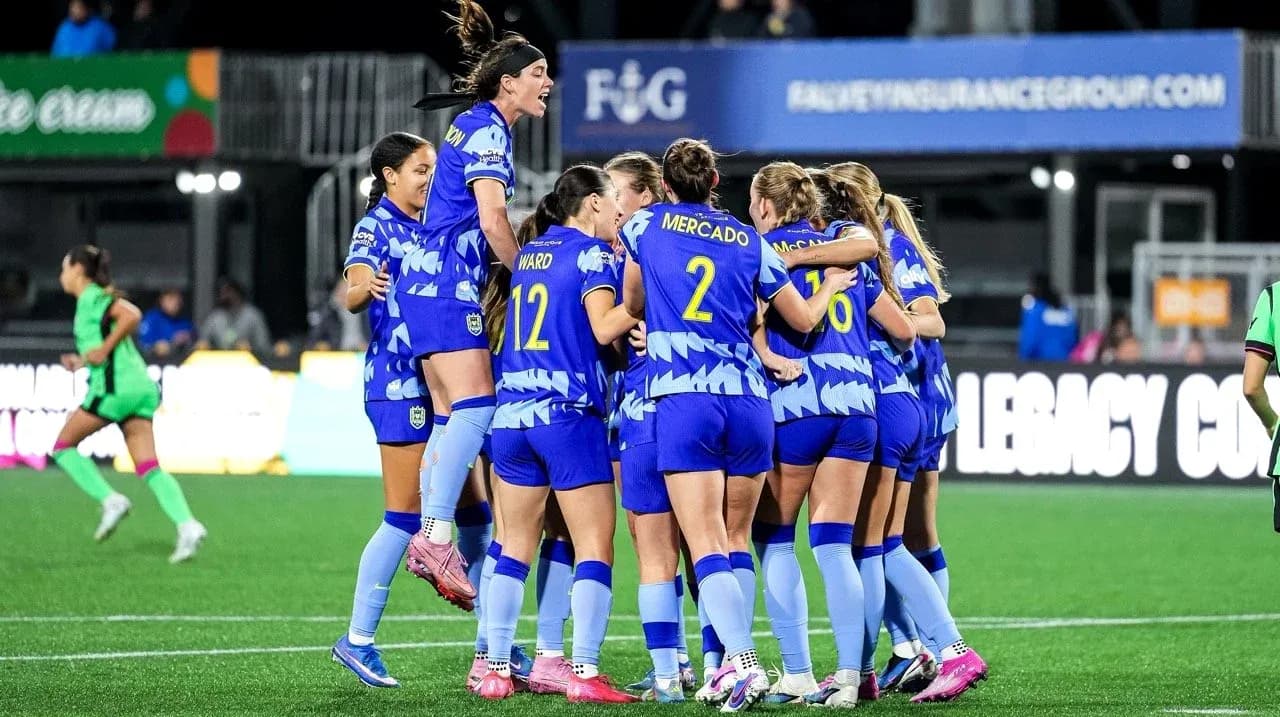
Under the lights at Centreville Bank Stadium in Pawtucket, Boston Legacy W and Seattle Reign FC W delivered a tight, tactical Group Stage contest in the NWSL Women, with the visitors edging a 2–1 win after leading 1–0 at half-time. Following this result, the standings snapshot is stark: Boston sit 14th with 9 points and a goal difference of -7 (11 scored, 18 conceded overall), while Seattle are 8th on 14 points with a goal difference of -2 (9 scored, 11 conceded overall) and still tracking toward the play-off positions.
The game played out as a clash of identities. Boston, who had already leaned into a 3-5-2 this season (their only recorded lineup shape), doubled down on a back-three and wing-heavy midfield, trying to mask an overall record of just 2 wins from 11 and an average of 1.0 goals scored and 1.6 conceded per game overall. At home they had been more dangerous, with 1.3 goals for and 1.6 against on average, but still fragile.
Seattle arrived with the more stable platform: a 4-2-3-1 that has been their primary shape (7 matches in that system) with a secondary 4-3-3 look. Overall, they had 4 wins from 10, scoring 0.9 goals and conceding 1.1 per match, and on their travels they had been efficient: 2 away wins from 4, scoring 1.0 and conceding 1.0 on average. This was the profile of a mid-table side that knows how to manage margins—and they did exactly that.
Tactical Voids and Discipline
Boston’s 3-5-2 was built around an aggressive, combative midfield core. Annie Karich, Alba Caño, Josefine Hasbo and Samantha Rose Smith formed the central lane, with Nichelle Prince asked to shuttle the right side and connect to the front two, Barbara Olivieri and Aissata Traore. The back three of Jorelyn Carabalí, Laurel Ansbrow and Emerson Elgin sat in front of Casey Murphy.
There were no listed absentees, so this was close to Boston’s strongest XI on paper. Yet their season-long discipline profile hinted at fragility. Heading into this game, Boston had accumulated yellow cards heavily between 16-30 minutes and 76-90 minutes, with 21.74% of their yellows in each of those windows, and their two red cards split between 31-45 and 76-90. This is a side that often loses emotional control either side of half-time and in the final stretch.
That edge is personified by players like Traore, Carabalí and Karich, each on 3 yellow cards this season, and by the presence of B. St.Georges in the red-card charts, having already seen a straight red. The upside is intensity; the downside is late-game chaos. Even without a specific card log for this match, the pattern matters: Boston tend to walk a disciplinary tightrope exactly when legs get heavy.
Seattle’s disciplinary map is calmer but with a twist. Heading into this game, 25.00% of their yellow cards arrived between 76-90 minutes and another 25.00% between 91-105, underlining a team that often finishes with bookings but rarely with dismissals—no red cards on record. The double late-window spike suggests a side that is willing to foul to protect a lead or slow momentum late, rather than one that unravels completely.
Key Matchups
Hunter vs Shield
For Boston, the “hunter” is clearly Aissata Traore. Heading into this fixture she was their leading scorer with 3 goals and 1 assist in 11 appearances, plus 19 shots (9 on target). She is not just a finisher but a reference point, winning 45 of 96 duels and drawing 23 fouls. Her profile is that of a forward who can pin centre-backs and force mistakes.
Her task was to unsettle a Seattle back four fronted by Claudia Dickey in goal and anchored by Phoebe McClernon and Jordyn Bugg. Seattle’s defensive numbers on their travels—4 goals conceded in 4 away matches, an average of 1.0—painted them as a compact unit. With Madison Curry and Sofia Huerta as full-backs, they could both defend the box and step into wide areas to prevent Boston’s wing-backs from delivering freely.
The crucial duel, then, was Traore and Olivieri attacking the channels between McClernon and Bugg, trying to exploit any hesitation in the line. Seattle’s overall concession rate of 1.1 goals per game suggested they usually allow chances but rarely collapse. In the end, conceding once away from home aligned with that pattern.
Engine Room
The heart of this contest lay in midfield. Boston’s engine was built around Karich and Caño. Karich, ever-present with 11 starts and 922 minutes, had been a metronome: 548 passes at 84% accuracy, 10 key passes, 28 tackles and 12 interceptions. She is both screen and distributor. Caño added a more two-way threat: 2 goals, 8 shots on target, 32 tackles and 83 duels contested, winning 45.
Across from them, Seattle deployed Angharad James-Turner and Ainsley McCammon as a double pivot in the 4-2-3-1, with Holly Ward, Sally Marie Menti and Maddie Dahlien ahead. The Reign’s central pair were tasked with two jobs: choke off Karich’s passing lanes into Traore and Olivieri, and protect against Boston’s second-line runs from Caño and Smith. Given Seattle’s solid record of 3 clean sheets overall and a relatively low goals-against column, this screening unit has generally done its work.
On paper, Boston’s midfield had the higher volume of ball-winners and progressive passers, but Seattle’s structure—two holding players behind three mobile attacking midfielders—gave them better spacing in transition. That likely told in the first half, where Seattle reached the break 1–0 up, exploiting the spaces behind Boston’s advanced wing-backs.
Statistical Prognosis and Tactical Verdict
Following this result, the numbers reinforce the narrative. Boston’s overall record now reads 2 wins, 3 draws and 6 defeats from 11, with 11 scored and 18 conceded. Their inability to keep a clean sheet (0 in total this campaign) and an overall goals-against average of 1.6 continues to define them. Even at home, where they had scored 9 and conceded 11 across 7 matches, the trade-off between attacking width and defensive cover in a 3-5-2 remains unresolved.
Seattle, by contrast, continue to live in the margins but manage them better. With 4 wins, 2 draws and 4 defeats from 10 before this fixture, they were already a side that often turned tight xG battles into points. Their away profile—2 wins, 1 draw, 1 loss, with 4 scored and 4 conceded—suggested that a 2–1 away victory would not be a statistical outlier but a natural extension of their trend: create just enough, concede just enough, and rely on structure and late-game discipline.
Without explicit xG values, the expected-goals picture must be inferred from patterns. Boston’s 1.0 goals scored per match overall against Seattle’s 1.1 conceded pointed toward Boston generating a modest but real threat. Seattle’s 0.9 goals scored per match overall against Boston’s 1.6 conceded implied that the visitors were likely to find multiple high-quality chances, particularly in transition and wide overloads against Boston’s back three.
The minute-by-minute card distributions add a final layer: both teams are at their most combustible late. Boston’s yellow and red spikes from 76-90, and Seattle’s heavy yellow concentration from 76-90 and 91-105, forecasted a frantic closing phase. A 2–1 scoreline fits a game in which Boston chased, Seattle absorbed, and both sides leaned into their emotional edges.
Tactically, the verdict is clear. Seattle’s 4-2-3-1, with its double pivot and disciplined back four, proved the more stable platform against Boston’s expansive 3-5-2. The Reign’s defensive solidity on their travels and their ability to manage late-game pressure outweighed Boston’s individual quality in the middle third and the threat of Traore up front. For Boston to flip future fixtures of this type, they will need to convert their midfield control—through Karich, Caño and Smith—into cleaner chances and, crucially, find a way to protect their back line without sacrificing width.
Related News
Portland Thorns W vs Houston Dash W: NWSL Women Clash
Kansas City W vs Denver Summit W: NWSL Women Showdown
Portland Thorns W vs Houston Dash W Prediction: Key Stats and Tips
Washington Spirit W vs Angel City W Prediction: Key Stats and Betting Tips
Racing Louisville W vs San Diego Wave W Predicted Lineups and Team News
Kansas City W vs Denver Summit W Prediction: Key Stats and Betting Tips