
Brighton W vs Tottenham Hotspur W: FA WSL Finale Preview
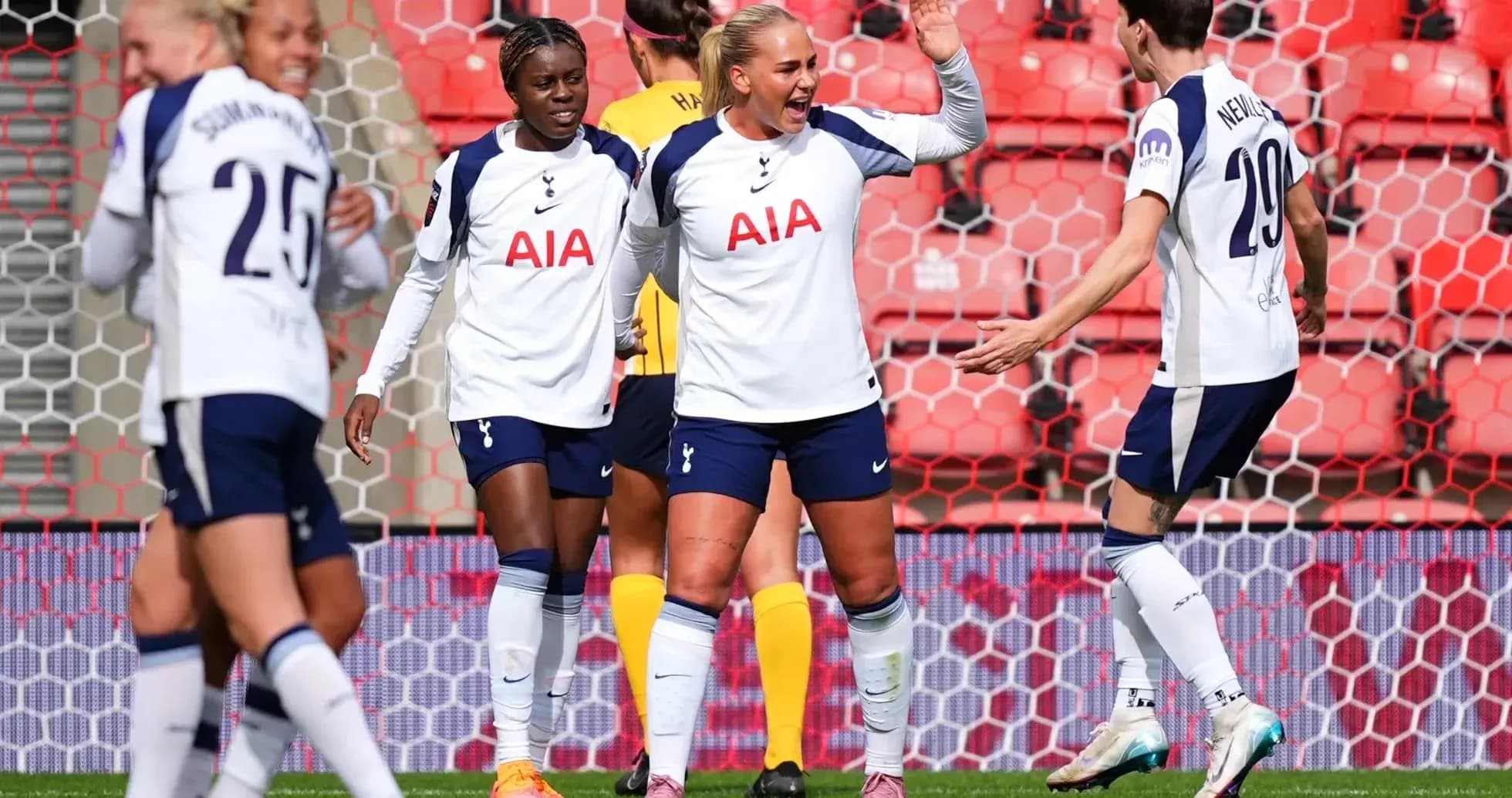
Amex Stadium stages an intriguing FA WSL finale on 16 May 2026 as Brighton W host Tottenham Hotspur W in Round 22 of the regular season. With the visitors sitting 5th on 33 points and Brighton 6th on 26, there is no 1/4 final at stake here, but there is plenty riding on league position, prize money and momentum heading into the off-season. For Brighton, it is a chance to close the gap on a direct rival and potentially finish within touching distance of the top five; for Spurs, it is about protecting their cushion and underlining their progress with a double over the Seagulls in the 2025 campaign.
Form and season context
In the league, Brighton’s trajectory has been quietly positive. They arrive in 6th with 26 points, a neutral goal difference (26 scored, 26 conceded) and a recent five-game form line of DDWWD. Across all phases they have taken 7 wins, 5 draws and 9 defeats from 21 matches, a profile of a mid-table side that has learned how to avoid defeat more consistently as the season has gone on.
At home, Brighton have been solid if unspectacular: 4 wins, 3 draws and 3 losses from 10 league games, with 16 goals scored and 13 conceded. An average of 1.6 goals for and 1.3 against per home game underlines a team that usually finds the net but rarely blows opponents away. The clean-sheet count (3 at home, 6 overall) and the fact they have failed to score in only 3 home fixtures show a side that is generally competitive on their own pitch.
Tottenham’s season has been more volatile but ultimately more productive. In the league they sit 5th, seven points clear of Brighton, with 10 wins, 3 draws and 8 defeats, scoring 33 and conceding 37. Their form line of WDLLL hints at a recent dip: one win and one draw followed by three straight losses, suggesting they arrive at the Amex needing a response.
Their away profile is strikingly different to their home form. Spurs have 4 wins, 1 draw and 5 losses from 10 away matches, but have scored 22 and conceded 25 on the road. That is 2.2 goals for and 2.5 against per away game across all phases: their trips tend to be open, high-scoring affairs. They have managed just one away clean sheet and have failed to score in only two away league matches, reinforcing the sense that their away days are rarely cagey.
Tactical shapes and stylistic contrast
Both sides lean heavily on the 4-2-3-1 base, but use it in different ways.
Brighton have used 4-2-3-1 more than any other shape (4 times), with 4-4-1-1 (3 games) and 4-4-2 (2 games) also prominent. This hints at a side that values a clear midfield structure, often with a double pivot and either an extra 10 or a second striker depending on the opponent. Their balanced goals for/against tallies (26–26) and modest “biggest win” markers (4-1 at home, 0-1 away) suggest a team built on organisation and incremental gains rather than chaos.
Defensively, Brighton concede 1.2 goals per game overall and have put together 6 clean sheets. They have also failed to score in 5 matches, but the home attacking numbers (1.6 per game) are encouraging. Disciplinary data shows a tendency to pick up yellow cards particularly between 31–45 minutes and 76–90 minutes, which may matter if they are forced into late-game defending.
Tottenham, by contrast, are more expansive and risk-tolerant. Their most common shape is also 4-2-3-1 (9 uses), but they have also turned to 4-4-2 (4 times) and even 3-4-2-1 once. The away goals data – a “biggest away win” of 3-7 and a “biggest away loss” of 5-2 – captures their high-variance nature. They score more than Brighton (1.6 per game overall) but concede significantly more (1.8 per game).
Spurs’ away attack is their main weapon: 22 goals in 10 matches, with the capacity to score in bursts. However, only one away clean sheet and 25 conceded on the road underline a vulnerability in defensive transitions and in managing games once they are ahead. Their yellow-card distribution spikes after half-time, particularly between 46–60 and 76–90 minutes, and they have had one red card in the 91–105 range across all phases, pointing to discipline issues late in matches.
Key players and attacking threats
Brighton’s standout attacking influence is Takako Seike. Operating as a midfielder, she has 4 league goals and 1 assist from 19 appearances, with 16 shots (10 on target) and 19 key passes. Her 7.04 average rating reflects a consistent impact in both directions: 19 tackles and 6 interceptions show she contributes without the ball as well. With Brighton often in a 4-2-3-1 or 4-4-1-1, Seike’s ability to arrive in advanced spaces, link play and shoot from good positions will be central to breaking open a Spurs defence that concedes 2.5 goals per away game.
For Tottenham, the attacking burden is spread but there are clear focal points. Bethany England leads their scoring charts with 5 goals from 20 appearances. Although listed as a midfielder, she operates high up the pitch, taking 31 shots (16 on target) and providing 12 key passes. Her 6.95 rating and usage pattern – 15 starts, 10 times substituted off – suggest she is trusted to set the tone early in games.
Olivia Møller Holdt is arguably the creative hub. With 4 goals and 3 assists in 20 matches, 16 key passes and a 7.09 rating, she offers both end product and ball progression. She draws a high number of fouls (25), which can help Spurs advance up the pitch and create set-piece situations.
Cathinka Cecilie Friis Tandberg adds a more direct, vertical threat from the front line. Four goals from 18 appearances, 9 key passes and a penalty scored underline her importance as a finisher and penalty taker. She also carries a disciplinary edge with 5 yellow cards, something to monitor in a potentially tight contest.
From the spot, Tottenham have converted 2 of 2 team penalties this season across all phases, with Tandberg individually 1/1. Brighton, by contrast, have had no penalties at all, which removes one potential route to goal for the hosts.
Head-to-head: recent balance
The last five competitive meetings in the FA WSL show a finely poised rivalry, with a slight edge to Tottenham:
- 5 October 2025, Brisbane Road (London): Tottenham Hotspur W 1-0 Brighton W – Spurs win.
- 16 March 2025, Gaughan Group Stadium (London): Tottenham Hotspur W 0-1 Brighton W – Brighton win.
- 14 December 2024, Broadfield Stadium (Crawley, West Sussex): Brighton W 1-1 Tottenham Hotspur W – draw.
- 28 April 2024, Gaughan Group Stadium (London): Tottenham Hotspur W 1-1 Brighton W – draw.
- 15 October 2023, The American Express Community Stadium (Falmer, East Sussex): Brighton W 1-3 Tottenham Hotspur W – Spurs win.
Across these five league fixtures, Tottenham have 2 wins, Brighton have 1 and there have been 2 draws. Three of the five matches finished with both teams scoring, and only one of the five produced more than three total goals.
Match dynamics and likely patterns
Given the data, this fixture shapes up as a clash between Brighton’s increasing defensive solidity at home and Tottenham’s high-output, high-risk away approach.
Brighton’s 4-2-3-1 or 4-4-1-1 should look to control central spaces, protect against Spurs’ transitions and use Seike’s late runs and creativity between the lines. With 6 clean sheets and just 13 goals conceded at home, they have the platform to frustrate.
Tottenham will likely accept an open contest. Their away numbers (22 scored, 25 conceded) almost guarantee chances at both ends. England’s movement, Holdt’s ability to find pockets and Tandberg’s penalty-box instincts will test a Brighton back line that, while improved, has still suffered heavy defeats (biggest home loss 0-3) when the structure breaks down.
Discipline and game management could be decisive. Spurs’ tendency to collect cards in the second half and Brighton’s own spikes in yellow cards late in each half suggest a contest that may grow increasingly scrappy as fatigue and tension rise.
The verdict
On paper, Tottenham carry more attacking firepower and have a stronger league position, but their away fragility keeps this finely balanced. Brighton’s home record and recent unbeaten run in the league (DDWWD) point to a side that has learned how to manage games better, especially at the Amex.
Expect Brighton to prioritise control and compactness, aiming to draw Spurs into a slower, more structured match than Tottenham usually experience away from home. Spurs, meanwhile, will trust their forwards to create enough chances, even if they concede opportunities at the other end.
A tight, competitive encounter looks likely, with a draw or a narrow one-goal margin either way the most logical outcome. Brighton’s improved resilience at home and Tottenham’s leaky away defence suggest that a share of the points – with both teams scoring – would be a fitting reflection of where these two sides stand at the end of the FA WSL season.
Related News

Charlton Athletic W vs Leicester City WFC: FA WSL Final Round Preview

Leicester City WFC's Crucial FA WSL Final Match Against Charlton Athletic W

Charlton Athletic W vs Leicester City WFC Prediction: Key Insights and Betting Tips

Chelsea W vs Manchester United W: Tactical Analysis and Match Insights

Arsenal Dominates Liverpool in FA WSL Clash
Tottenham's Tactical Triumph Over Brighton in FA WSL Finale