
Champions League 2026/27: A New Format and High Stakes Await
The penalty heartbreak in Budapest is already fading into the background. It has to. After a second successive Champions League final and a first Premier League crown since 2004, the club strides back into Europe’s elite next season with something more dangerous than hope: expectation.
This will be a fourth straight year at the top table, but the table itself has changed. Again.
A new Champions League, same high stakes
The 2026/27 campaign will continue with UEFA’s revamped league phase, now firmly replacing the old group-stage comfort blanket. Thirty-six clubs, one big league, eight games each. No return fixtures, no familiar double-headers. Just eight different opponents: four at home, four away, every match carrying weight.
The format, first used in 2024/25 and again in 2025/26, rewards consistency and punishes drift. Finish in the top eight of that 36-team ladder and you march straight into the last 16. Slip into ninth to 24th and you’re thrown into a two-legged play-off just to stay alive in the competition.
The pressure is relentless. So is the standard.
Two extra spots in the league phase go each year to the associations whose clubs performed best in Europe the previous season. In 2024/25, that honour fell to England and Spain, handing both the Premier League and La Liga an additional berth. The result: five English sides and five Spanish sides in next season’s Champions League.
Last season, the club didn’t just handle the new format, it bent it to its will. Eight matches, eight wins – the first time any team has gone perfect in the league phase. Top of the pile, top of the seeding, and a clear marker laid down for the rest of the continent.
Who’s in – and who’s coming
The cast list for 2026/27 is almost complete. Twenty-nine of the 36 places are already locked in.
England sends a formidable quintet. Alongside the champions are Liverpool, Manchester City, Manchester United and Aston Villa, all qualifying via their Premier League finishes.
Spain matches that strength with five of its own: Real Madrid, Barcelona, Atletico Madrid, Villarreal and Real Betis. Ten heavyweights from two leagues. No hiding place.
Italy and Germany bring four each. From Serie A come Napoli, Inter Milan, AS Roma and Como, an intriguing mix of established contenders and an ambitious newcomer. The Bundesliga delegation features Bayern Munich, Borussia Dortmund, RB Leipzig and Stuttgart.
France’s three representatives are led by the defending European champions, Paris Saint-Germain, joined by Lens and Lille. The Netherlands provides two: Eredivisie winners PSV and runners-up Feyenoord.
Portugal’s flag will be carried by Porto and Sporting Lisbon. Domestic champions Galatasaray (Turkiye), Slavia Prague (Czechia), Shakhtar (Ukraine) and Club Brugge (Belgium) all booked their places early by winning their leagues.
That leaves seven spots to be filled through the summer qualifiers. Five of those come from the ‘champions path’, a gauntlet reserved for title-winners from 42 different nations. The final two places will go to clubs who finished second, third or fourth in their domestic leagues.
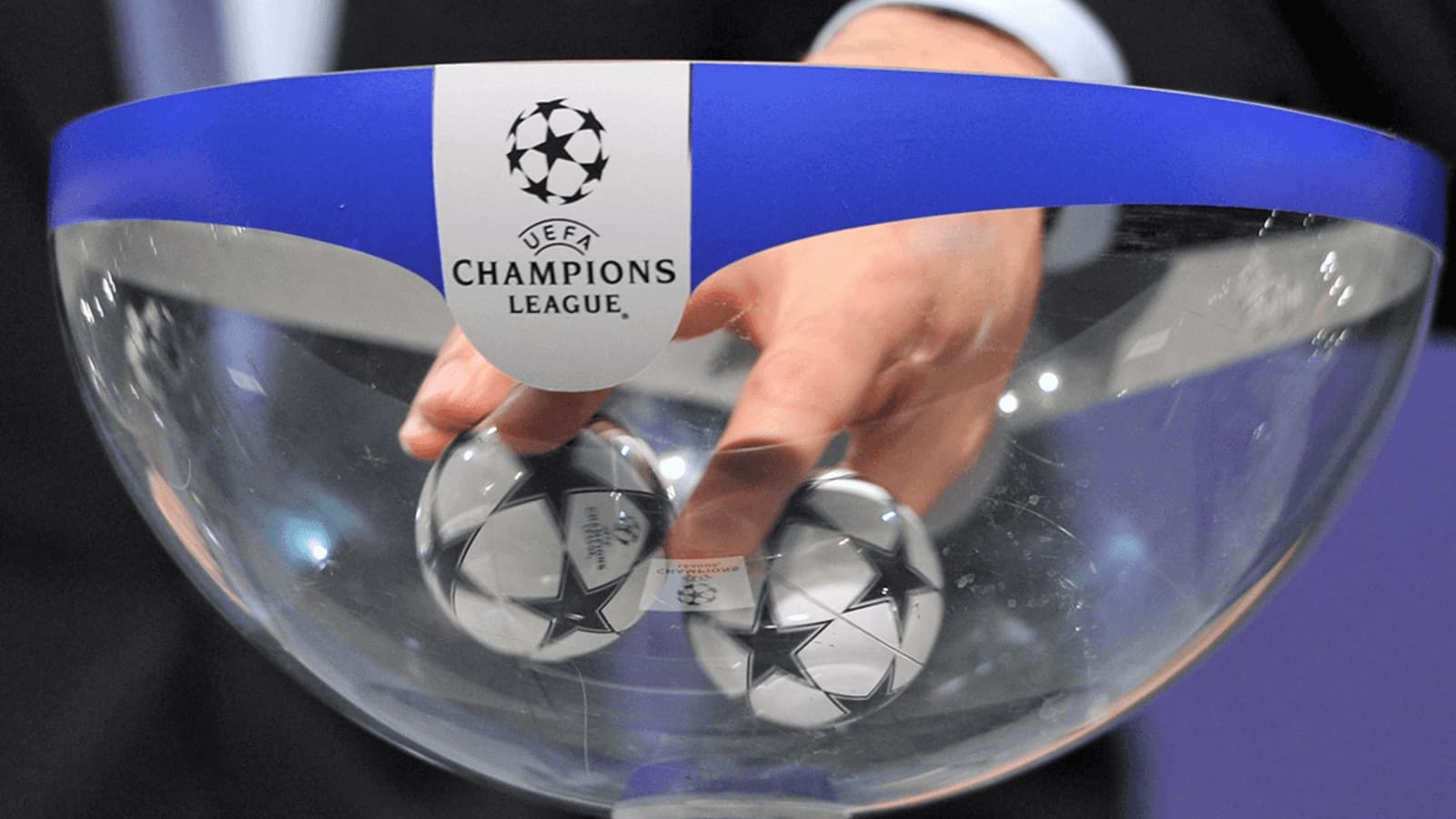
The qualifiers wrap up on August 26. A day later, on August 27, the full 36-team league phase will be drawn, and the road to Madrid will finally have a map.
Pots, rivals and who lies in wait
The rules of the draw matter more than ever in this sprawling format.
One thing is clear: there will be no all-Premier League clashes in the league phase. English clubs are kept apart at this stage, so there will be no meetings with Liverpool, Manchester City, Manchester United or Aston Villa until the knockouts.
UEFA’s club coefficients sort the 36 teams into four pots. The club’s perfect league phase last season and deep run in the competition have locked in a place in Pot 1.
It is elite company. Pot 1 currently includes Paris Saint-Germain, Bayern Munich, Real Madrid, Liverpool, Inter Milan, Manchester City, Barcelona and Atletico Madrid. Giants everywhere you look.
Pot 2 has its own dangers: Borussia Dortmund, AS Roma, Sporting CP, Porto, Club Brugge, Real Betis, PSV Eindhoven, plus Aston Villa and Manchester United from the Premier League.
Pot 3 is no softer. Feyenoord, Lille, Napoli, RB Leipzig, Villarreal, Shakhtar Donetsk and Galatasaray all sit there, the sort of opponents that can turn a league phase campaign on its head in a single bad night.
Pot 4, for now, features Como and Lens. Slavia Prague, Stuttgart and the seven remaining qualifiers will be distributed between Pots 3 and 4 once the qualifying dust settles on August 26.
The draw mechanics are simple but ruthless. The club will face two teams from each pot, one home, one away. No more than two opponents from the same country can be drawn, and domestic rivals are off-limits in this phase.
Eight fixtures. Eight different styles, atmospheres and tactical puzzles. Every mistake magnified.
Dates that will shape a season
The first key date is fixed: Thursday, August 27, 2026. That’s when the draw in Nyon will spit out the eight names that define the club’s autumn and winter.
The league phase itself stretches across eight matchdays:
- September 8–10
- October 13–14
- October 20–21
- November 3–4
- November 24–25
- December 8–9
- January 19–20
- January 27
From there, the competition tightens.
On January 29, 2027, UEFA will draw the knockout play-off ties – the two-legged battles for those who finish between ninth and 24th in the league table. Those games are scheduled for February 16–17 and February 23–24.
Then comes the key ceremony: February 26, 2026, when the draws for the round of 16, quarter-finals, semi-finals and the final are all mapped out in one hit, laying the entire knockout path bare.
The round of 16 will be played on March 9–10 and March 16–17. The quarter-finals follow on April 6–7 and April 13–14. Semi-finals land on April 27–28 and May 4–5.
And then, the destination: Saturday, June 5, 2027. Wanda Metropolitano, Madrid. A stadium built for noise, pressure and nights that define eras.
Last season ended with penalties and pain. This one offers something else: a chance to prove that run to Budapest was not a peak, but a platform.
Related News

UFC 332 Preview: Natalia Silva vs. Wang Cong Fight Card, Odds, Start Time, and Details
Andy Roddick Responds to Andre Agassi’s Comments on Alexander Zverev at the Laver Cup

Knicks Prepare for Flexible Roles in Title Defense

Rui Hachimura Swaps Lakers Fans to Clippers in Surprising Jersey Exchange

Who Will Be the NBA's Next First-Time All-Stars? Top Picks and Long Shots for 2027

How Strong Is Your Team at Home? Check Out the 2026 Brasileirão Home Standings