
Charleston Battery Dominates FC Tulsa 5–1 at Home
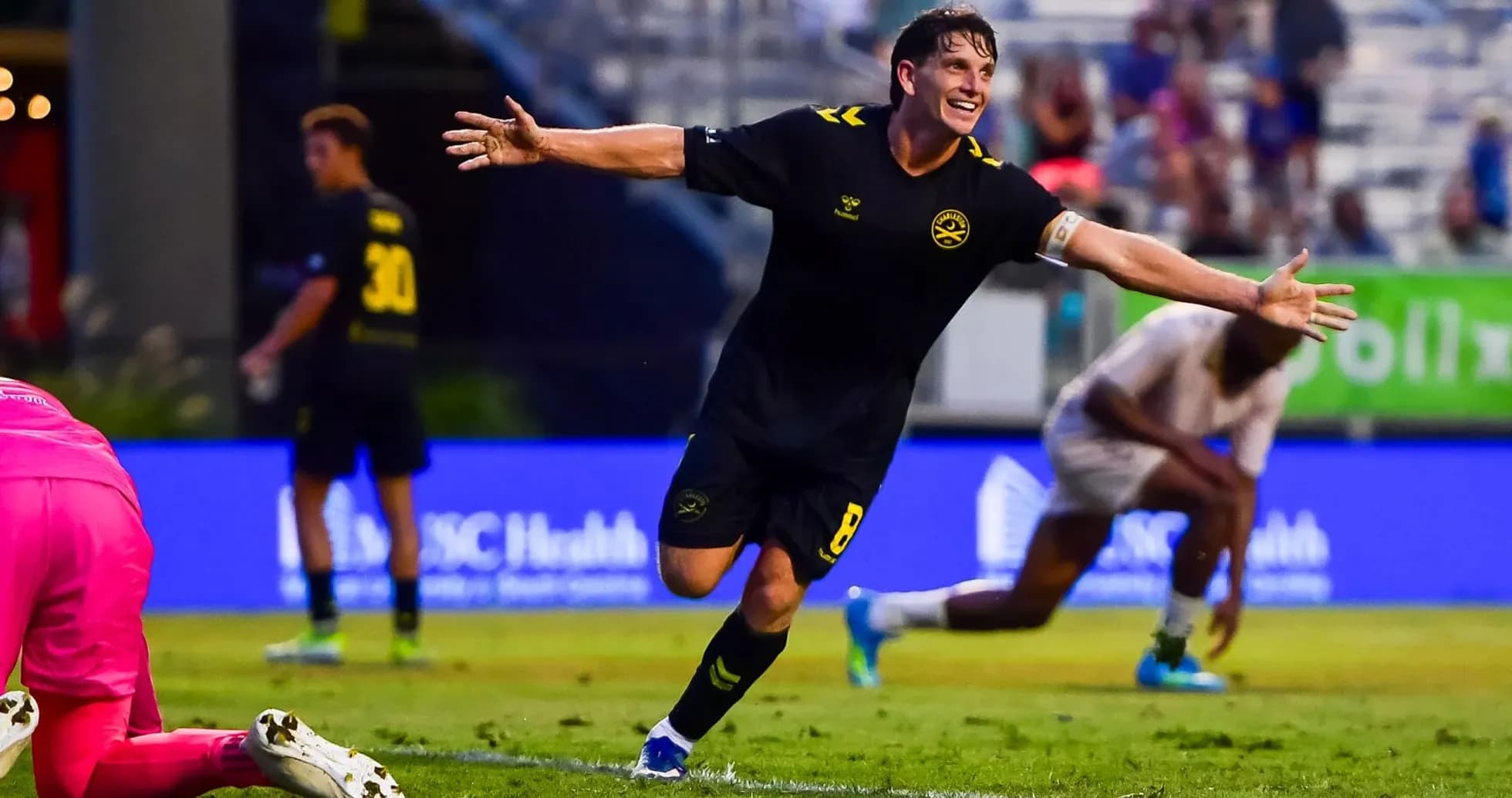
Under the lights at Patriots Point Soccer Complex, this USL Championship Group Stage clash became something more than a routine league fixture. Charleston Battery, already one of the division’s most ruthless home sides, turned a meeting with FC Tulsa into a statement, dismantling their visitors 5–1 and underlining why a promotion push is more than just an aspiration.
Heading into this game, Charleston’s seasonal DNA was already clear: fortress at home, fragile on their travels. They sat 4th in USL 1 with 20 points from 12 matches, built on a home record that read 5 wins and 1 draw from 6, with 17 goals scored and only 5 conceded at Patriots Point. That translated to a home average of 2.8 goals for and 0.8 against, a profile of a side that overwhelms opponents early and rarely lets them breathe.
Tulsa arrived with their own, quieter momentum. Ranked 7th with 16 points from 11 games, they were more balanced, their goal difference of 0 the mathematical truth of a team that scores and concedes at an identical rate: 14 goals for and 14 against overall, averaging 1.3 both for and against. On their travels they had been competitive—2 wins, 2 draws, 2 defeats, with 8 goals scored and 10 conceded, a 1.3–1.7 away profile that hinted at vulnerability once stretched.
I. The Big Picture: Charleston’s home storm
The scoreboard told a brutal story by full time: 3–1 to Charleston at the break, 5–1 by the end. The Battery’s attacking depth was evident from the first whistle. Ben Pirmann’s starting XI, though listed without a formal formation, carried a clear internal logic: L. Zamudio as the last line, a defensive core featuring D. Martinez, G. Smith, J. Akpunonu and N. Messer, and a midfield spine anchored by E. Ycaza and K. Pakhomov.
Ahead of them, the front unit of M. Foster, M. Berry, J. Kelly and C. Swan gave Charleston multiple reference points. Berry, wearing 90, functioned as the central fulcrum, with Kelly and Swan able to stretch the field horizontally and Foster drifting into pockets between the lines. At Patriots Point, where Charleston’s “biggest home win” marker of 5–1 was already on the books, this felt like the fully realized version of that blueprint.
Tulsa, under Luke Spencer, leaned on A. Tambakis in goal and a defensive line of Ian, A. Clarke, L. Batista and L. Stauffer. In midfield, G. Colli and J. Kocevski were tasked with controlling rhythm, while G. Robinson and B. Sparks flanked the creative axis of R. Cabral and J. Webber. On paper, it was a side built to transition quickly and punch back, but the evening quickly became about survival.
II. Tactical Voids and Discipline: where the game tilted
With no official absentees listed, both managers had near-full access to their squads. That made the contrast in on-field cohesion even more striking. Charleston’s season-long card profile hinted at a side that lives on the edge but manages it: their yellow cards are spread, with noticeable spikes in the 31–45 and 76–90 ranges (both at 23.08%), yet no red cards at all. They know how to compete aggressively without self-destruction.
Tulsa’s disciplinary curve is more volatile. Their yellows surge in the 61–75 window (25.81%), with another high in the final quarter hour (19.35%). In a match where they were chasing shadows from early on, that pattern likely manifested as late, tired fouls and desperate interventions once Charleston’s tempo and home confidence took over.
Without red-card interruptions, this was decided not by absences but by structure, tempo and execution.
III. Key Matchups: Hunter vs Shield, Engine Room vs Engine Room
Even without explicit top-scorer data, Charleston’s attacking “hunter” is less about a single marksman and more about a collective front line that thrives at home. Their biggest home win margin—5–1—mirrors this fixture’s final score, and it is no coincidence. When Charleston get rolling at Patriots Point, they do not simply edge games; they overwhelm them.
Against that, Tulsa’s “shield” on their travels had already shown cracks. On their travels they had conceded 10 goals from 6 matches before this night, an average of 1.7. Their worst away defeat, 5–1, was already etched into their season narrative. This match did not just repeat that pattern; it confirmed it as a structural weakness. The combination of a high-scoring home side and an away defence with a 5-goal concession ceiling was always going to be combustible.
In midfield, the “engine room” duel shaped the flow. E. Ycaza and K. Pakhomov offered Charleston a double pivot capable of both recycling possession and punching vertical passes into Berry and Foster. Their control allowed the Battery to sustain pressure and pin Tulsa deep, forcing wide players like Sparks and Robinson to defend far more than they could attack.
On the other side, Colli and Kocevski were meant to be Tulsa’s stabilisers, but against a side averaging 2.8 home goals, containment alone was never going to be enough. Once Charleston established a 3–1 half-time lead, Tulsa’s midfield had to open up, stretching the distances between lines and exposing their back four to repeated waves of pressure.
IV. Statistical Prognosis and xG Logic: why this result made sense
Following this result, the underlying numbers feel less like a coincidence and more like inevitability. Charleston’s overall goal difference heading into the game was +5 (21 scored, 16 conceded in total), and almost all of that positive margin was built at home. Their 2.8 home goals-for average aligned perfectly with a five-goal explosion, especially given Tulsa’s away profile of conceding 1.7 per match and having already endured a 5-goal concession on the road.
From an Expected Goals perspective, the script is easy to sketch: a high-volume, high-territory home side, with a clean-sheet count of 2 at home and no home defeats, repeatedly creating high-quality chances against an away defence that tends to bend and occasionally break. Tulsa’s own attack—1.3 goals per away game—was always likely to fashion something, which the single goal on the night reflects, but their inability to keep the game within one scoreline once momentum turned was the decisive flaw.
Charleston’s penalty record—1 taken, 1 scored in total—underlines a clinical streak from the spot when opportunities arise, while Tulsa’s perfect 2 from 2 overall further suggests both sides are technically secure from 12 yards. In a different version of this fixture, with a tighter open-play xG balance and a spot-kick either way, the margin might have narrowed. But here, the Battery’s superiority in volume and quality of chances made the 5–1 feel proportionate rather than inflated.
In narrative terms, this was a night where season-long trends converged: Charleston, imperious at home, leaned into their attacking identity; Tulsa, brave but brittle away, were exposed once more. For the Battery, it reinforces their status as genuine contenders heading into the play-off race. For Tulsa, it is a brutal reminder that to be more than a fringe promotion hopeful, their shield on the road must be reforged, not merely patched.
Related News
San Antonio's Tactical Edge Secures 2–1 Victory Over Colorado Springs

Charleston Battery Dominates Loudoun United 4–1 in Statement Win

Miami FC vs Orange County SC: USL Championship Clash Highlights
Colorado Springs vs San Antonio: USL Championship Group Stage Preview

Charleston Battery vs Loudoun United: Match Preview

Miami FC vs Orange County SC Match Preview