
Chelsea Edges Fulham in Premier League Opener
Under the Craven Cottage floodlights, Fulham and Chelsea opened their Premier League seasons with a match that felt less like an August easing-in and more like a midwinter scrap. By the final whistle, Chelsea’s 3-2 away win had carved an early-season fault line between the neighbours: Fulham left with a narrow defeat and a goal difference of -1 after conceding 3 and scoring 2 at home, while Chelsea departed with three points, an away goal difference of 1 from 3 scored and 2 conceded, and an early perch in 6th place.
This was a meeting of two new eras on the touchline. Alvaro Arbeloa’s Fulham set up in a 4-2-3-1 that promised structure and verticality, while Xabi Alonso’s Chelsea arrived in a 3-4-2-1 that blended Bundesliga-style aggression with Premier League tempo. The formations told the story before a ball was kicked: Fulham’s back four and double pivot against Chelsea’s back three, high wing-backs, and a front trio designed to overload the half-spaces.
For Fulham, absences framed the tactical voids before kick-off. J. Andersen, suspended with a red card, and T. Cairney, sidelined by a knee injury, stripped Arbeloa of both his aerial organiser and his most experienced midfield metronome. In their place, C. Bassey and J. Cuenca anchored the defence, shielded by S. Berge and A. Iwobi. It forced Fulham into a more cautious build-up: without Cairney’s rhythm, progression had to come from the full-backs and the band of three behind G. Garcia.
Chelsea’s absentee list was longer but more evenly spread. A. Anselmino was inactive, while M. Caicedo, E. Emegha, M. Sarr, and J. Henderson all missed out through various injuries, and W. Fofana served a suspension. Alonso had to recalibrate his spine: no Caicedo as the destroyer, no Fofana in the back line. Yet the XI he sent out was anything but makeshift. M. Lacroix marshalled the back three, R. Lavia sat at the base of midfield, and C. Palmer, M. Rogers, and Joao Pedro formed a fluid, technically rich attacking trident.
The first half unfolded as a clash of ideas. Fulham’s 4-2-3-1 was narrow and disciplined, with T. Castagne and A. Robinson asked to provide width and progression from full-back. Ahead of them, O. Bobb, J. King, and C. Palacios floated between the lines, trying to knit play into G. Garcia. But Chelsea’s 3-4-2-1 suffocated those spaces. J. Acheampong, Lacroix, and L. Colwill formed a compact back three, with M. Gusto and R. James pinning Fulham’s full-backs deeper than Arbeloa would have liked.
The decisive difference came in Chelsea’s attacking chemistry. Palmer, already emerging as one of the league’s standout performers, arrived at Craven Cottage as both a top scorer and top assister for his side this season, with 1 goal and 1 assist from his first 83 minutes of league action. His profile is that of a modern creator-finisher: 4 shots with 2 on target, 32 passes at 87% accuracy, 3 key passes, and 8 dribbles attempted with 5 successful. Against Fulham, that blend of incision and control allowed Chelsea to turn promising positions into genuine chances.
Alongside him, Joao Pedro mirrored that dual threat. He, too, carried 1 goal and 1 assist in his early-season tally, with 3 shots (1 on target) and 2 key passes, a reminder that Alonso’s system doesn’t rely on a single focal point. M. Rogers, the third prong, added yet another layer: 1 goal, 5 key passes, and a perfect 3 successful dribbles from 3 attempts. Fulham’s centre-backs were constantly being pulled into uncomfortable zones, with Bassey and Cuenca forced to choose between stepping into midfield to track Palmer and Rogers or holding the line against Joao Pedro’s runs.
Fulham, to their credit, were not passive. Castagne, one of their early-season bright spots, offered thrust from right-back. In his 90 minutes, he delivered 40 passes at 85% accuracy, 2 key passes, and even 1 shot on target, while contributing defensively with 1 tackle, 1 interception, and 1 blocked shot. His assist underlined Fulham’s capacity to hurt teams when they can release their full-backs. Yet his yellow card was emblematic of a side often forced into reactive defending, especially as Chelsea shifted the ball quickly into the channels.
Discipline, too, told its own story. Fulham’s season card profile so far is stark: all of their yellow cards have come in a late-game surge between 76 and 90 minutes, a 100.00% concentration that hints at fatigue or desperation as matches slip away. Chelsea’s bookings, by contrast, have skewed early; 66.67% of their yellows arrived between 0 and 15 minutes, with another 33.33% between 61 and 75. R. Lavia embodies that edge: 1 yellow card, 3 tackles, and 1 interception in 65 minutes, walking the line between enforcer and risk.
The “Hunter vs Shield” duel in this fixture was less about a single striker and more about Chelsea’s attacking unit against Fulham’s defensive structure. Overall this campaign, Fulham have conceded 3 goals in total, all at home, at an average of 3.0 goals per home game. Chelsea, on their travels, have scored 3 goals with an away average of 3.0, and their away goal difference of 1 (3 for, 2 against) reflects a side that can both outscore and outplay opponents. In this match, that pattern held: Fulham’s back four bent under the weight of Palmer’s movement, Joao Pedro’s timing, and Rogers’ directness.
In the “Engine Room”, Berge and Iwobi worked tirelessly to hold Fulham together, but without Cairney’s tempo and against the press-and-probe axis of Lavia, James, and Hato, they were often outnumbered in transitions. Lacroix’s distribution from the back – 50 passes at 94% accuracy, 1 key pass, and 5 tackles – allowed Chelsea to bypass Fulham’s first line and find Palmer and Rogers between the lines with unnerving regularity.
Following this result, the statistical prognosis for both sides is sharply defined. Fulham, 12th with 0 points, have shown they can score – 2 goals at home, averaging 2.0 per home game – but their defensive leak of 3.0 goals per home match and the late flurry of cards point to structural and physical issues in closing games. Chelsea, 6th with 3 points, have yet to keep a clean sheet but have already established an attacking baseline of 3.0 away goals per match, with no penalties taken or missed and their creative fulcrums thriving from open play.
The story of this night at Craven Cottage is of a Fulham side still learning Arbeloa’s demands, capable of punching back but not yet able to control the fight, and a Chelsea team under Alonso whose offensive patterns and individual quality in Palmer, Joao Pedro, Rogers, and Lacroix are already calibrated to hurt opponents. If the underlying numbers hold, Chelsea’s blend of high xG profiles and aggressive structure should keep them in the upper reaches, while Fulham must tighten the back line and manage those frantic final minutes if they are to turn narrow defeats into the kind of gritty draws that define survival and comfort in this league.
Related News
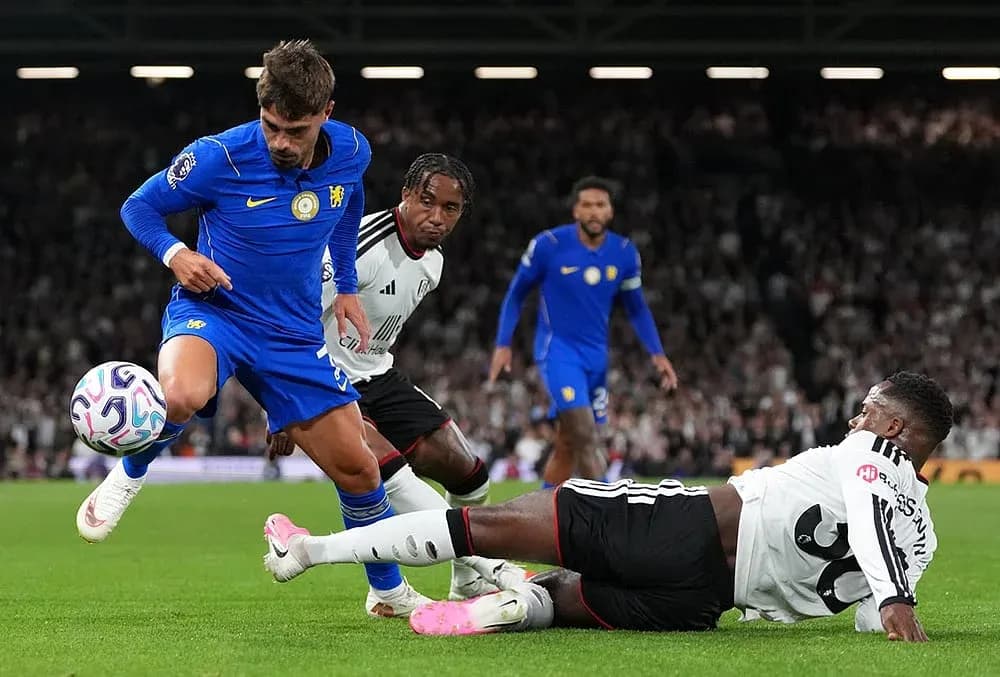
Chelsea Edges Fulham in Premier League Opener

Crystal Palace vs Manchester City Predicted Lineups: Team News and Match Preview

Tottenham vs Newcastle Prediction: Key Stats and Betting Tips

Liverpool vs Nottingham Forest Prediction: Key Stats and Betting Tips

Sports Illustrated's Premier League Best XI: Gameweek 1 Highlights
Crystal Palace vs Manchester City: Premier League Clash Preview