
Chelsea and Hull City Draw 2–2: A Tactical Stalemate
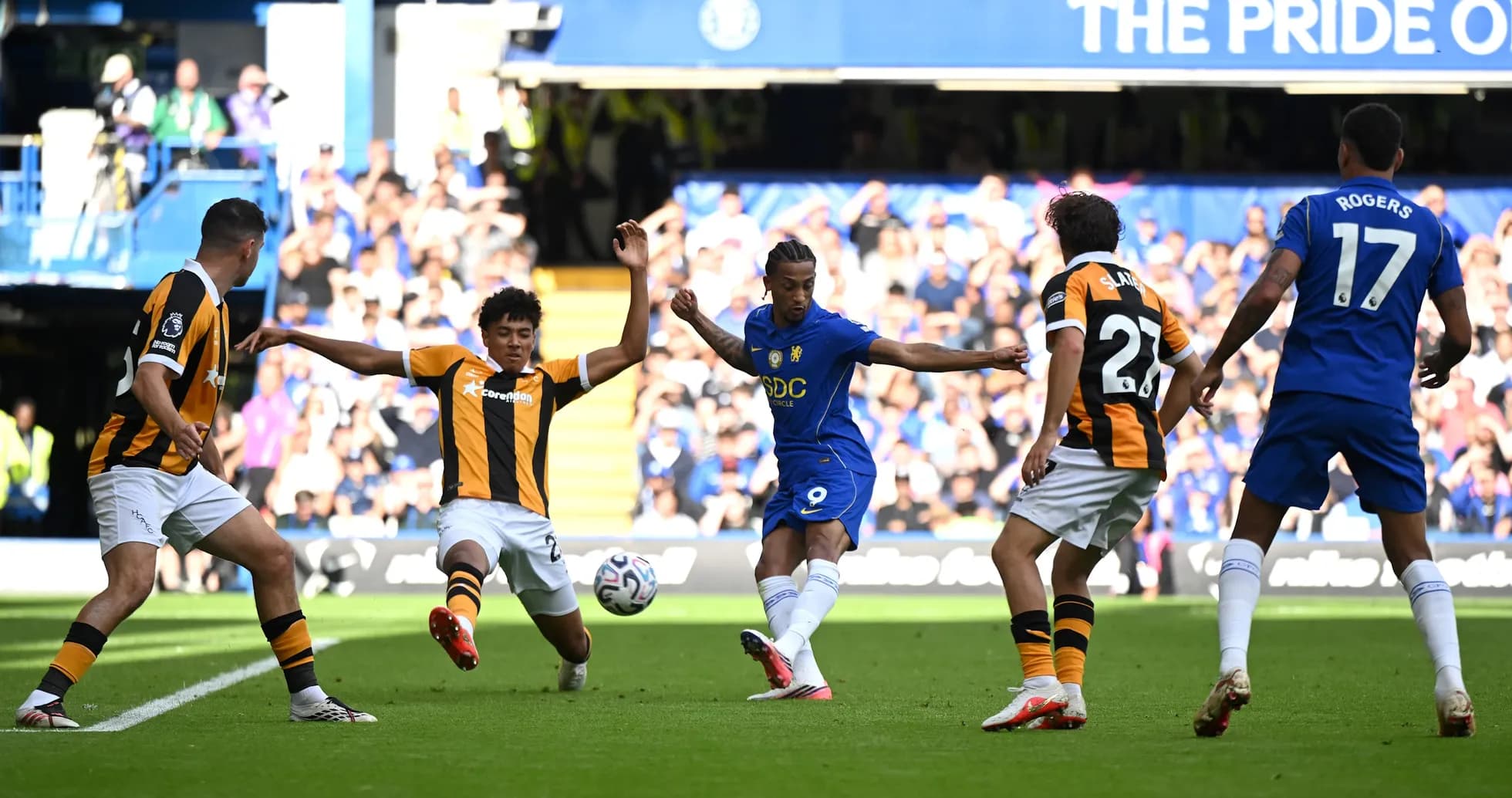
Under the grey London sky at Stamford Bridge, a 2–2 draw between Chelsea and Hull City closed with a feeling of unfinished business rather than shared satisfaction. In a Premier League season still in its early chapters, this Regular Season - 4 fixture brought together two sides whose identities are already sharply drawn: Chelsea, fifth in the table on 7 points with an attacking average at home of 3.0 goals per game, and Hull City, improbably third with 8 points and a defensive record that had conceded only 2 goals overall before kick-off.
I. The Big Picture – Clash of Blue Fire and Amber Steel
Heading into this game, Chelsea’s campaign had been defined by volatility and volume. Overall they had scored 10 goals and conceded 9, a goal difference of +1 built on relentless front-foot football but fragile defensive control. At Stamford Bridge, those tendencies were amplified: 6 goals for and 5 against in just 2 home matches, with no clean sheets and no failures to score. Xabi Alonso’s side came in as one of the league’s great entertainers, but not yet one of its great controllers.
Hull arrived with a very different profile. Overall they had 5 goals for and only 2 against, a goal difference of +3 that spoke of compactness and clarity. On their travels, they had 3 goals scored and 2 conceded, averaging 1.5 goals for and 1.0 against away from home, underpinned by a structure that had already produced 3 clean sheets overall. Their form line of WWDD suggested a team that knew its limits and played to them with ruthless discipline.
The 2–2 scoreline therefore felt like a collision of those identities rather than a surprise: Chelsea’s attacking firepower finally breaking through Hull’s armour, but their own defensive looseness again preventing them from turning dominance into victory.
II. Tactical Voids – Who Was Missing, and What It Cost
Both managers had to navigate significant absences that shaped the tactical story.
For Chelsea, the midfield spine was thinned. M. Caicedo, E. Emegha, J. Henderson and M. Palestra were all ruled out through various injuries, stripping Alonso of a true specialist ball-winner and an experienced controller. That absence pushed responsibility onto R. Lavia as the single pivot and demanded more defensive work from R. James and M. Gusto, both listed as midfielders in this setup. It helped explain why, even with a 4-2-3-1 on paper, Chelsea often looked like a 2-4-4 in possession, exposing the centre-backs in transition.
Hull’s injury list was just as long, if not as glamorous: I. Ansah, J. Butland, D. Gyabi, C. Hughes, E. Matazo and H. Morita all missed out. The losses of Matazo and Morita in particular removed energy and distribution from central midfield, forcing S. Jakirović to lean even harder into a 5-4-1 that protected space rather than contested every duel. K. Tzolakis in goal, instead of the injured Butland, became a central figure in a low block that had to survive long stretches without the ball.
Disciplinary trends also cast a shadow. Chelsea’s yellow-card distribution this season has been front-loaded: 33.33% of their bookings have arrived between 0–15 minutes, with another 22.22% in the 76–90 window. Hull, by contrast, peak in the 46–60 minute band, where 30.77% of their cautions are concentrated. This match followed those patterns in spirit if not in explicit card details: Chelsea again played on the edge early and late, while Hull’s intensity spike around the restart coincided with their most aggressive pressing phase.
III. Key Matchups – Hunter vs Shield, Engine Room vs Enforcer
The headline duel was always going to be Chelsea’s attacking trident against Hull’s five-man rearguard.
The “Hunter” was Joã o Pedro, already with 3 goals and 3 assists in the league and averaging 2 shots per game, 4 of his 8 efforts on target. His movement as the lone forward in the 4-2-3-1 pulled Hull’s central trio of S. Ajayi, J. Egan and N. Mendy into constant decisions: step out and risk the space behind, or hold the line and allow him to receive between the lines. Behind him, C. Palmer and M. Rogers – both with 3 goal contributions or more this season – formed a rotating triangle that repeatedly tried to overload the half-spaces.
Against that, Hull’s “Shield” was collective rather than individual. The 5-4-1 flattened into a back six at times, with L. Coyle and R. Giles dropping deep to pin Chelsea’s wide midfielders. Hull had conceded only 0.5 goals per game overall heading into this fixture, and their comfort in defending their own box was evident: they allowed Chelsea to progress but rarely left the central channel unguarded.
In the engine room, R. Lavia’s task was to dictate tempo and protect the centre-backs L. Colwill and J. Hato. Hato, already with 2 assists this season and 7 tackles plus 2 successful blocks, stepped out aggressively to intercept passes into O. McBurnie, Hull’s reference point up front. McBurnie, who has drawn 9 fouls and committed 5 this season, played the familiar role of chaos agent: backing into defenders, contesting 74 duels overall and winning 36, and forcing Chelsea to defend more second balls than Alonso would have liked.
The other pivotal figure was M. Belloumi. With 2 goals, 1 assist and 10 tackles so far, he personifies Hull’s dual identity: creator and destroyer. Operating from the right of midfield, he repeatedly tested Pedro Neto and J. Hato, looking to spring counters into the channels when Chelsea’s full-backs vacated their posts.
IV. Statistical Prognosis – What This Draw Says About Both Sides
Following this result, the numbers tell a story of two trajectories converging.
Chelsea’s overall attacking average of 2.5 goals per game remains elite, and they have still not failed to score this season, either at home or away. Yet their 2.3 goals conceded per game overall, with 2.5 at home, continues to drag them back toward the pack. The lack of a single clean sheet underlines the cost of their aggressive structure and the absence of a fully fit defensive midfielder group.
Hull, meanwhile, will see the concession of two goals as a crack in their previously watertight record, but not a collapse. Even after this, their defensive metrics remain strong: just 2 goals conceded at home and 2 on their travels before today, with three clean sheets already in the bank. The 5-4-1 is not a temporary fix; it is a clear identity.
In xG terms – even without explicit values – you would expect Chelsea’s volume of chances, their home scoring rate of 3.0 and the creative output of Joã o Pedro, Palmer and Rogers to have produced a higher-quality shot profile than Hull’s more selective counters. Yet Hull’s model is built on the idea that they do not need many shots; they just need to keep the game within one moment.
The draw at Stamford Bridge therefore feels like a tactical stalemate that slightly flatters Hull’s resilience and slightly exposes Chelsea’s balance. Alonso’s side look like a Europa League contender that must tighten its defensive distances to become more. Jakirović’s Hull, by contrast, look every inch a Champions League outsider: structurally sound, emotionally disciplined, and perfectly content to leave with a point from the kind of ground where Chelsea are built to blow teams away.
Related News
Liverpool vs Fulham: Goalless Draw Reflects Early Season Realities
Manchester City vs Sunderland: Head-to-Head Stats and Historical Overview
Chelsea and Hull City Draw 2–2: A Tactical Stalemate

Tottenham vs Aston Villa Stats: Head-to-head Record Before September 2026 Clash

Brentford vs Chelsea Stats: Head-to-head and Recent Form

Manchester United vs Manchester City Predicted Lineups: Team News and Analysis