
Chelsea W vs Manchester United W: FA WSL Clash Preview
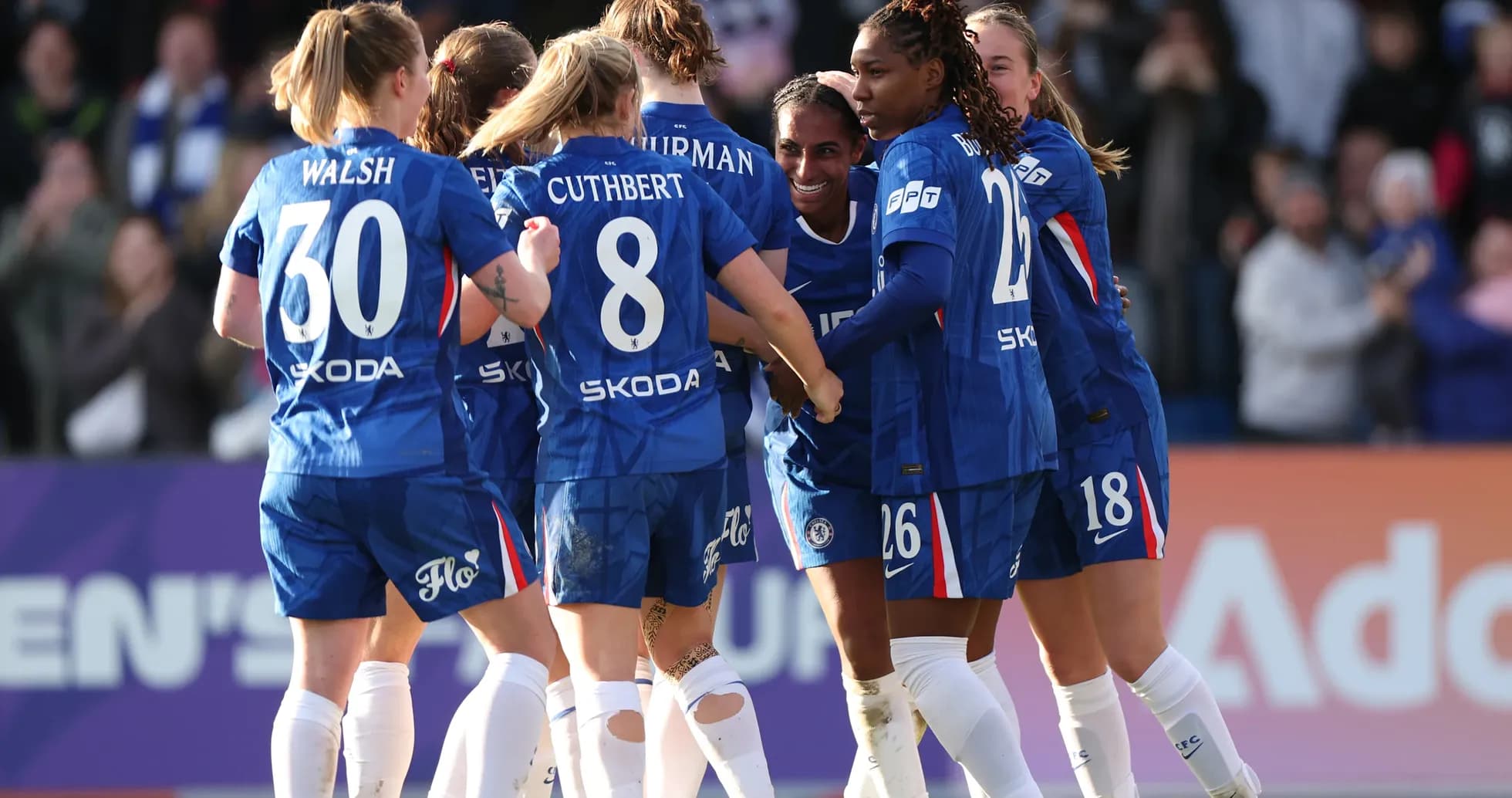
On 16 May 2026, under the tight, blue glare of the London sky, Stamford Bridge in London stages another chapter of a rivalry that has come to define the top end of the FA WSL. Chelsea W, already entrenched in the Champions League places, welcome Manchester United W, who arrive still chasing a statement result against the champions’ standard-bearers. With the league campaign reaching its climax, Chelsea W are fighting to lock in second place and keep pressure on the summit, while Manchester United W look to protect a top-four finish and prove they can finally turn parity into supremacy on one of the biggest domestic stages.
Season Context
Chelsea W come into this fixture sitting 2nd in the FA WSL table with 46 points from 21 matches, built on 14 wins, 4 draws and just 3 defeats (46 points, 21 played). Their attack has been consistently productive with 43 goals scored, while a defence that has conceded 20 keeps their goal difference at a healthy +23 (43 GF, 20 GA). The description tag confirms they are firmly in the “Champions League” zone, underlining the high standards expected at Stamford Bridge.
Manchester United W arrive in London ranked 4th with 40 points from their 21 games, having recorded 11 wins, 7 draws and 3 defeats (40 points, 21 played). They have scored 38 goals and conceded 21, giving them a goal difference of +17 (38 GF, 21 GA). There is no formal description attached to their position, but their numbers place them as serious contenders just behind the established elite, needing a big away performance to close the gap to Chelsea W.
Form & Momentum
Chelsea W’s recent league form string reads “WWWDW”, a run that speaks of sustained control (4 wins in 5). With 43 goals across 21 matches, Chelsea W are averaging just over two goals per game (43 GF in 21 played), while conceding fewer than one per outing (20 GA in 21). That balance supports the idea of a side both dangerous and relatively secure. The predictions model also rates their last five overall performances at 87% form with 100% attacking and 50% defensive indices, reinforcing the picture of a team whose main weapon is relentless offensive pressure (lastFive form 87%, att 100%, def 50%).
Manchester United W’s form string of “DDLWD” hints at inconsistency and missed opportunities (only one win in the last five). Their season-long figures still show a capable side, scoring 38 in 21 (around 1.8 goals per game) and conceding 21 (around 1.0 per game), but the predictions data rates their last five at just 40% form, with a low 21% attacking index and a stronger 64% defensive index. That combination suggests a team that has tightened up at the back recently but struggled to turn possession and territory into goals (lastFive form 40%, att 21%, def 64%).
Head-to-Head Patterns
The recent history between these clubs has been rich and high-stakes, and it leans towards Chelsea W. In the WSL Cup, Chelsea W beat Manchester United W 2-0 at Ashton Gate Stadium on 15 March 2026, a decisive win in the WSL Cup, season 2025 (2-0, WSL Cup, season 2025, March 2026).
Just weeks earlier, the sides met in the FA Women’s Cup at Kingsmeadow on 22 February 2026, where Chelsea W again emerged on top after extra time, winning 2-1 in the FA Women’s Cup, season 2025 (2-1, FA Women’s Cup, season 2025, February 2026).
The most recent league meeting came at Leigh Sports Village on 3 October 2025, when Manchester United W and Chelsea W shared the points in a tightly contested FA WSL clash that finished 1-1 in the FA WSL, season 2025 (1-1, FA WSL, season 2025, October 2025). Those three results capture a pattern: Chelsea W have edged the knockout ties, while the league encounter was more evenly balanced.
Tactical Preview
Chelsea W’s tactical identity this year has been built on flexibility within a front-foot framework. Their most used shape is a 4-1-4-1, deployed 6 times, complemented by a 4-2-3-1 on 3 occasions. Both systems allow Chelsea W to flood the final third with runners while keeping a single pivot to protect the back line. The league statistics show 43 goals from 21 games, aligning with the predictions model’s attacking rating of 82% in the comparison section, suggesting a side comfortable imposing themselves with numbers high up the pitch (comparison att: Chelsea W 82%).
Personnel-wise, Chelsea W have a standout attacking weapon in A. Thompson. A. Thompson, listed as an attacker, has scored 6 league goals and provided 3 assists, with 23 shots and 13 on target, plus 21 key passes (6 goals, 3 assists, 23 shots, 13 on target, 21 key passes). A. Thompson’s 7.07 rating and 79% pass accuracy underline a forward who can both finish and create, ideal for exploiting the spaces that open when Chelsea W overload wide areas from their 4-1-4-1 or 4-2-3-1.
Manchester United W tend to mirror that structural flexibility but with a slightly more cautious edge. Their most common formation is a 4-2-3-1, used 10 times, with a 4-1-4-1 appearing 3 times and a 4-4-2 twice. The double pivot in 4-2-3-1 helps shield a defence that has conceded only 21 goals in 21 league matches (21 GA in 21 played), and the comparison model even rates their defensive side higher than Chelsea W’s (defence comparison: Chelsea W 42%, Manchester United W 58%).
In attack, Manchester United W share the creative burden across several players. J. Park, officially listed as an attacker in the squad but recorded as a midfielder in the top scorers data, has 4 goals and 3 assists with 21 shots and 13 on target, plus 17 key passes (4 goals, 3 assists, 21 shots, 13 on target, 17 key passes). E. Terland, an attacker, has also chipped in with 4 goals and 9 key passes (4 goals, 9 key passes). Meanwhile, M. Malard and E. Toone both sit on 3 assists each, with M. Malard adding 2 goals and 22 key passes, and E. Toone contributing 1 goal and 10 key passes (M. Malard: 2 goals, 3 assists, 22 key passes; E. Toone: 1 goal, 3 assists, 10 key passes). That spread of creators suggests Manchester United W will look to combine between the lines rather than rely on a single focal point.
Discipline could also shape the contest. For Manchester United W, J. Olme has collected 5 yellow cards, while J. Riviere has 4 yellow cards and one yellow-red, highlighting aggressive roles in midfield and wide defensive areas (J. Olme: 5 yellows; J. Riviere: 4 yellows, one yellow-red). Against a side as mobile as Chelsea W, those players will walk a fine line between necessary bite and risky fouls.
Statistical Snapshot
- Competition: FA WSL, season 2025 — 16 May 2026.
- Venue: Stamford Bridge, London.
- Prediction: Win or draw — Double chance : Chelsea W or draw.
- Win Probabilities: Home 45% / Draw 45% / Away 10%.
- Model: Chelsea W 68.8% — Manchester United W 31.2%.
Betting Verdict
The prediction model leans clearly towards Chelsea W avoiding defeat, and the bookmakers broadly agree, with home win prices clustered around 1.46–1.58 and the draw and away win drifting out towards roughly 4.00 and 5.50–6.00. Chelsea W’s stronger recent form (“WWWDW”) and their cup victories over Manchester United W in March and February 2026 support the “Double chance : Chelsea W or draw” angle. Manchester United W’s patchier “DDLWD” sequence and modest last-five attacking index (21%) suggest they may struggle to outscore a Chelsea W side averaging over two goals per league game. For bettors, siding with Chelsea W on the double chance market aligns with both the statistical edge and the recent head-to-head story at the sharp end of English women’s football.
Related News

Charlton Athletic W vs Leicester City WFC: FA WSL Final Round Preview

Leicester City WFC's Crucial FA WSL Final Match Against Charlton Athletic W
Charlton Athletic W vs Leicester City WFC Prediction: Key Insights and Betting Tips

Chelsea W vs Manchester United W: Tactical Analysis and Match Insights

Arsenal Dominates Liverpool in FA WSL Clash
Tottenham's Tactical Triumph Over Brighton in FA WSL Finale