
Club America Dominates Puebla 2–0 in Apertura Showdown
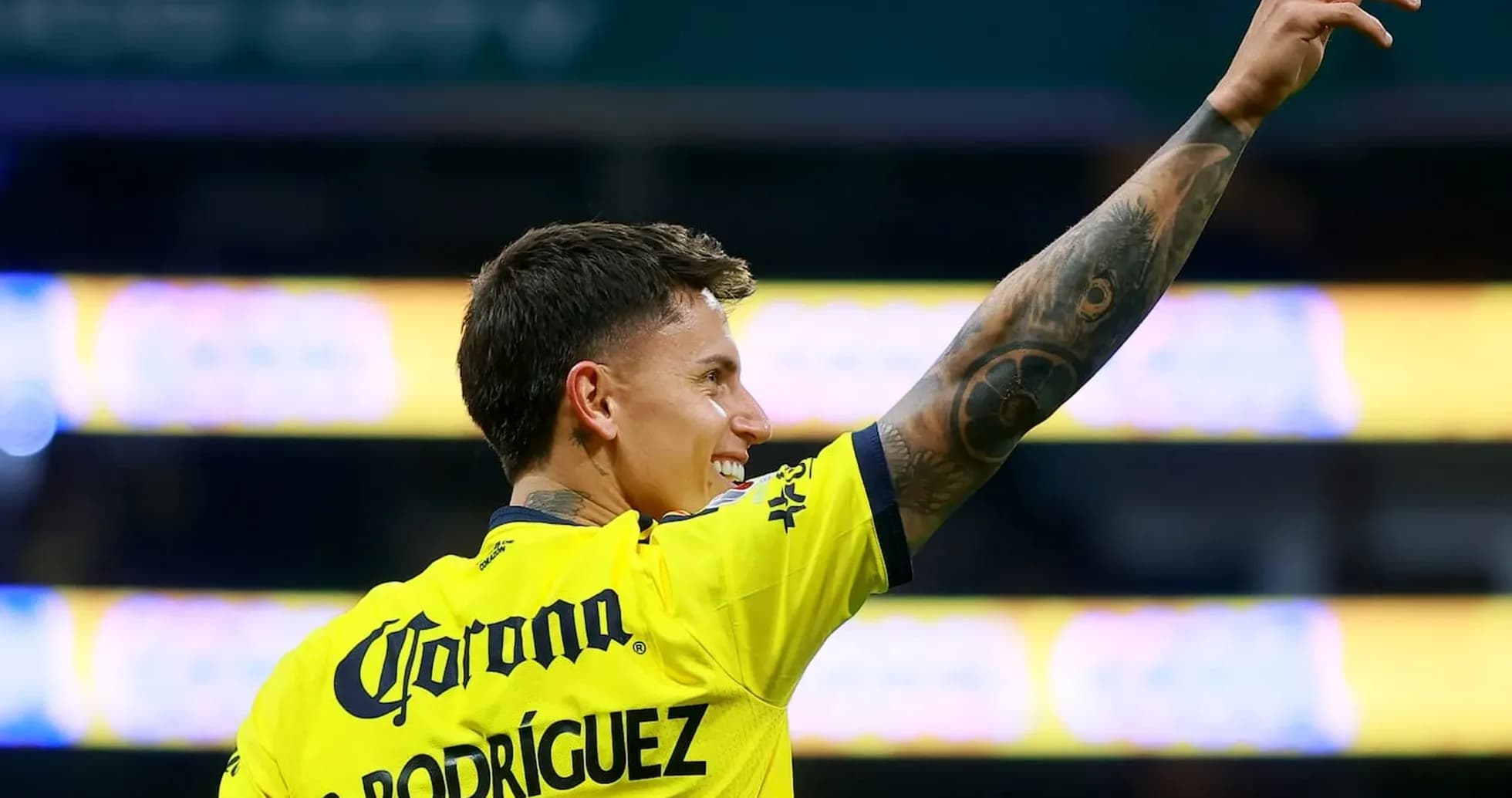
Under the lights of Estadio Banorte, Club America’s 2–0 win over Puebla felt less like a single result and more like a confirmation of a hierarchy already written into this Apertura. The league leaders arrived as a machine in motion; they left with the table-topping aura only strengthened, still unbeaten after 6 matches, now on 16 points with a goal difference of +10 overall (12 scored, 2 conceded). Puebla, eighth with 10 points and a goal difference of 0 overall (9 scored, 9 conceded), discovered the gap that still exists between their ambition and the division’s current benchmark.
I. The Big Picture – Structure and Seasonal DNA
Both coaches mirrored each other on the whiteboard, sending out 4-2-3-1 shapes that told very different stories once the whistle blew. Guillermo Almada Alves Jorge’s Club America leaned into a front-four carousel, built on a secure base that has defined their season: at home they have now played 3, won 3, drawn 0, lost 0, scoring 8 and conceding 0. The defensive record is not an accident; heading into this game, their home average stood at 2.7 goals scored and 0.0 conceded.
Puebla’s Gerardo Espinoza also trusted the 4-2-3-1 that has been his primary system this campaign, but his side arrived with more volatility in their numbers. On their travels they had played 4, winning 2 and losing 2, with 5 goals scored and 6 conceded. An away average of 1.3 goals scored and 1.5 conceded hinted at a team that can hurt opponents but rarely walks away unscathed.
The first half followed the season-long scripts. Club America’s high block and measured possession suffocated Puebla’s attempts to build, with the hosts striking once before the break to go in 1–0 up at half-time. The second half saw the leaders manage tempo, pick their moments, and add a second, completing a performance that fit neatly into their broader pattern: 5 wins and 1 draw overall, 12 goals for and only 2 against.
II. Tactical Voids and Discipline – Edges at the Margins
In terms of personnel, both squads arrived deep and relatively unencumbered by absences; the benches were stacked with genuine game-changers. For Club America, the presence of H. Martín, B. Rodriguez and Raphael Veiga among the substitutes underlined how Almada can alter the entire attacking profile with a single substitution vector. For Puebla, the likes of L. Hernandez, O. F. Moreno Villegas and creative midfielder A. Herrera offered different ways to chase a result.
Yet the more telling void was psychological and disciplinary. Club America’s season-long card pattern suggested controlled aggression: yellow cards spread through the first 75 minutes, but with a noticeable spike between 61–75 minutes (30.00%), and a single red late on this campaign, in the 76–90 window (100.00% of their reds). It paints a picture of a side that pushes the line in the closing stages when protecting or chasing a result, but rarely loses its head.
Puebla’s discipline profile was more precarious. Their yellow cards this season have clustered late, with 40.00% between 61–75 minutes and another 40.00% between 91–105 minutes. More significantly, their only red card has arrived between 61–75 minutes (100.00% of their reds), precisely in the period when matches often become stretched. That red belongs to right-back I. Moreno, who started again here. He is a defender who has committed 5 fouls this season and already seen one straight dismissal, a risk factor whenever Puebla are forced to defend deep and react.
In a game where Club America’s home dominance was likely to pin Puebla back for long spells, that late-game disciplinary fragility loomed large. Even without a dismissal on the night, the away side’s need to foul to stop transitions and protect their box sapped momentum and field position.
III. Key Matchups – Hunter vs Shield, Engine Room vs Enforcer
The league’s scoring charts framed a fascinating “Hunter vs Shield” duel before a ball was kicked. For Puebla, E. Mustre arrived as their leading scorer, with 3 goals and 1 assist from 6 appearances, converting 4 of his 6 shots on target and operating as a mobile reference in the final third. His job was to test a Club America defence that had conceded just 2 goals overall in 6 matches, with 4 clean sheets and none at home.
The shield held. With R. Juarez and M. Vazquez patrolling centrally, and full-backs E. Lara and D. Espinoza providing both width and recovery speed, Mustre was largely kept away from his preferred zones. America’s defensive line is not just solid; it is proactive. Espinoza, in particular, embodies that: across the season he has produced 14 tackles, 3 successful blocks and 8 interceptions, and already contributed 2 assists. In this match, his dual role as overlapping outlet and defensive extinguisher on the left neutralised Puebla’s attempts to isolate him in wide 1v1s.
In the “Engine Room” battle, Club America’s midfield double pivot of E. Cerrillo and Icaro (operating as a deeper connector) set the rhythm. Ahead of them, the trio of D. Arriaga, A. H. Gutierrez Torres and O. Perea constantly rotated between half-spaces, dragging Puebla’s midfield line of A. Organista, A. Ramirez, B. Garnica, K. Velasco and C. Baltazar into uncomfortable decisions: step out and leave lanes, or sit and concede territory.
This is where the latent influence of Raphael Veiga and H. Martín mattered, even when not starting. Veiga’s season numbers – 2 assists, 1 goal, 16 key passes and 86% pass accuracy – make him the creative metronome of this side. Martín, with 3 goals, 1 assist and a penalty record of 1 scored and 1 missed this campaign, is the penalty-box presence that constantly pins centre-backs. Whether on the pitch from the start or introduced from the bench, they force defensive units like Puebla’s to defend deeper and narrower, opening space for runners from midfield.
On the other side, Puebla’s own creative axis has been emerging through A. Herrera, who has 2 assists in just 146 minutes, with 3 key passes and 89% pass accuracy. But starting on the bench here, his ability to thread passes into Mustre arrived late against a defence already in control of scoreline and territory.
IV. Statistical Prognosis – Why 2–0 Felt Inevitable
Strip away the narrative and the numbers still point to a predictable outcome. Club America came into this fixture averaging 2.0 goals scored overall per match and just 0.3 conceded, with no losses and no failures to score. Puebla, by contrast, were averaging 1.5 goals scored and 1.5 conceded overall, with only 1 clean sheet and 1 match where they failed to find the net.
Even without explicit xG values, the structural indicators are clear: America’s attack generates volume and variety, their penalty profile (2 awarded, 1 scored, 1 missed) showing they regularly force desperate defending in the box. Puebla, while dangerous, concede as often as they score, especially away where their defensive average sits at 1.5 goals conceded.
On the pitch, that translated into a match where Club America’s 4-2-3-1 behaved like a 2-3-5 in possession, hemming Puebla in, while their rest defence and pressing traps smothered transitions to Mustre. Puebla’s best hope was to ride out waves, nick a moment through their young striker, and avoid the disciplinary landmines that have plagued them late in games. Instead, the leaders’ control, defensive structure and deeper bench gradually squeezed the life out of the contest.
Following this result, Club America look every inch the Apertura’s team to beat: unbeaten, ruthless at home, and with a spine that rarely gives up chances, let alone goals. Puebla remain competitive and dangerous, but this night in Mexico City underlined the difference between a side capable of reaching the play-offs and one currently built to dominate them.
Related News

Tigres UANL vs Necaxa Stats: Head-to-head Record and Analysis

Pachuca vs Chivas: A Clash of Contrasting Trajectories in Liga MX

Atletico San Luis vs Guadalajara Chivas Stats and Head-to-Head Record
Club Queretaro vs Monterrey Stats: Head-to-head Record Before Match

Monterrey vs Atletico San Luis preview: next match details and prediction

Monterrey vs Atletico San Luis Predicted Lineups: Liga MX Match Preview