
Cristiano Ronaldo's Final World Cup Journey: A Nation's Hope
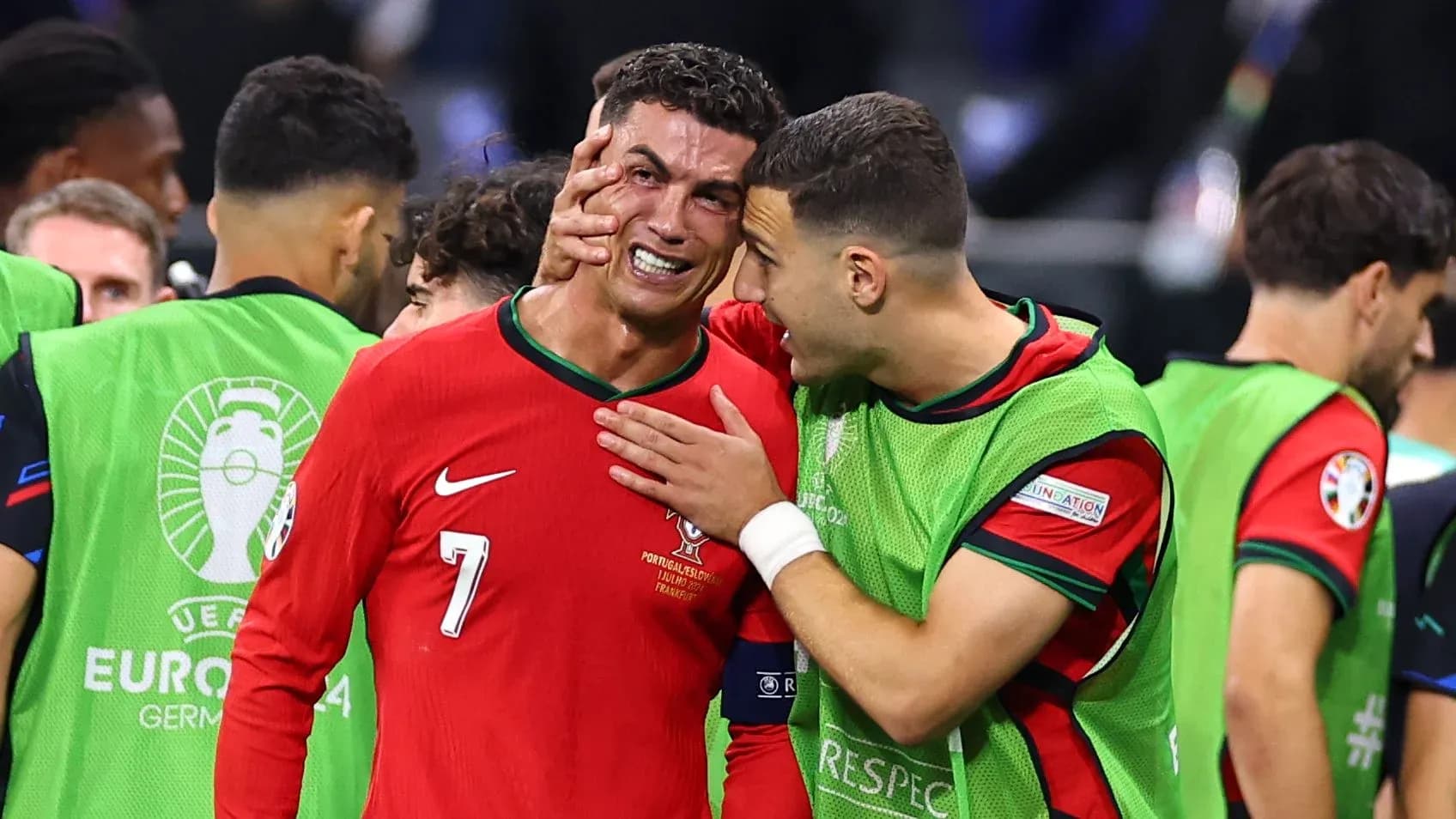
Cristiano Ronaldo will walk into a sixth World Cup at 41 years of age, a number that feels almost unreal in a sport that devours careers before most players hit their mid-30s. For Portugal, the countdown to 2026 comes with something heavier than tactics or travel plans: the sense that this is the final act of their greatest ever player.
Inside Portuguese football, that emotion is already being felt. Godinho, who spent half a century inside the Portuguese Football Federation and watched Ronaldo’s entire international story unfold, does not hide what he wants to see at the end of it.
He wants Ronaldo to go out as world champion.
“Let's hope he's in a position to retire – I don't know when, but the body isn't eternal – with a title of this magnitude,” he told Lusa, laying bare the dream that quietly runs through the federation and the fanbase alike. One last trophy, the only one missing from a career built on breaking every boundary in front of him.
A Brutal World Cup for Tired Legs
Romance, though, will not soften what awaits in 2026.
The tournament in the United States, Canada, and Mexico is already being talked about as one of the most demanding ever staged. Distances are vast. Climates swing. Time zones shift. For European teams, Godinho sees a structural disadvantage that no motivational speech can erase.
“The World Cup will be difficult ... because of the fatigue they will bring,” he warned. The best players, he pointed out, arrive from “major club competitions” already worn down, then face “long journeys, schedule changes and climate” that can strip away sharpness and rhythm.
The message is blunt: if Portugal want to carry Ronaldo to the summit, they must first carry their squad through the grind.
“Careful preparation is needed,” Godinho said. “It's much more difficult to play in the United States than in Germany.” It’s not just about form or talent. It’s about how much is left in the legs after a season that never seems to end.
From Figo’s Dressing Room to the Edge of History
Godinho’s authority on the subject doesn’t come from distance. He was there at the beginning.
He remembers the skinny teenager who arrived in 2003, thrown into a dressing room full of giants: Luis Figo, Rui Costa, Fernando Couto. Ronaldo was 18, raw and fearless, handed a debut against Kazakhstan and a place among legends.
“It wasn't difficult to work with Cristiano,” Godinho recalled. The talent was obvious, but the environment around him mattered just as much. That senior group, he believes, “helped him a lot to understand the dimension of where he was.”
The “winning mentality” that has defined Ronaldo’s two-decade reign with Portugal did not appear out of thin air. It was sharpened by those early years, by the standards set by others, and by the “tough talk” he sometimes had to absorb from more experienced teammates. He listened. He adapted. He became the one others looked up to.
Now, as he prepares for a sixth World Cup, the roles are reversed. The kid who once learned from Figo is the monument in the room, the benchmark for a new generation who grew up with his posters on their walls.
Group K and the Fine Line Between Nerves and Belief
Portugal’s route begins in Group K, with a first step that feels more psychological than tactical.
On June 17 in Houston, they open against the Democratic Republic of Congo. It is not a glamour tie, but it is exactly the kind of game that can shape a campaign. Win it, and the tension eases. Slip up, and the questions start before the tournament has really begun.
“The first game is always very important,” Godinho said. Not decisive, but defining. He knows better than most that a slow start does not necessarily kill a dream – Euro 2016 proved that – yet he also understands what a positive opening does for a squad’s “state of mind, fatigue, and mentality.”
After Congo, Portugal face Uzbekistan and Colombia as they navigate Group K. On paper, it looks manageable for a side packed with elite club talent. On the ground, in North American heat, after long-haul flights and long seasons, nothing will feel routine.
Godinho’s faith in the structure around the team is clear. “I am convinced that with the players and organisational capacity we can get there,” he said, before drawing a firm line. “But saying we are going to win is premature.”
That tension between belief and realism hangs over everything. Portugal know they have the tools. They also know how thin the margins are when legs are heavy and pressure climbs.
The Last Climb
Some careers drift to an end. Ronaldo’s will not. His final World Cup, if 2026 is indeed that, will be played under a spotlight that has followed him since that first call-up as a teenager.
For Godinho, for the federation, for a country that has lived through every twist of this journey, the hope is simple and enormous at the same time: that his body holds long enough, and that the team around him is built strong enough, to carry him to the one trophy that still sits out of reach.
The planning, the sports science, the travel logistics, the rotation of tired legs – all of it now orbits around a single question.
Can Portugal, in the most demanding World Cup of all, finally give Cristiano Ronaldo the ending his career has been driving toward for more than 20 years?
Related News

Wilfred Ndidi’s Marriage Reportedly Ends as He Enters New Relationship
Cristiano Ronaldo's Top 5 Most Valuable Cars in His Extraordinary Collection
Ben Whittaker’s Challenge to Prove Eddie Hearn’s Bold British Boxing Bet
Peter Handscomb on the Challenge of Facing Indian Bowlers
How to Watch UFC 332: Silva vs. Wang Live on CBS and Paramount+ This Saturday
Raul Rosas Jr. Shares His Thoughts on the Shocking UFC Vegas 121 Finish Against Raoni Barcelos