
Dayot Upamecano's Mastery of Interceptions in Football
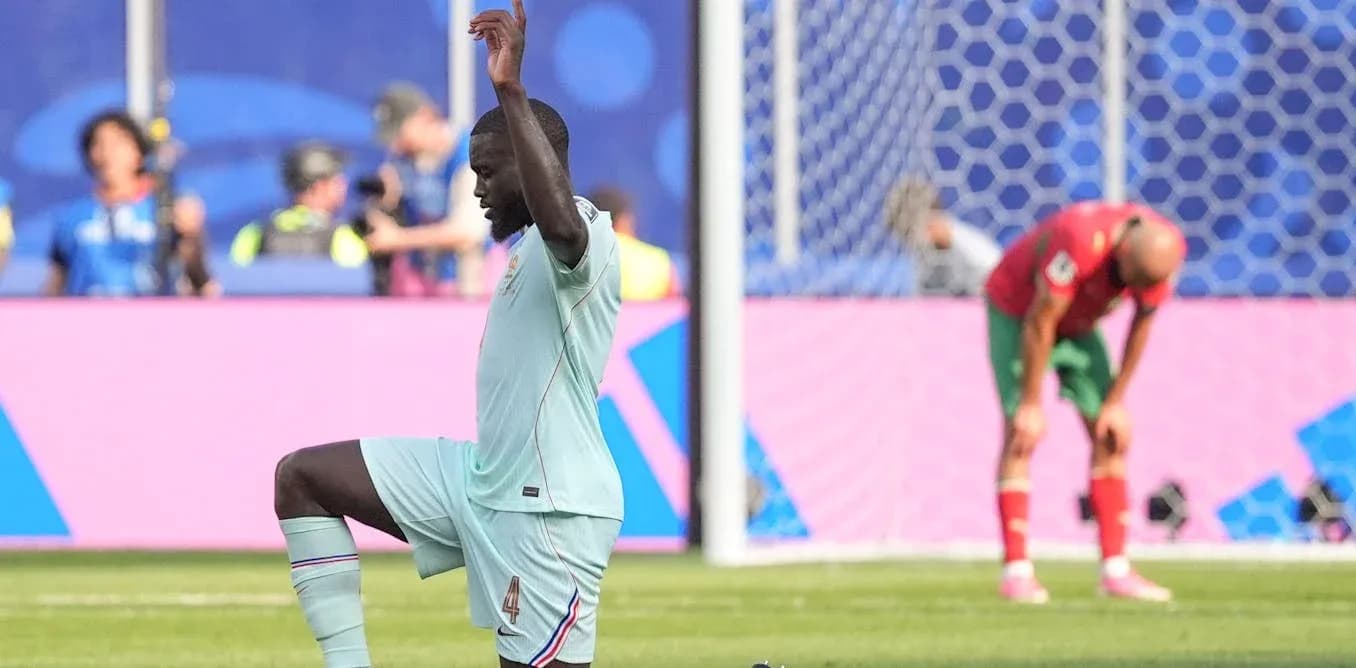
Dayot Upamecano sees it before anyone else does.
A midfielder shapes to slide a pass into the inside channel, the forward darts across the line, and for a split second the whole move looks scripted. Then Upamecano steps in, one stride, one touch, and the danger is gone. The entire action takes less than a second, but inside that second lives a storm of calculation: speed, distance, angle, balance, risk.
At the start of the 2026 World Cup semi-final week, the France defender sat top of the tournament charts with 12 interceptions. Twelve times he had read the story of an attack faster than the man who wrote the pass. Twelve times he had made the right decision under pressure, with his brain and legs working at the edge of fatigue.
This is the hidden craft of elite defending. Not the slide tackle, not the crunching duel, but the quiet theft of a ball that was never meant to be his.
The art inside a split second
An interception begins long before the ball leaves the passer’s boot. A defender scans the pitch, weighs up shapes and distances, and runs through a mental checklist: Who is free? Where is the space? How quickly can I get there?
Research on anticipation in sport shows that top athletes fuse what they know with what they see. A defender reads the passer’s posture, the angle of the hips, the approach to the ball. Even the direction of the supporting runs feeds into that instant forecast: where will this ball actually go?
Then the ball is struck and the problem sharpens. Speed suddenly matters. In experimental work with well-trained amateur footballers, the faster the pass, the less likely players were to even try an interception. When they did, their success rate dropped. The ball was simply travelling too quickly for their bodies to match their intentions.
Distance shapes the choice as well. Studies of senior male futsal players – a game played in tight spaces where passes zip past defenders at close range – found that how far the defender started from the ball helped decide whether an interception was on. But there was no single “go” moment. Players constantly tweaked their speed and line, adjusting to the ball’s flight until the move ended. The interception was not a one-off decision. It was a rolling negotiation between brain, ball and body.
Experience sharpens that negotiation. In a football-specific experiment comparing expert and less-expert athletes, both groups initially thought they could intercept more than they actually could. Only after repeated attempts, with direct feedback on what they could and could not reach, did their self-assessments line up with reality. The message is clear: defenders learn, often painfully, where their limits lie.
When the legs and the mind begin to fade
That learning is fragile once fatigue creeps in.
Mental fatigue is the quiet enemy: the drained concentration that follows long periods of intense focus. In one study involving 20 professional male footballers, players completed a demanding 30-minute mental task, then went straight into a training match. Their passing decisions deteriorated. The legs were willing, the brain a fraction slower.
Another study with well-trained male players found that mental fatigue dulled both the speed and accuracy of football-specific decisions. These experiments did not test interceptions directly, but the overlap is obvious. Cutting out a pass demands the same skills: selecting the right visual cues, judging speed and distance, predicting what comes next, then committing to an action with almost no time to spare.
Physical fatigue adds another layer. Research with 24 trained male players showed that acute physical tiredness reduced how far and how intensely they moved. It also altered elements of their positioning and their contribution to team play. The pitch looked the same, but their capacity to cover it had shrunk.
A related study drew an intriguing line between decision-making quality and how players coped with this drop-off. Those with stronger decision-making skills held their positions and remained effective under acute physical fatigue, partly by accepting that they had to move at a slower pace. They conserved what they had left and thought their way through the game. Players with weaker decision-making profiles did the opposite: they kept running hard, but their positioning and defensive impact declined.
So the best defenders do not just run more. They run smarter as their bodies fade. A tired centre-back must still track the ball’s path, but now with a sharper awareness of what his legs can realistically deliver.
Cape Verde and the power of disruption
The numbers from this World Cup underline how interceptions can tilt the balance for teams without the ball.
Cape Verde, making their first appearance at the tournament, turned interception into a weapon. In their Group H opener, they faced Euro 2024 winners Spain, a side built to dominate possession and probe patiently. Cape Verde met them with a different kind of control: 15 interceptions and a 0-0 draw.
Across four matches, the debutants averaged roughly 13 interceptions per game. They advanced from the group and then pushed defending champions Argentina to extra time in the round of 32, losing 3-2 only after stretching them deep into the night.
Those figures do not prove that interceptions alone carried Cape Verde through. A high tally often means a team has spent long spells defending, constantly reacting to opponents who hold the ball. But cutting out passes did allow them to break up rhythm, deny easy progression and spring forward before superior sides could reorganise. Each interception was not just a defensive act; it was an invitation to counterattack.
In a tournament where possession giants expect to dictate the tempo, Cape Verde showed how reading the game and stepping in at the right moment can narrow the gap.
The duel with deception
Of course, attackers are not passive targets. They fight back with disguise.
Research on deception in competitive sport highlights how athletes hide their true intentions. A passer might open their body towards one teammate, selling the idea of a switch, then slide the ball inside to another. By the time the real direction becomes obvious, the defender has already shifted weight towards the wrong passing lane.
This creates a cruel choice. Move early and you might get there first, but you are easier to trick. Wait for more information and your read improves, yet the ball has more time to travel beyond you. The defender lives in that tension, caught between being proactive and being patient.
Training for the invisible work
The research carries a blunt message for coaches. If they want defenders to intercept well in real games, training must mirror real games.
That means drills with moving opponents, not mannequins. Passes that vary in speed and angle. Realistic starting distances. Sessions that include disguise and feints, not just predictable patterns. Interceptions are born in chaos, not in straight lines.
It also means paying attention to when these decisions are made. Fatigue changes everything: how far a player can sprint, how quickly they can adjust, how clearly they can think. Monitoring total distance covered and high-intensity runs only tells part of the story. A defender might hit the same physical numbers yet lose a crucial half-second in judgment, and that is often the half-second that matters.
The goal is not to chase interception statistics for their own sake. The best defenders learn which balls they can reach and which they must let go. They keep adjusting their expectations as each pass travels, and as their own physical state shifts during the match.
By the time Dayot Upamecano slides across to meet a through ball in the 89th minute, the visible action is just the final frame. Behind it sits a long tournament of recalibration: reading bodies, reading passes, reading his own fatigue. On the biggest stage, in the tightest matches, that private calculation is often what decides who goes home and who plays on.
Related News

India's Record Chase of 406 Against West Indies Highlighted by Gill's 223 and Rohit's Century

Alex Pereira Hints at Major UFC Bout: 'Big Challenge' Ahead
Three Hall of Famers, Ten Fights, 109 Rounds: The Forgotten Rivalry That Shaped Lightweight Boxing's Golden Era

Khamzat Chimaev and Colby Covington Set for RAF Abu Dhabi Title Clash in November

Thomas Tuchel Confident Harry Kane Will Join 100-Goal Club for England Soon

Cristiano Ronaldo Vows to Reveal Truth After Leaving Portugal Squad Amid Conflict