
Diego Forlan: From Tennis Dreams to Football Legacy
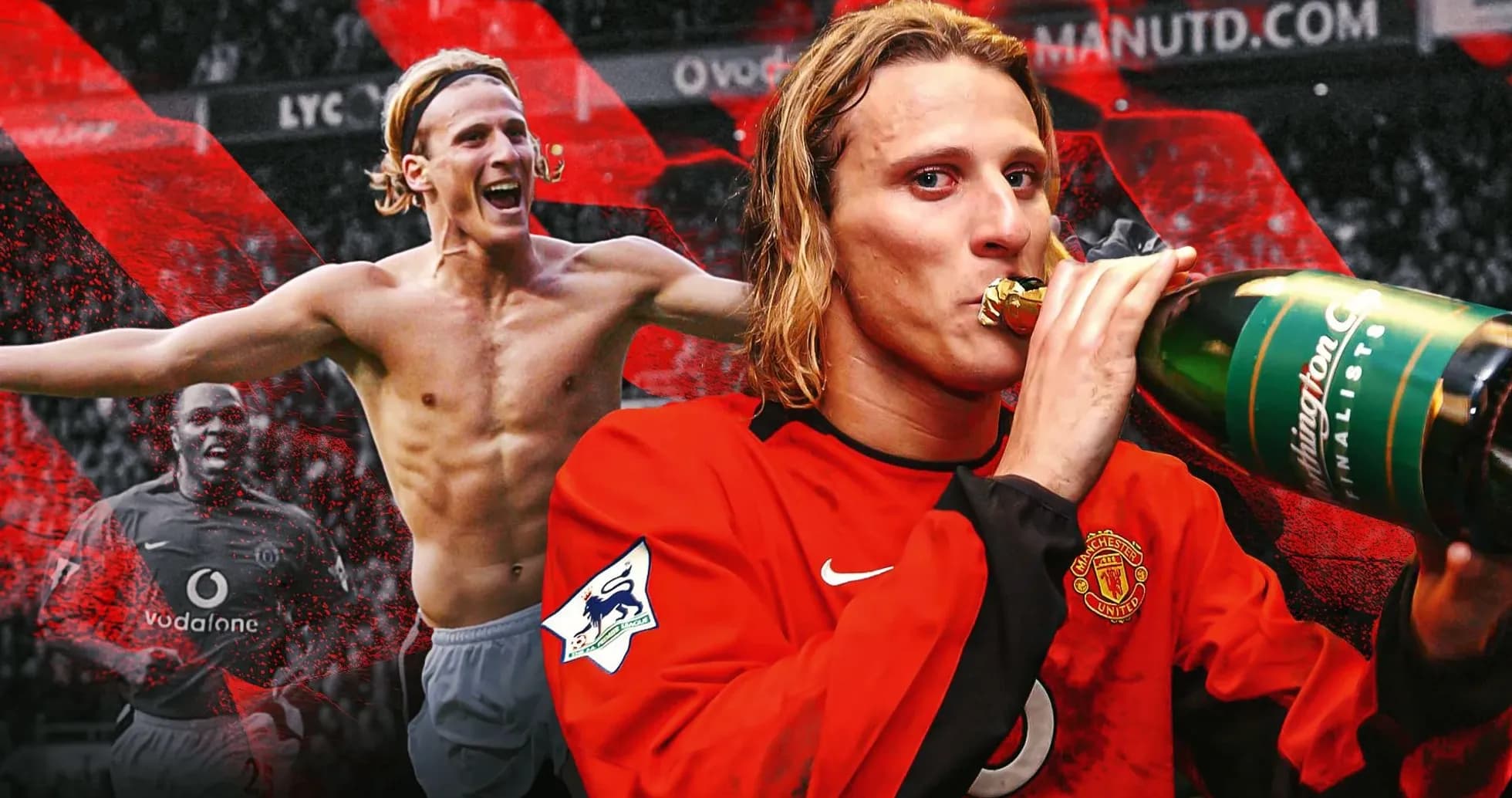
Diego Forlan never meant to follow his father onto a World Cup pitch. As a boy, he wanted a racket in his hand, not a ball at his feet. Pablo Forlan had played for Uruguay at the 1966 and 1974 World Cups; his son was supposed to be a tennis player.
Then came the car crash.
His sister, Alejandro, survived but was left paralysed. Her boyfriend died. Medical bills mounted. Diego Maradona, the Argentine genius Forlan idolised from afar, stepped in and paid out of his own pocket to help the family. From that moment, the boy who loved tennis decided he needed to make it in football. Not for fame. For money. For responsibility.
At 12, he switched sports. The rest of his life changed.
From Montevideo to Manchester
Forlan bounced between the academies of Penarol and Danubio, two of Uruguay's giants, before a seven‑month trial with Nancy in France in 1995. He was 16, far from home, and desperate to make it. Nancy said no.
He went back to South America. No sulking, no surrender. A family contact and manager Jose Omar Pastoriza opened a different door: Independiente, one of Argentina’s 'Big Five'. There, in Avellaneda, he found his stage.
By 18, Forlan was in the first team. By the time he left, he had 40 goals in 91 games and a reputation as one of the most dangerous two-footed forwards on the continent. Europe came calling again. In January 2002, Middlesbrough agreed a £6.9 million deal. The Premier League beckoned.
Then Manchester United crashed the party.
Sir Alex Ferguson moved fast. United matched the fee, offered better wages and, crucially, the manager himself picked up the phone. Forlan later wrote how he struggled to understand the Scot’s rapid-fire English as he took the call in a bathroom while his roommate slept. But the message cut through the accent.
"We want you. It’s not just interest, we want you. You can be a great player for us. Wait for us. You will play for Manchester United."
Forlan waited.
United needed a No.9. Teddy Sheringham and Andy Cole had gone. Ruud van Nistelrooy was already the ruthless finisher, but Ferguson wanted more firepower. Forlan’s debut came quickly, off the bench in a 4-0 win at Bolton. Fifteen minutes, no goal, but plenty of running, sharp movement and pace. Van Nistelrooy liked what he saw.
"He’s very, very quick, has two great feet and I think at 22 years of age, he has a great future," the Dutchman said.
The future, though, was not straightforward.
The drought
Forlan’s first start didn’t arrive until March, covering for an injured Ole Gunnar Solskjaer against Tottenham at Old Trafford. United cruised to a 4-0 win. Forlan buzzed around the final third, made clever runs, found space. He also missed chances that made the crowd groan. Composure deserted him at the crucial moments.
He finished that 2001-02 season with 18 appearances and no goals. None. United’s campaign collapsed too: third in the Premier League, early exits in both domestic cups, and a painful Champions League semi-final defeat to Bayer Leverkusen.
Yet Old Trafford warmed to Forlan. He ran himself into the ground, chased lost causes, pressed defenders. He got his reward in a different shirt. Uruguay took him to the 2002 World Cup, and in South Korea/Japan he scored one of the goals of the tournament against Senegal – a stunning 20-yard volley lashed into the far corner. Confidence flickered back.
It didn’t immediately translate at club level. Back at United for 2002-03, he remained a substitute. Six Premier League games off the bench. Cameos in both legs of a Champions League qualifier against Zalaegerszeg. Still nothing. Twenty-six appearances. No goals. The British press dubbed him "Forlorn".
Then came appearance number 27.
The penalty that changed everything
Maccabi Haifa at Old Trafford. Opening night of the Champions League group stage. Forlan came on just before the hour with United 4-1 up. He worked tirelessly, as always, and then ballooned a huge chance over the bar after being slipped in by Van Nistelrooy. The groans were familiar now.
The clock ticked towards 90. It looked like another night of frustration, another story about the striker who couldn’t score.
Then David Beckham won a penalty in the 88th minute.
Beckham grabbed the ball. Captain, set-piece specialist, he was the obvious taker. Forlan begged. Beckham saw the desperation in his eyes and stepped aside.
"Please. please. Anyone with an ounce of humanity says please on his behalf," ITV commentator Peter Drury murmured as Old Trafford held its breath.
Forlan’s body language screamed anxiety. His finish didn’t. He sent the goalkeeper the wrong way with a crisp side-foot into the corner. 5-2. Finally.
Beckham and the rest swarmed him. Relief washed around the stadium.
"If I'd taken it and scored, I'd have been hated by 67,000 people," Beckham admitted. "He's been working so hard in training and in matches, and he really deserved that."
Ferguson agreed. "Diego's movement is first-class and he deserves his goal. Even in the half-hour he was on, he created half a dozen chances. If you put that amount of effort in you should get something. Hopefully he will settle down now and get lots more."
Forlan didn’t celebrate wildly. He knew it was only a beginning. "I had to adjust myself to the Premiership and a different culture," he said later. He talked about the limited minutes, the need to keep the ball, the belief that the goals would come. "It would have been better to score that goal after a move but it still counts."
It counted more than he knew.
The shirt comes off
The next seven games brought no further goals. The whispers started again. Then, on October 26, came Aston Villa at Old Trafford.
United trailed 1-0 with 13 minutes left. Mikael Silvestre picked up the ball on the far side of the box with defenders massed in front of him. Little seemed on. He dug out a cross. Forlan, inexplicably unmarked, rose and planted a superb header into the top corner past Peter Enckelman.
Nine months after his debut, he finally had a first Premier League goal from open play.
This time, the celebration exploded. Shirt off, sprinting, chest bare. In the chaos, he even charged towards the Villa fans instead of the home end. After 23 league games without scoring from open play, direction was a luxury.
A week later, Southampton arrived. Ferguson put Forlan back on the bench. It didn’t matter.
With five minutes left and the game level at 1-1, Juan Sebastian Veron rolled the ball to Forlan, 25 yards out. Two touches, then a vicious drive that screamed past Antti Niemi. Another winner. Another shirt off.
Then came the comic twist. United’s Nike dual-layer kit baffled him. He couldn’t get the shirt back on. The game restarted with him still wrestling with it, ball at his feet. He charged into a challenge while literally holding his shirt in his hands.
"I was trying to get it back on quickly, but sometimes when you are in a hurry, things tend to get worse," he laughed afterwards. Would he do it again? "We'll have to see when it happens."
It happened again. And again.
Anfield, and immortality
Forlan earned a start in a 5-3 thriller against Newcastle, providing two assists for Van Nistelrooy, and kept his place for a trip to Liverpool eight days later. Anfield. Rivalry. Noise. Tension.
For an hour, the game was scrappy. No rhythm, no clear pattern. It felt like it would take a mistake or a flash of genius to break it open.
The error came first.
Jamie Carragher nodded a loose ball back towards Jerzy Dudek. Routine. Or it should have been. The Liverpool goalkeeper somehow let it slip under his legs. Forlan reacted quickest, stroking the ball into the empty net. He instinctively reached for his shirt, then thought better of it and yanked it back down in a last-second act of restraint.
That one was about being alert. The next was pure technique.
Barely three minutes later, Ryan Giggs danced through two challenges and poked the ball to Forlan on the edge of the box. One touch, then a ferocious drive at Dudek’s near post. The keeper should have done better, but the strike was clean and ruthless.
Sami Hyypia pulled one back, Fabian Barthez made a stunning late save from Dietmar Hamann, and United held on. But the day belonged to Forlan.
"You don’t know what you did. You will be remembered for years," Gary Neville told him afterwards, as Forlan recalled in a 2022 club interview.
The fans proved Neville right. They built a chant to the tune of Dean Martin’s "Volare":
"Diego, whoooah, Diego, whoooah, He came from Uruguay, and made the Scousers cry."
It echoed around Old Trafford for years. It even rang out at Sunderland in April 2017, long after Forlan had gone, leaving Jose Mourinho puzzled on the touchline.
"I knew it was something important but, you know, I didn’t know in that moment, until now, after 20 years, they would still be singing my name," Forlan told United’s media. To GQ in 2019, he admitted: "I get goosebumps every time I hear it. I’m not Ryan Giggs, Paul Scholes or another United legend, nor am I the only player to have scored at Anfield, so it feels a privilege to be remembered. I was getting so few minutes in the team that I didn’t even feel like I was a proper footballer until that game."
That afternoon on Merseyside gave him a place in club folklore. The goals kept coming.
December, and the title push
In December, Forlan added three more crucial strikes. He finished calmly in a 2-0 League Cup win over Burnley. He then nutmegged Carlo Cudicini to score the only goal of a quarter-final against Chelsea.
Back in the league, Birmingham City came to Old Trafford. Beckham nodded the ball back across the box, and Forlan smashed home the opener on the half-volley in a 2-0 win. His numbers remained modest, his minutes limited, but his impact was sharp.
On January 18, Chelsea returned to Manchester for a pivotal league clash. Arsenal had just beaten West Ham to go five points clear at the top. Chelsea were three behind United. Lose, and Ferguson’s side risked slipping out of the race.
Chelsea dominated the first half. Eidur Gudjohnsen put them ahead on the half hour. Cudicini then slipped, mis-hit a pass straight to Beckham, and the England captain crossed for Paul Scholes to make it 1-1. United roared back after the break, but Cudicini redeemed himself with a remarkable save to deny a Van Nistelrooy header.
Into stoppage time, it stayed level. Then Forlan appeared.
On for Van Nistelrooy, he ghosted between Chelsea’s centre-backs onto a perfect through-ball from Veron. One swing of his left boot, one precise finish, and United had a 2-1 win in the third minute of injury time. The shirt came off again as he sprinted away to a deafening Old Trafford.
"That's why we always put him on for the last 20 minutes. He's become a really important player this year with important goals," Ferguson said.
United went on to reclaim the Premier League title four months later. Forlan finished with six goals and two assists in 25 appearances, only seven of them starts. On paper, it was a modest return. On the pitch, his goals had shifted momentum in a title race.
The limits of a cult hero
Yet it was never his fate to become a long-term superstar at Old Trafford.
In a 2003-04 pre-season friendly against Juventus, Forlan produced one of the most infamous misses of his career, somehow hitting the side netting from inside the six-yard box with the goal gaping. It set an uneasy tone for his final year at the club.
Ferguson moved towards a lone-striker system. Van Nistelrooy, already dominant, became even more central. Forlan’s space shrank.
The Uruguayan still offered flashes of his quality: a gorgeous volley in a 3-0 Champions League win over Rangers, the decisive goal away at Panathinaikos to secure qualification, a brilliant double off the bench in a 4-0 win at Aston Villa. He scored in a 3-0 FA Cup fourth-round victory at Northampton and collected a winner’s medal.
But the misses hurt. He squandered more chances than he took. He failed to impose himself when given rare starts. Against Leicester in April, he was hauled off after 57 laboured minutes and tried to head straight down the tunnel in frustration.
Then came the competition. Louis Saha arrived in January 2004. Wayne Rooney followed from Everton that summer. Forlan’s path narrowed to a sliver.
He got 17 minutes in the 2004-05 league opener at Chelsea. The pitch was wet. Ferguson told him to wear long studs. Forlan preferred short ones. He agreed to change but didn’t. When he slipped through on goal and wasted a chance, the manager was furious.
"Ferguson wanted me to play with long studs, the interchangeable ones that suit wet pitches, but I feel more comfortable in short ones," Forlan later revealed. "I agreed to change but I didn't and wasted a chance. Afterwards, I rushed to the dressing room to change boots but Ferguson caught me. He grabbed the boots and threw them. That was my last game for United."
Days later, he left for Villarreal in a £2m deal, labelled a transfer flop by many. The story between him and Ferguson, though, didn’t end in bitterness.
In his autobiography, Ferguson reflected that Van Nistelrooy’s "singularity" had worked against Forlan. "Ruud wanted to be the No 1 finisher, that was his nature. Diego Forlan didn’t register on his radar at all, so when you put the two of them out there together, there was zero chemistry. Diego was better with a partner," he wrote. "But he scored some priceless goals. He was a good player and a terrific pro."
Villarreal proved him right. Given the starring role, Forlan exploded. Later, at Atletico Madrid, he formed a deadly partnership with Sergio Aguero. With Uruguay, his understanding with Luis Suarez and Edinson Cavani helped carry the national team to new heights.
He was never meant to be Solskjaer, the ultimate super-sub. He needed to feel central, trusted, indispensable. United could not offer that.
Devotion over numbers
Still, Old Trafford never forgot him. Roy Keane, hardly a man known for sentiment, summed it up in 2023.
"I remember when Diego Forlan came in, and it wasn't quite happening for him. If a player tried – and Diego did – we'd drag him with us; we'd try and help him," he said.
That was the point. Forlan made the Scousers cry, yes, but his place in United hearts was built on more than two goals at Anfield. It was about the endless running when the goals wouldn’t come, the refusal to hide, the willingness to keep showing for the ball when every miss felt heavier than the last.
United fans saw a player who never stopped giving himself to the badge, even when the numbers mocked him. In an era since Ferguson where the club has often seemed to lack that kind of relentless character, his story hits differently.
Romance in football is usually measured in medals and statistics. With Diego Forlan at Manchester United, it’s better measured in devotion. And on that score, his legacy is untouchable.
Related News
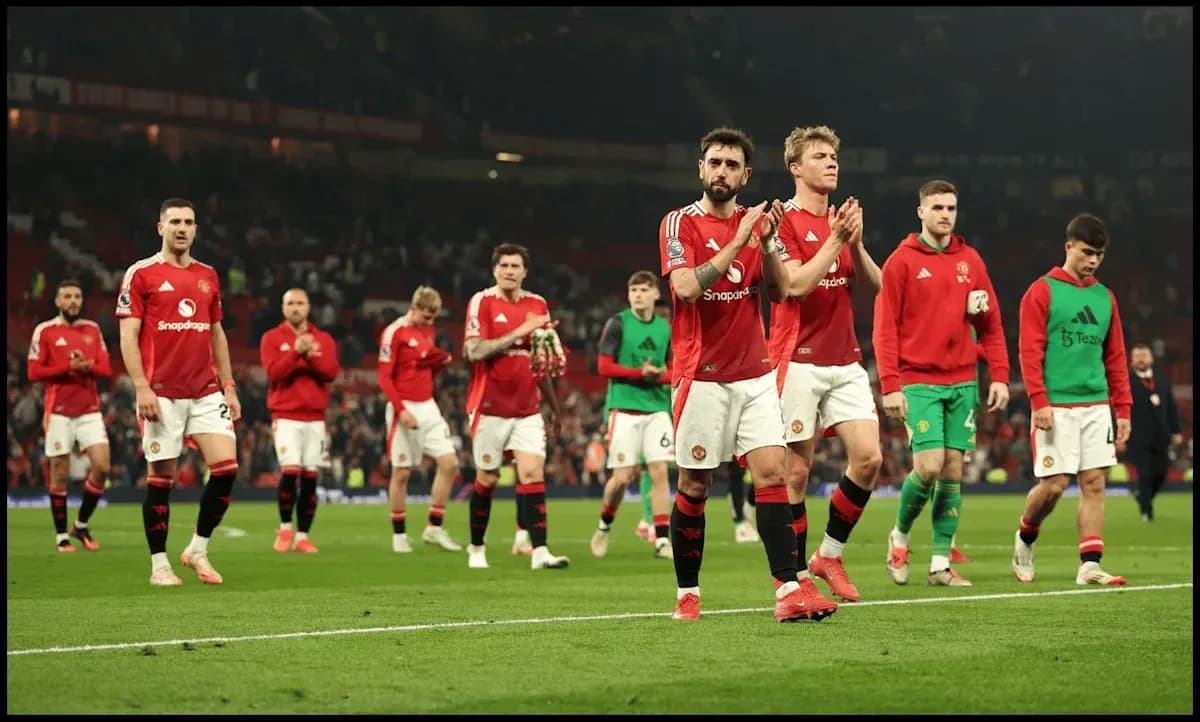
Manchester United Eye Barcelona's Marc Bernal for Midfield Rebuild
Christos Tzolis Transforms Arsenal's Attack
Bournemouth Sets Unwanted Record as Brentford Dominates Again
Ismail Kartal Stays as Fenerbahce Coach After Resignation Drama
Real Madrid Dominates Rayo Vallecano with 4-1 Victory
Arsenal Maintain Perfect Start with Win Over Sunderland