
Egnatia Rrogozhinë vs Celje: UEFA Champions League 2nd Qualifying Round Preview
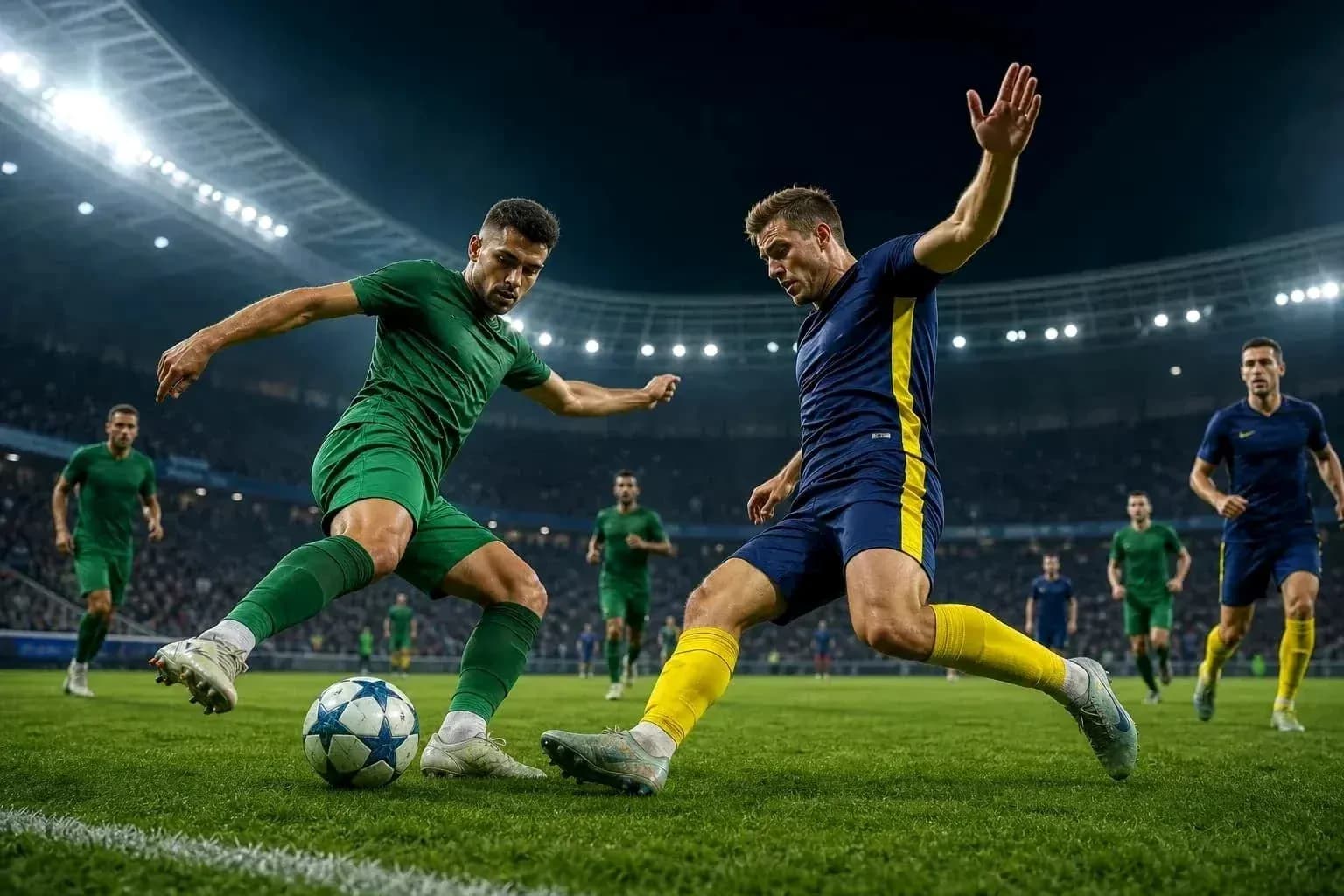
Celje and Egnatia Rrogozhinë return to centre stage with everything still on a knife-edge in the UEFA Champions League 2nd Qualifying Round. Under the lights at an as-yet-unconfirmed venue in Celje, on 28 July 2026, the Slovenians know that any kind of win will be enough after a wild 3-3 draw in Albania, while the Albanian champions arrive with momentum and the comfort of knowing that another high-scoring draw could also be enough if they keep their attacking edge.
Season Context
Celje step into this home leg still searching for their first win of this European campaign. Their Champions League record so far shows 1 match played, 0 wins, 1 draw and 0 defeats, with 3 goals scored and 3 conceded. That single draw away from home has kept them alive, but it also underlines how fine the margins are: they average 3.0 goals scored and 3.0 conceded per game, a profile that screams risk and reward in equal measure.
Egnatia Rrogozhinë arrive with a slightly deeper European sample and a stronger platform. Across 3 Champions League fixtures they have 1 win, 2 draws and 0 losses, scoring 10 goals and conceding 5. That means they are averaging 3.3 goals scored and 1.7 conceded per match, an attacking return that marks them out as one of the more adventurous sides at this stage while still keeping their defensive record respectable.
Recent Form
For Celje, the story so far is one of resilience and volatility. Their official form line in this competition is “D”, reflecting that single 3-3 away draw. Scoring 3 goals on the road shows they can hurt opponents at this level (3 goals per game), but conceding 3 in the same match highlights defensive fragility (also 3 conceded per game). It paints a picture of a team that will likely need to embrace another open contest rather than try to grind out a low-scoring affair.
Egnatia Rrogozhinë bring a more established pattern into the return leg, with a Champions League form sequence of “DWD”. Remaining unbeaten across 3 matches (1 win, 2 draws) while scoring 10 times underlines a confident, front-foot side (3.3 goals per game), even if 5 goals conceded shows they are not watertight at the back (1.7 conceded per game). Their last-five indicators back this up: their attack index is higher than their defence, and their overall recent-performance index sits well above Celje’s, suggesting they arrive in Celje with momentum and belief.
Head-to-Head Patterns
The only competitive meeting between these sides so far was a thriller. On 22 July 2026, at Demrozi Stadium in Rrogozhine, Egnatia Rrogozhinë and Celje played out a 3-3 draw in the UEFA Champions League (season 2026, July 2026). The Albanians twice showed their attacking quality at home, but Celje’s ability to score three away goals in such a hostile setting hints at a tie that is far from one-sided. With no other non-friendly clashes on record, that six-goal spectacle is the lone but powerful reference point: when these two meet, chaos is more likely than control.
Tactical Preview
Celje’s early Champions League data suggests a side that leans into balance on paper but chaos in practice. Their most-used shape so far is a 4-4-2, deployed in their only European outing. That structure typically offers two banks of four to protect the back line, yet conceding 3 goals in that match (3.0 per game) shows the block has not been particularly secure. The flip side is that a front two and wide midfielders give them natural routes to goal, reflected in their 3 goals scored. Expect Celje to push their full-backs on and look for quick combinations between players like A. Kotnik and M. Poplatnik, using crosses and second balls to pin Egnatia Rrogozhinë back, knowing that they must win on the night.
Egnatia Rrogozhinë, by contrast, have already shown tactical flexibility across their 3 Champions League fixtures. They have alternated between a 3-5-2 and a 5-3-2, with the former used twice and the latter once. The 3-5-2 version is the more aggressive interpretation, helping them to those 10 goals scored (3.3 per game) by flooding midfield and pushing wing-backs high. The 5-3-2 variant offers a more conservative platform when protecting a result, which could be useful here given that a draw with plenty of goals still suits them. Their defensive record of 5 goals conceded in 3 games (1.7 per match) is far from miserly but significantly tighter than Celje’s, suggesting they can absorb pressure a little better while still threatening in transition through runners like S. Bakayoko and J. Montenegro.
Discipline could also shape the rhythm. Celje have already picked up a yellow card in their single match, while Egnatia Rrogozhinë have collected multiple bookings and even a red card across their 3 games, indicating a willingness to play on the edge when games become stretched. In a high-stakes second leg, that aggression might help them disrupt Celje’s build-up but also carries the risk of leaving spaces or suffering another dismissal.
Statistical Snapshot
- Competition: UEFA Champions League, season 2026 — 28 July 2026.
- Venue: null, Celje.
- Prediction: Win or draw — Combo Double chance: draw or Egnatia Rrogozhinë and +2.5 goals.
- Win Probabilities: Home 10% / Draw 45% / Away 45%.
- Model: Celje 40.6 — Egnatia Rrogozhinë 59.6.
Betting Verdict
The analytical models lean clearly towards Egnatia Rrogozhinë avoiding defeat, with only a 10% chance assigned to a Celje win and a combined 90% on draw or away victory. That dovetails with the form profile: Egnatia Rrogozhinë are unbeaten in 3 Champions League games and average 3.3 goals per match, while Celje’s only outing was a wild 3-3 draw that exposed defensive issues (3.0 conceded per game). The recent head-to-head, also finishing 3-3, reinforces the expectation of another open, high-scoring contest. On that basis, the advised angle of “draw or Egnatia Rrogozhinë and over 2.5 goals” is well supported by both the goal trends of these sides and the balance of power suggested by the performance indices.
Related News
Luis Díaz Confident Bayern Munich Can Win Champions League
AFC Champions League Matchday One: Insights and Team Strategies

Vincent Kompany’s Bayern Munich Future Not Tied Solely to Champions League Success
Barcelona’s Camp Nou to Host 2029 Champions League Final, Munich Confirmed for 2028
Bayern Munich's Allianz Arena Set to Host 2028 Champions League Final
Allianz Arena to Host 2028 Champions League Final for Third Time