
England's World Cup Collapse Against Argentina
England’s World Cup dream was ticking towards history. Then it fell apart in a blur of sky blue and white.
Thomas Tuchel’s side stood on the brink of a first men’s World Cup final on foreign soil, Anthony Gordon’s crisp finish early in the second half having tilted a taut semi-final their way. Minutes from glory, they were instead dragged into Argentina’s storm, floored by an Enzo Fernández thunderbolt and finished off by Lautaro Martínez in stoppage time.
From control to collapse in half an hour.
Tuchel’s gamble backfires
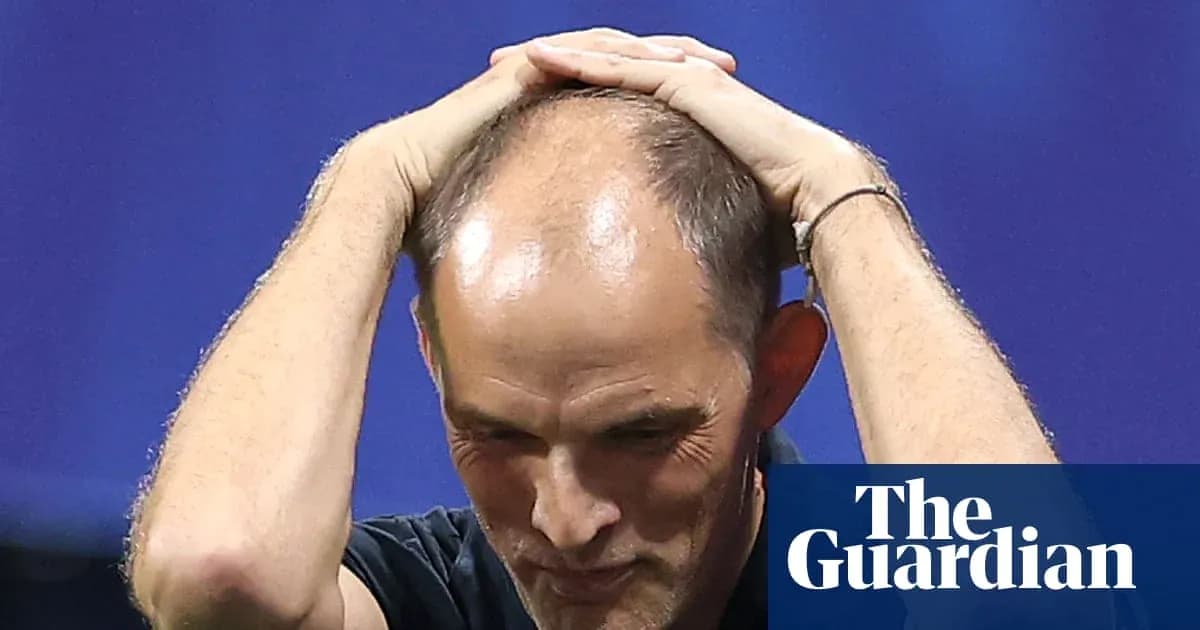
Tuchel did not hide. He could not. The turning point had his fingerprints all over it.
With England leading 1-0 but beginning to creak under Argentina’s growing aggression, the head coach chose to shut the game down. Declan Rice and Reece James were withdrawn, England flipped to a back five, and the message – intentional or not – was clear: hold what we have.
Three minutes later, Fernández stepped into a loose ball and detonated it. His piledriver tore past Jordan Pickford and ripped the match away from England’s grasp.
“We decided to go to a back five because the gaps were far too open,” Tuchel said. “Argentina played with more risk, played with more rhythm and played with the feeling maybe that they had nothing to lose any more, which freed them up and pulled us back. Because we obviously played suddenly with a feeling that we had a lot to lose.
“Of course the responsibility is on the coach and if it doesn’t go well it’s easy to say it was wrong.”
He knew what was coming. The inquests, the familiar accusations of English fragility with a lead, the talk of curses and psychology. Tuchel batted that away.
“I don’t believe so much in an English thing and a curse or whatever,” he said. “It’s repeating itself in different moments. It’s different coaches, different players, different situations.
“What cost us today was that we were not active enough in any structure.”
His numbers told the same story. Between Gordon’s opener and Lautaro Martínez’s winner, England had just 12% of the ball. A semi-final, a one-goal lead, and almost no way to breathe.
From belief to heartbreak
For an hour, England had matched the world champions stride for stride. Gordon’s goal felt like the reward for a front-foot performance, the kind Tuchel has been desperate to imprint on this side.
“We deserved to be up 1-0,” he insisted. “We played one of our better matches, maybe our best match under the circumstances. The team was top – we couldn’t bring it over the line.”
They could not, because once ahead, they shrank. Harry Kane, who led a shattered group over to salute the travelling support at full time, did not sugarcoat what followed.
“Just gutted, gutted for the boys, gutted for everyone: the team, the staff, the fans,” he told the BBC. “We played well for the vast majority of it. Once we went 1-0 up we just seemed to try to hold on which, at this level, is not enough.
“After the goal, whether it was them putting more men forward or us being able to match them man for man, it just was wave after wave and we were just trying to hold on, put the blocks in, but in the end it wasn’t enough.”
Wave after wave. That was exactly how it looked. White shirts retreating, blue ones swarming, Lionel Messi drifting into pockets, Fernández dictating, the full-backs pinning England deeper and deeper.
When the equaliser came, it felt inevitable. The winner felt like punishment.
As the clock ticked into added time, Lautaro Martínez, introduced from the bench, found the decisive touch. His low, ruthless finish in the second minute of injury time completed the turnaround and sent Argentina into Sunday’s final against Spain in New York. Messi dropped to his knees, fists clenched, as another final – another shot at immortality – became real.
On the other side, Jude Bellingham wiped away tears. The midfielder’s night ended in raw frustration; he appeared to strike the Argentina substitute Valentín Barco on the back of the head after the final whistle and had to be hauled away by reserve goalkeepers Dean Henderson and James Trafford. The officials took no action.
Argentina smell blood
Argentina had been here before in this tournament. They came from 2-0 down to beat Egypt in the last 16 and never looked panicked when trailing again. If anything, they seemed to grow.
“England pressed hard for about 60 minutes,” Lautaro Martínez said. “After finding the goal, they dropped back, and that gave us more composure in circulating the ball and spreading the play.”
Once England retreated, Argentina advanced with relish. The reigning champions flooded midfield, overloaded the flanks and kept coming. Six or seven chances went begging before the net finally bulged again.
On the touchline, Lionel Scaloni lived every second. When it was over, emotion poured out of him.
“This team plays best when they are facing adversity,” Argentina’s head coach said. “We had a challenging situation, there was blood in the water and we went for it. We had six or seven chances and the ball wouldn’t go in but the team fought until the end. After they scored, we really proved ourselves – it shows what football means to us and it goes beyond tactics.”
The scenes on the pitch underlined that. Lisandro Martínez celebrated draped in a banner reading “Las Malvinas son Argentinas”, a pointed political statement wrapped around a sporting triumph.
England left with questions
Tuchel insisted he felt “no regrets” in the immediate aftermath, at least not publicly. “The team gave everything and we were very very close,” he said. Yet his own admission that England “were not active enough in any structure” cut to the heart of the problem.
This was a performance that flirted with something special and then sank into something familiar: a lead, a big stage, a retreat, and a brutal punishment.
Argentina now head to New York and a final against Spain, chasing back-to-back titles and another chapter for Messi. England head home with a semi-final exit, a sense of opportunity lost, and a coach who has already put the blame on his own shoulders.
How long that shields his players – and how quickly they learn to play with a lead instead of hiding behind it – will shape what comes next.
Related News

India's Record Chase of 406 Against West Indies Highlighted by Gill's 223 and Rohit's Century

Alex Pereira Hints at Major UFC Bout: 'Big Challenge' Ahead
Three Hall of Famers, Ten Fights, 109 Rounds: The Forgotten Rivalry That Shaped Lightweight Boxing's Golden Era
Khamzat Chimaev and Colby Covington Set for RAF Abu Dhabi Title Clash in November
Thomas Tuchel Confident Harry Kane Will Join 100-Goal Club for England Soon
Cristiano Ronaldo Vows to Reveal Truth After Leaving Portugal Squad Amid Conflict