
Why is Enzo Fernandez Valued Higher than Rodri?
Barcelona want Rodri. Manchester City are eyeing Enzo Fernandez. One is a four-time Premier League champion and World Cup player of the tournament. The other has never hit those heights on the pitch, yet commands almost double the price.
So why is the Chelsea midfielder valued so much higher?
Rodri still delivers – but the clock is ticking
On the grass, the story is simple. Rodri is still the better footballer.
After two injury-affected seasons at Manchester City, his World Cup with Spain underlined his class, earning him player of the tournament. Even in a disrupted Premier League campaign last year, data from Gradient Sports shows he outperformed Fernandez in five of six key midfield metrics: passing, carrying, tackling among them.
He remains the benchmark for the position.
But the market does not just buy what a player is. It pays for what a player will be.
Rodri turned 30 at the start of the summer. Fernandez is 25, heading into what should be his prime. When you map out the careers of current Premier League midfielders who have reached at least £35m in Transfermarkt value, the pattern is clear: values typically peak around 27, then slide steadily as players move towards 30.
Rodri is an outlier in one sense. His Transfermarkt value peaked late, at 28, when he won the Ballon d'Or, hitting £111.1m. Since then, it has fallen sharply to £47m.
Fernandez, by contrast, is right on trend. His value has climbed to a career-high £85.5m and, on the age curve alone, still has room to hold or grow. Clubs pay a premium for that runway.
Contract power: Chelsea hold the cards
Age is only half the equation. Contract length does the rest.
Rodri is heading into the final year of his deal at Manchester City. Let that run down, and City risk losing him for nothing next summer. That looming deadline drags his price down before any negotiation even starts.
Chelsea face no such pressure with Fernandez. He has six years left on his contract. That is leverage, and everyone in the market knows it.
Group current Premier League players by contract length and the pattern is stark. The longer the deal, the higher the average value. According to Transfermarkt, players with five or more years remaining – the bracket Fernandez sits in – average £49.7m. Those with less than a year left – like Rodri – average just £7m.
Transfermarkt only bakes contract length into its model to a limited extent. In real negotiations, the effect is even more brutal. A long deal gives the selling club time, options and the freedom to walk away. A short deal hands that power to the buyer.
Form, fitness and the fine print
Strip it back to the numbers and two factors dominate valuations: age and contract runway. That’s what the correlation between Premier League player profiles and Transfermarkt values shows.
But they are not the only drivers.
Short and long-term form matters. So does club strength, measured here by Opta’s power rankings. Availability is another key piece, tracked by minutes played.
Rodri wins on performance – both over the long haul and in recent seasons. He is the superior midfielder by almost every on-ball metric.
Fernandez, though, wins in the categories that move the market. He is younger. He is tied down for longer. And he is on the pitch far more often.
Last season, Rodri played 1,515 of a possible 3,420 Premier League minutes. Less than half. Fernandez clocked 3,121 minutes. Almost the full campaign.
That availability, coupled with a relatively clean injury history, pushes Fernandez’s value up again. Clubs are paying not just for quality, but for reliability over a long, expensive contract. On that front, Chelsea’s No 8 looks like a safer long-term asset than City’s ageing metronome.
A market shaped by context – and by snowball fees
None of this exists in a vacuum. Transfer values are not a neat science. They are a reaction to context, to fashion, to scarcity.
Last summer’s window showed how quickly prices can be distorted when demand outstrips supply. Strikers moved for inflated sums because there were not enough elite options to go around.
The same effect is now visible in central midfield. Asking prices get benchmarked against recent deals, and this summer Chelsea have a strong set of reference points.
- Fees for Mateus Fernandes at Spurs (£85m)
- Sandro Tonali at Manchester City (£100m)
- Elliot Anderson at Arsenal (£116m)
- Bruno Guimaraes (£75m)
All feed into how Chelsea view Fernandez. Those numbers help them justify an asking price of £120m for the Argentina international, even though his Transfermarkt valuation sits at £85.5m.
Once one big move goes through, the rest of the market rolls behind it. That snowball has pushed transfer fees up far faster than inflation. In just a year, the average cost of a top-level signing has jumped from £53.9m to £70.5m.
Premier League clubs are also paying a premium for players already proven in the division. With the physical and tactical demands climbing season on season, “Premier League-ready” has become a price booster in its own right. That helps explain why Chelsea now feel Fernandez is worth more than the £107m they paid Benfica three years ago.
So Barcelona can chase Rodri at around £60m, and Manchester City can explore a move for Fernandez at closer to double that. On the pitch, the City midfielder may still be the superior player. In the market, age, contract, availability and a runaway midfield arms race have rewritten the rules.
The real question now is simple: who blinks first in a window where data, not reputation, is setting the going rate?
Related News

Arsenal Secures Teenage Forward Vincent Joseph from Liverpool

Simone Inzaghi Faces Criticism Over Ali Al-Bulaihi's Exclusion
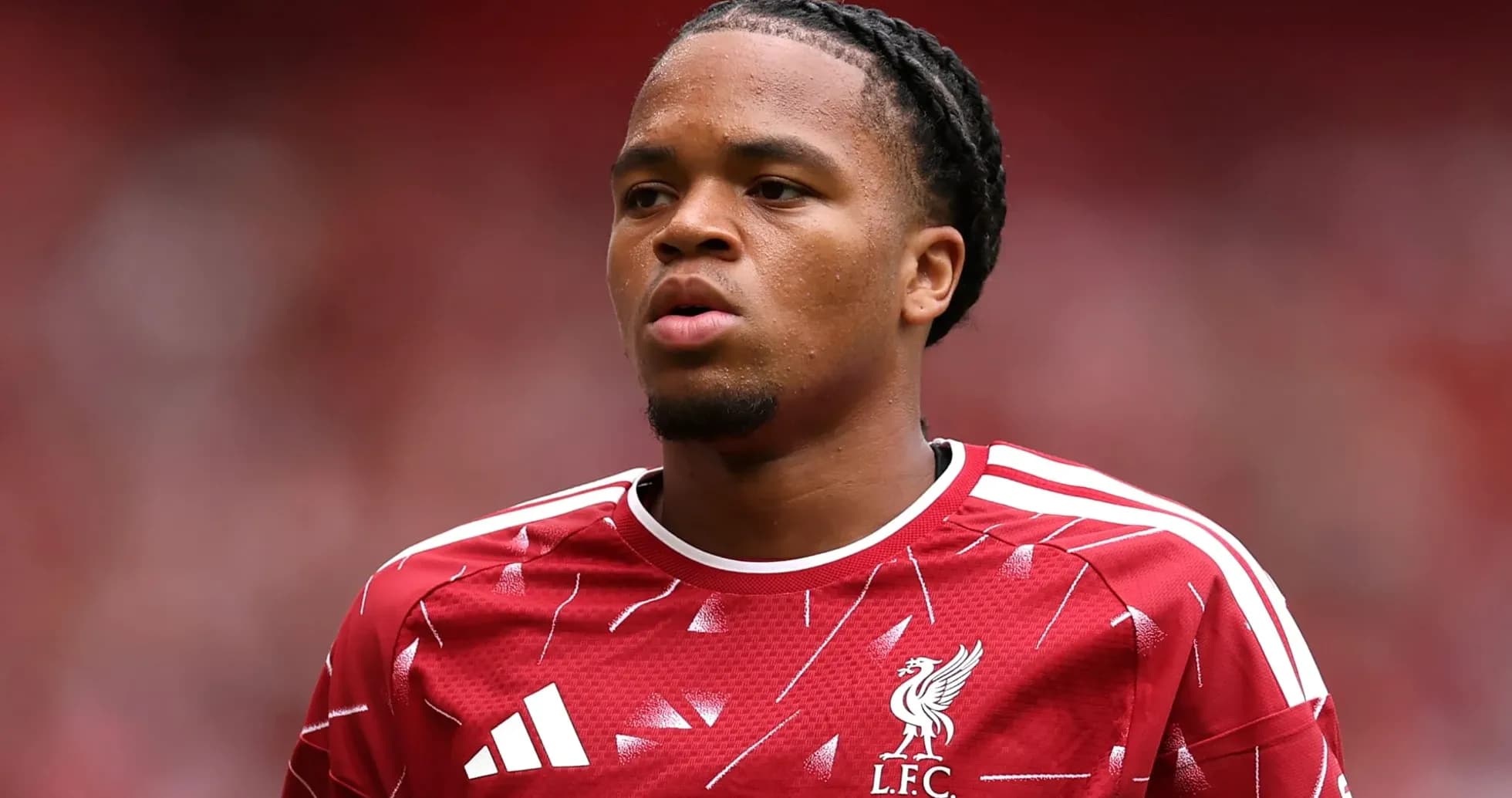
John Barnes Warns Liverpool About Ngumoha Hype: Let Him Grow

Why is Enzo Fernandez Valued Higher than Rodri?

Barcelona finalizes Ferran Torres transfer to PSG for €50m

Yan Diomande's Dream Transfer to Real Madrid