
Everton vs Manchester United: Early Season Tactical Insights
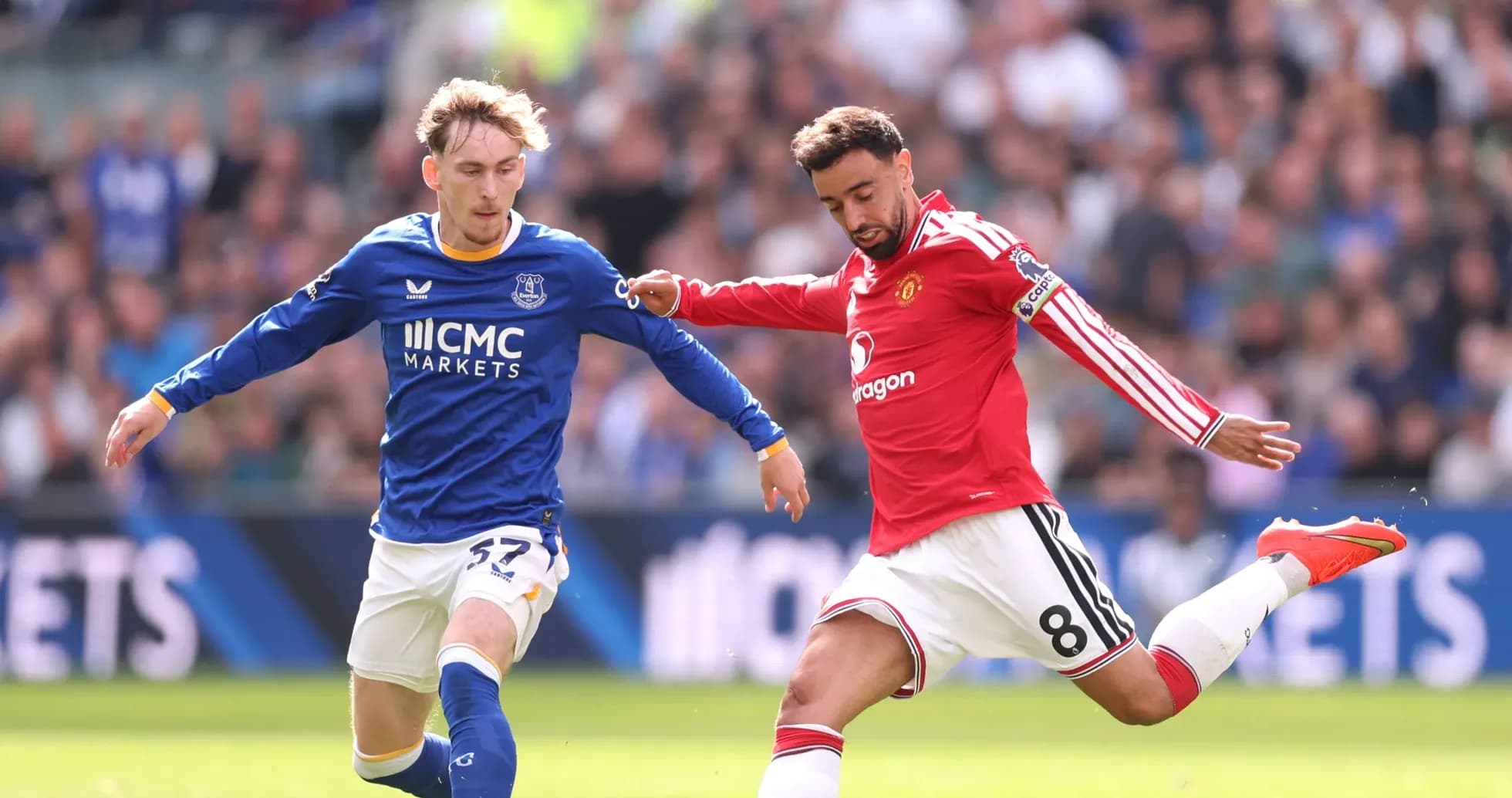
The Hill Dickinson Stadium had the feel of an early‑season measuring ground rather than a simple Round 3 fixture. Everton, newly assertive under Leighton Baines, arrived unbeaten and sitting 8th with 5 points, their overall goal difference a tidy +2 (5 scored, 3 conceded). Manchester United, 11th with 4 points and a +1 goal difference (7 scored, 6 conceded), came in as the more volatile side: explosive at home, uncertain on their travels. A 2–2 draw in regular time felt almost inevitable given the profiles – but how the two squads arrived there reveals a lot about their evolving identities.
Both managers trusted the same structural language: a 4‑2‑3‑1 that has been their go‑to this campaign. For Everton, that shape is already a comfort zone – they have used it in 2 matches so far – and it shows in the balance of their season numbers. At home they average 2.0 goals for and 1.0 against, and overall they sit at 1.7 goals scored and 1.0 conceded per match. The spine of J. Pickford, J. Tarkowski, J. Branthwaite and the double pivot of J. Garner with H. Armstrong underpins a side that has yet to lose in total, with 1 win and 2 draws from 3 fixtures.
United’s 4‑2‑3‑1 under Michael Carrick is more aggressive and risk‑tolerant. In total they have scored 7 and conceded 6 in 3 games, an attacking average of 2.3 goals per match matched by a leaky 2.0 conceded. The choice of S. Lammens behind a back four of D. Dalot, H. Maguire, L. Martinez and L. Shaw, with K. Mainoo and Y. Tielemans as the double pivot, signals a commitment to building through midfield and pushing full‑backs high. That ambition is rewarded at Old Trafford, where they have 5 goals in 1 home match, but away the picture is harsher: on their travels they have 2 goals for and 4 against, with no wins and 1 draw, 1 defeat.
Injury absences subtly reshaped the tactical voids. Everton’s list is short but significant: C. Norgaard was ruled out with injury, depriving Baines of a natural screening midfielder who might otherwise anchor the base of the structure. That placed extra defensive responsibility on Garner and Armstrong, both starters here, and raised the importance of Everton’s centre‑backs holding their line under pressure.
For United, the absentee list is longer and more strategically damaging. C. Baleba (ankle injury), A. Diallo, T. Heaton, M. Ugarte (knee injury) and M. de Ligt were all unavailable. The absence of Ugarte in particular removes a pure ball‑winner from the pivot, forcing Carrick to lean on Mainoo and Tielemans for both progression and protection. Without de Ligt, H. Maguire and L. Martinez carry the burden of aerial dominance and recovery defending, a risky proposition away from home given United’s away record of 4 goals conceded in 2 games.
Discipline and card timing added another layer to the chessboard. Everton’s season yellow‑card profile is unusually even: 20.00% of their yellows come in each of the 0–15, 31–45, 46–60, 61–75 and 91–105 minute windows. That spread suggests a side that sustains intensity but occasionally fouls to break rhythm at any stage rather than spiking in panic late on. Crucially, they have no reds in total, reinforcing an image of controlled aggression.
United, by contrast, cluster their cautions in the game’s decisive phases. In total, 20.00% of their yellows land between 31–45 minutes, another 20.00% between 61–75, a hefty 40.00% from 76–90, and 20.00% in 91–105. That late‑game surge in bookings underlines a pattern: as matches open up and legs tire, United’s defensive structure frays, especially away. It is not yet costing them in red cards – they have none overall – but it hints at vulnerability if opponents can drag them into deep waters.
Within this framework, individual matchups defined the narrative. On United’s side, Bruno Fernandes arrived as one of the league’s standout performers: in total 3 goals, 1 assist, 9 shots (4 on target), 203 passes at 84% accuracy and 8 key passes across 270 minutes, with a 7.88 average rating. Operating as the central playmaker in the 4‑2‑3‑1, his duel with Everton’s central screen – Garner and Armstrong, backed by Tarkowski and Branthwaite – was the “Engine Room” battleground. Fernandes’ ability to drift into half‑spaces behind Everton’s double pivot and between their centre‑backs was always going to test the hosts’ compactness.
Flanking him, B. Mbeumo brought direct running and end‑product from the right. With 2 goals, 7 shots (4 on target) and 5 key passes in total, his one‑v‑one against V. Mykolenko, supported by T. George tracking back, was a classic “Hunter vs Shield” duel. If United could isolate Mbeumo against Everton’s left‑back, they could exploit the Toffees’ high full‑back positioning.
Everton’s own attacking trident of B. Johnson, K. Dewsbury‑Hall and T. George behind T. Barry offered a different threat profile. Johnson, already on the league’s disciplinary radar with 1 yellow and 4 fouls committed in 3 appearances, represents a high‑risk, high‑energy runner from wide areas. His aggression is double‑edged: useful for pressing United’s build‑up through Dalot and Maguire, but liable to draw the referee’s eye, particularly with John Brooks in charge and United’s history of drawing late cards.
Off the bench, H. Hackney loomed as Baines’ tempo‑changer. In total he has 1 assist, 3 key passes and 75 completed passes at 89% accuracy, plus 3 tackles and 2 blocks – the profile of a midfielder who can both tidy possession and add line‑breaking passes. Introduced into a game state where United’s yellow‑card curve spikes from 76–90, Hackney’s ability to keep the ball and find pockets between Mainoo and Tielemans could tilt momentum Everton’s way.
Defensively, both sides carried clear statistical identities into this fixture. Everton’s overall record of 3 goals conceded in 3 matches – 1.0 per game in total, 1.0 at home – speaks to a disciplined back four. They have 1 clean sheet at home and have never failed to score in total, a combination that makes them stubborn and consistently dangerous in front of their own fans. United, by contrast, have yet to keep a clean sheet in total and have already failed to score once away. Their biggest away defeat, 2–0, underlines how quickly their high‑risk approach can unravel when the press is broken.
Overlaying all this with expected‑goals logic, the contours of a 2–2 draw feel statistically coherent. Everton’s home attacking average of 2.0, set against United’s away defensive average of 2.0 conceded, points to the hosts generating enough chances to score twice. United’s total attacking average of 2.3, even moderated by their 1.0 away figure, still suggests they would find routes through a defence that, while solid, is not impermeable.
Following this result, Everton extend an unbeaten start built on structure, balance and a quietly ruthless home attack. Manchester United leave Liverpool with another away draw that encapsulates their season to date: thrilling going forward, fragile without the ball, and reliant on the brilliance of Bruno Fernandes and the wide runners to bail out a defence still searching for control.
Related News

Sunderland vs Arsenal Stats: Head-to-Head Record and Historical Context
Tottenham vs Everton Stats: Head-to-Head Record and Meeting Preview
Manchester City vs Coventry: A Tale of Two Teams
Chelsea vs Hull City Stats: Head-to-head Record Before September 2026 Match
Liverpool vs Fulham Stats: Head-to-head Record Before Match
Nottingham Forest vs Tottenham: Tactical Analysis of Premier League Clash