
Everton's Transfer Window Implodes Amid Fan Revolt
Everton’s transfer window did not simply end badly. It imploded.
What should have been a decisive final 24 hours became a public unravelling that has left supporters in open revolt and owners The Friedkin Group, along with chief executive Angus Kinnear, under the harshest glare of scrutiny.
A window that turned toxic
The mood was already sour. The proposed sale of home-grown forward Harrison Armstrong to Nottingham Forest had lit the fuse days earlier. Armstrong, 19, is regarded by many inside and outside the club as Everton’s brightest academy product since Wayne Rooney. When news of the deal broke, the backlash was instant and ferocious.
Faced with a toxic reaction from the fanbase, Everton’s board blocked the move. One PR disaster swerved. Briefly.
Because deadline day was waiting.
The Balogun farce
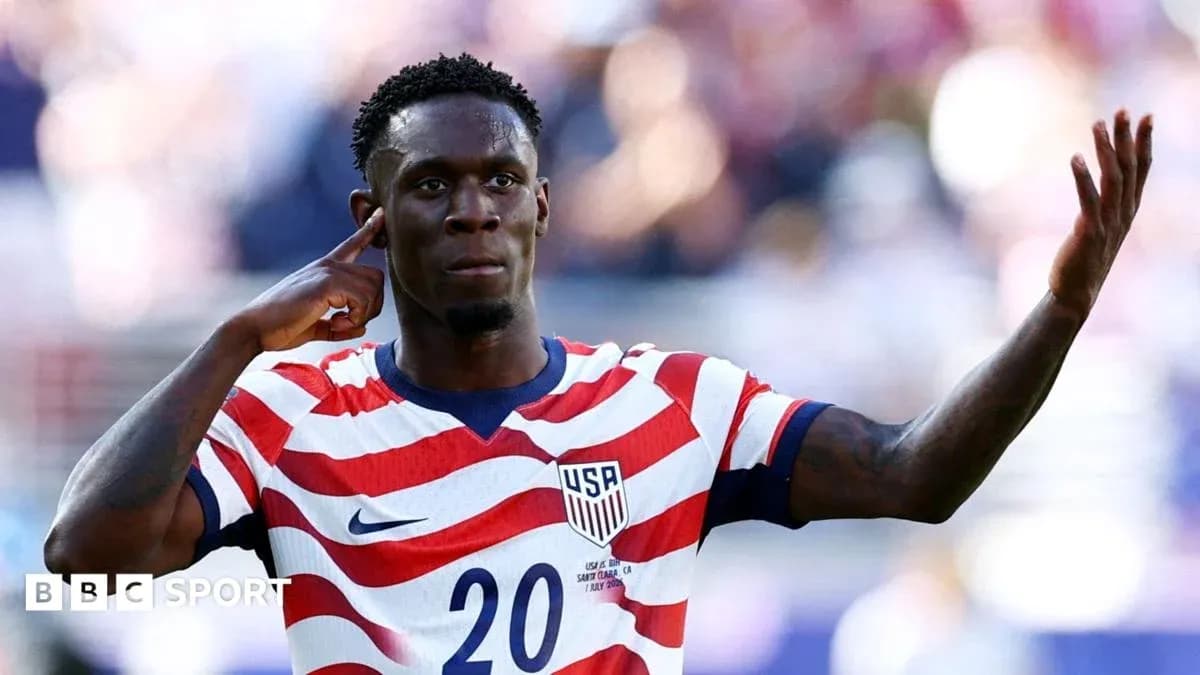
Folarin Balogun was supposed to be the solution. A £40m signing from AS Monaco, a 25-year-old United States striker with pedigree and potential, flying in to give David Moyes the cutting edge he has lacked.
On paper, the deal was done. Both clubs had signed the deal sheet, allowing the transfer to be completed after Tuesday’s 23:00 BST deadline. Balogun had agreed personal terms. Everton had scheduled an 8am flight to bring him to Merseyside.
Then the chaos began.
The flight was delayed. Documents from Monaco arrived later than Everton wanted. When Balogun finally underwent his medical, issues emerged. The deal had to be restructured, shifting to a smaller up-front fee and a series of performance-related payments. His personal terms stayed the same.
As the clock ticked, Everton scrambled. They turned to Joshua Zirkzee at Manchester United, pushing for a loan. The Dutchman was ready to sign. United were not ready to let him go. Attention moved to Aston Villa’s Tammy Abraham. He chose to stay at Villa Park. Time drained away.
Eventually, minutes before the deadline, Everton and Monaco found a compromise on Balogun. The path was clear again.
Then the player walked away.
In the early hours of Wednesday, Balogun left Finch Farm without signing, having suffered a change of heart. Monaco sporting director Thiago Scuro later told journalists the striker was “not comfortable” with how Everton treated him during his medical.
Everton insist they supported Balogun throughout, were transparent about the medical concerns and made clear they were prepared to work with Monaco on a solution that would still see the move go through. None of it mattered. The deal was dead, the optics dreadful.
One striker, and a manager short-changed
The timing made everything look worse.
Earlier in the day, Everton had sanctioned Beto’s £15.5m move to Fiorentina, leaving Moyes’ squad lighter up front even before Balogun’s collapse. At the same time, their most creative player, Iliman Ndiaye, was completing a £65m move to Manchester City.
Everton can argue that Balogun made a personal decision they could not control. Supporters are asking a different question: why did a club with glaring, long-term issues in attack wait until the final day to address them?
Kinnear had gone on BBC Radio Merseyside recently to insist the squad was “in a good place”. He spoke of a clear metric: by the close of the window, Everton would have “the absolute best player” they could get in each position. He also relayed the owners’ verdict that missing out on Europe last season amounted to “failure”.
Moyes admitted he was “surprised” by that public declaration. After this week, the word “failure” is being thrown at the owners and chief executive, not the manager.
The “good place” Kinnear described has left Moyes with one senior striker, the raw Thierno Barry, and only 18 senior outfield players. For a 63-year-old manager who has already hinted at his unease over the club’s transfer business, it is a brutal hand.
Scrambling for solutions
Not everything was botched. Everton did re-sign Jack Grealish on loan and finally addressed a long-standing right-back problem by bringing in Ashley Maitland-Niles from Lyon for £3m.
Even that came with turbulence. A £9.4m deal for Fulham’s Kenny Tete was shelved late on when the London club could not secure a replacement. Maitland-Niles was eventually confirmed just after midnight.
The squad now has one recognised right-back in Maitland-Niles and one left-back in Vitaliy Mykolenko, after youngster Adam Aznou was allowed to join Malaga on loan. One striker. One right-back. One left-back. And a season stretching out in front of them.
The club did add PFA Championship Player of the Year Hayden Hackney from Middlesbrough, a move that underlines some ambition in midfield. Christian Norgaard arrived from Arsenal to replace Idrissa Gueye, but the 32-year-old Dane is injured with no return date. Young German Merlin Rohl signed, while Tyrique George’s loan became permanent. Brennan Johnson came in from Crystal Palace in a straight swap for Dwight McNeil.
On paper, those are sensible additions. In reality, they have all been drowned out by the noise of deadline day.
Fans turn on the hierarchy
The mood outside the club is unforgiving.
Moyes, speaking after the Carabao Cup second-round win at Preston North End, had already sounded the alarm. “I still think we have got a lot of work to do. We need more players. Our squad is not big enough and we need to get more quality in some areas if we can do.”
His words now hang over the club like a warning unheeded.
Supporters’ groups have moved quickly. A petition calling for Kinnear’s resignation has been launched. “The Everton Fans’ Forum” issued a lengthy statement accusing the club of leaving the squad “dangerously short” in key positions.
Their message was stark: this is not about reckless spending or demanding marquee names. It is about “competence, preparation and accountability”.
“The 1878s”, the volunteer group behind the huge flags, banners and tifos that have helped transform atmospheres at the new Hill Dickinson Stadium, have taken an even more symbolic step. The group announced it is “standing down for the foreseeable future” in protest at how the window has been handled.
They made clear they are bound by rules on wording and imagery for flags, unable to display the anger many fans feel. If they could, they said, they would fill the ground with messages of “discontent, disappointment and anger”. Instead, they will withdraw their colour and noise.
For a club that has leaned heavily on its supporters’ passion to mask on-field and off-field failings, that is a serious rupture.
A credibility gap
Everton have yet to issue any public statement on the Balogun collapse, the Armstrong U-turn or the fury now directed at TFG and Kinnear. Silence, in this context, is not neutral. It is accusatory.
The club have emerged from this window weaker than when it opened, both on the pitch and in the court of public opinion. They avoided one PR catastrophe by keeping Armstrong, only to stumble straight into another, more damaging one with Balogun and the broader failure to reinforce.
Moyes is left to navigate a Premier League season with a thin squad, one orthodox striker and a fanbase that no longer trusts the people running their club.
The fences that need mending are not small. The question now is not just whether Everton can fix their squad in January. It is whether their owners and executives can repair a relationship with supporters that, after this shambolic window, looks close to breaking.
Related News
Transfer Deadline Day: Balogun, Camara and Arsenal's Rivals
Everton's Transfer Window Implodes Amid Fan Revolt
Bournemouth's Transfer Window Review: A Solid 7 Out of 10
Manchester United's Left-Back Dilemma: The Gamble of 2023
Piero Ausilio Set to Leave Inter Milan After 28 Years
Manchester United Target Cole Palmer Amid Chelsea's Future Plans