
FC ST. Gallen's Tactical Masterclass Against Benfica
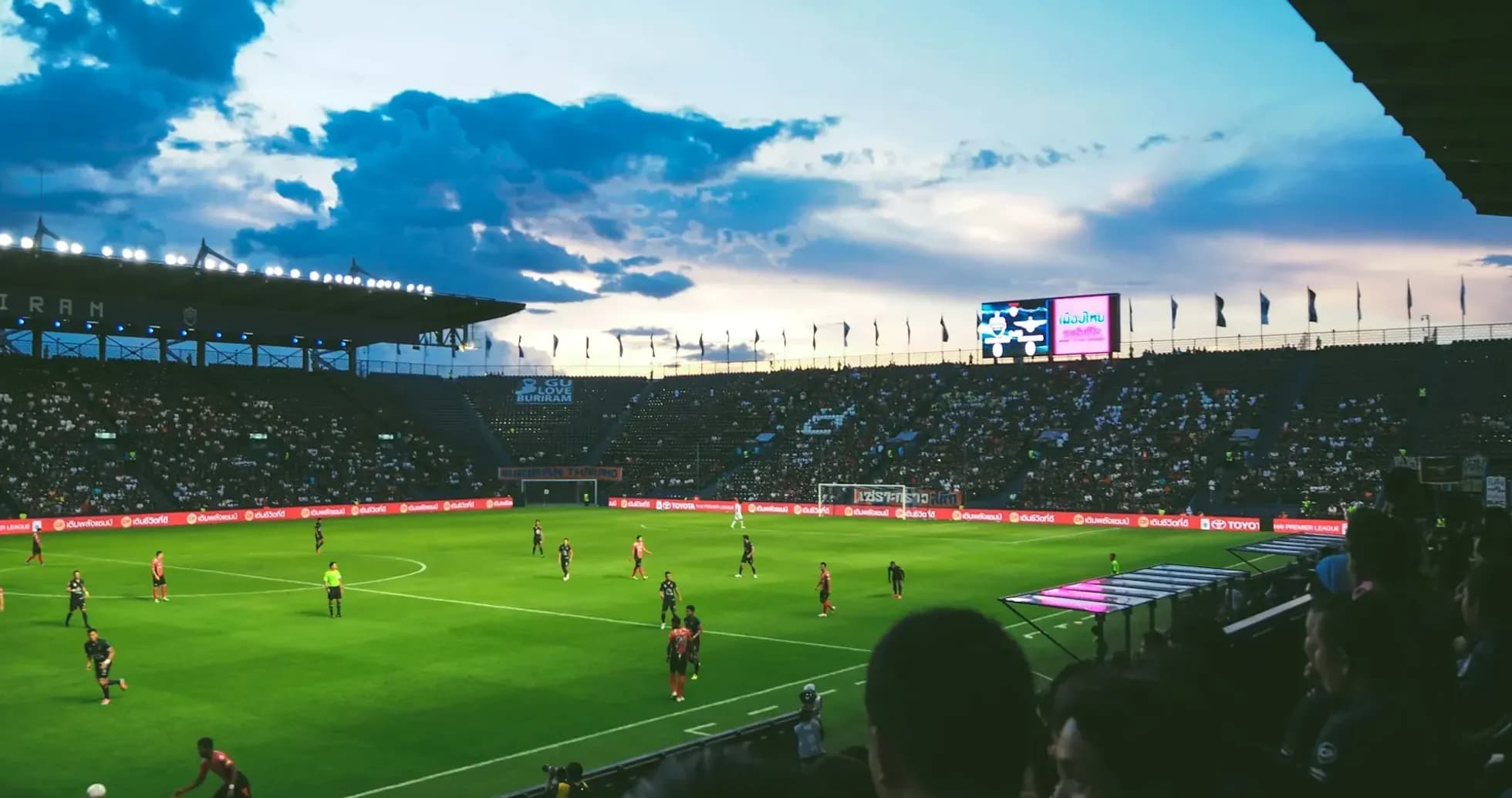
FC ST. Gallen’s 2-1 win over Benfica at Kybunpark was a classic example of an underdog using structure, intensity and directness to overturn a possession deficit. In the 2nd Qualifying Round of the UEFA Europa League, Enrico Maassen’s 3-5-2 absorbed long spells without the ball (38% possession) yet consistently generated higher-quality territory and chances, particularly inside the box, where the hosts produced 14 efforts to Benfica’s 10.
Team Structure
Structurally, FC ST. Gallen’s 3-5-2 was built on an asymmetric back three and aggressive wing activity. T. Gaal operated as the right-sided defender but with license to step out and attack the far post, which became decisive with his 80th-minute winner. J. Stanic anchored centrally, with C. Okoroji nominally on the left but often stepping into midfield, helping compress space against Benfica’s double pivot of Manu and J. Kaminski. The wing and half-space band of H. Vandermersch, Lukas Görtler, L. Daschner, C. Boukhalfa and M. Stevanovic created a dense five-man screen that narrowed central lanes into Rafa Silva and G. Sudakov.
Defensive Strategy
Out of possession, FC ST. Gallen accepted Benfica’s 62% of the ball but controlled where that possession occurred. The hosts committed 15 Fouls and took 13 Free Kicks, reflecting a deliberate stop-start rhythm: break up Benfica’s tempo, reset the block, then spring forward. Their three Yellow Cards all came for “Foul”, underlining a tactical edge to the aggression rather than emotional loss of control. The back three defended the box compactly, forcing Benfica to circulate in front rather than play through.
Transition Play
In transition, the home side were markedly more vertical. With 17 Total Shots to Benfica’s 14 and 14 of those from inside the box, FC ST. Gallen consistently turned regains into penetration. A. Balde stretched the last line, while C. Witzig and Stevanovic attacked channels and second balls. Daschner’s role was pivotal: operating between Benfica’s midfield and defence, he linked first passes out of pressure and provided the assist for Gaal’s late goal, illustrating the value of a true connective 10 in a 3-5-2.
Benfica's Approach
Benfica’s 4-2-3-1 under Marco Silva was possession-dominant but often sterile. The back four of A. Bah, A. Silva, C. Lenglet and S. Dahl enjoyed long passing sequences, contributing to 479 Total passes with 394 accurate (82.3%). Yet much of this circulation was in deeper zones, as FC ST. Gallen’s midfield five narrowed to deny vertical access. Manu and Kaminski recycled the ball reliably but rarely broke lines decisively; their task became one of control rather than incision.
Offensive Play
Higher up, the 3-2-1 band of Rafa Silva, Sudakov, M. Figueiredo and V. Pavlidis had to operate in tight pockets. Rafa Silva still found a way to score, combining with Pavlidis, but overall Benfica’s 10 Shots inside the box and 4 Shots outside it did not translate into sustained pressure. Four Blocked Shots for Benfica show FC ST. Gallen’s back line and midfielders were consistently in position to contest efforts, often getting bodies in front rather than allowing clear looks at goal.
Set-Play Profiles
Both teams’ set-play profiles added a further tactical layer. FC ST. Gallen earned 6 Corner Kicks to Benfica’s 5, again punching above their possession share. The hosts’ ability to push centre-backs forward on dead balls, especially Gaal, gave them an aerial and second-ball threat that Benfica struggled to clear convincingly. Conversely, Benfica’s 15 Free Kicks to FC ST. Gallen’s 13 Free Kicks for themselves reflected a game where the Portuguese side were often fouled as they tried to accelerate through midfield, but without converting those restarts into decisive chances.
Goalkeeping Performances
In goal, L. Ati Zigi (FC ST. Gallen) was protected by the compactness in front of him, facing 4 Shots on Goal and making 3 Goalkeeper Saves. His interventions were efficient rather than spectacular, but the numbers highlight how rarely Benfica were allowed truly clean looks: when they did break through, he responded. At the other end, A. Trubin (Benfica) dealt with 6 Shots on Goal, making 4 Goalkeeper Saves. That volume of on-target efforts, compared to Benfica’s, underscores FC ST. Gallen’s superior shot quality and their ability to generate clear-cut situations despite less of the ball.
Substitution Patterns
The substitution patterns further reveal the tactical story. Around the 66th minute, Benfica introduced T. Gouveia (IN) for J. Kaminski (OUT) and E. Barrenechea (IN) for M. Figueiredo (OUT), seeking more dynamism and directness in the final third. However, this also slightly loosened their central control, creating the conditions for FC ST. Gallen’s transitions to become more dangerous. Maassen’s triple change on 72 minutes — A. Hunziker (IN) for C. Witzig (OUT), L. Frokaj (IN) for C. Boukhalfa (OUT), and D. Besio (IN) for A. Balde (OUT) — refreshed the front line while preserving the structural integrity of the 3-5-2. Fresh legs up front maintained pressing intensity and kept Benfica’s back line from committing fully to the attack.
Discipline and Tactical Edge
Discipline was another subtle hinge. FC ST. Gallen’s three Yellow Cards (all “Foul”) contrasted with just one for Benfica (Vangelis Pavlidis, also “Foul”). The home side walked a fine line between disruption and risk, but the absence of any Red Cards for either team meant their aggressive strategy never collapsed into numerical inferiority. The late Yellow Card for Tom Gaal at 90+4’ epitomised this: a defender stepping out to kill a late Benfica surge, accepting a booking to protect the lead.
Statistical Overview
Statistically, Benfica’s 62% Ball Possession and higher passing volume suggest control, yet FC ST. Gallen’s 17 Total Shots, 6 Shots on Goal and 3 Blocked Shots tell a different story: the Swiss side turned their limited spells into repeated penalty-area entries. Benfica’s 14 Total Shots and 4 Shots on Goal, while respectable, were more easily managed by a well-organised low-to-mid block. Corner and foul counts — 6-5 in corners and 15-13 in Fouls — confirm a finely balanced contest in terms of territory, but one where FC ST. Gallen were more ruthless in exploiting key moments.
Tactical Conclusion
Tactically, this match underlined the effectiveness of a compact 3-5-2 against a possession-heavy 4-2-3-1: concede non-threatening possession, dominate the box, and maximise transitions. FC ST. Gallen executed that plan with clarity, and the numbers from Kybunpark support the scoreboard.
Related News
AC Milan vs Benfica: A Clash of Two Philosophies in UEFA Europa League
Five Standout Europa League Players to Watch in 2026/27

AC Milan vs Benfica Europa League Clash: Team Updates, Lineups & Broadcast Info
Omonia Nicosia vs Benfica Predicted Lineups: Team News for UEFA Europa League
Red Bull Salzburg vs Ararat-Armenia Predicted Lineups and Team News
Celje vs Red Bull Salzburg Predicted Lineups and Team News