
Fenerbahçe vs AS Roma: Tactical Analysis of UEFA Champions League Opener
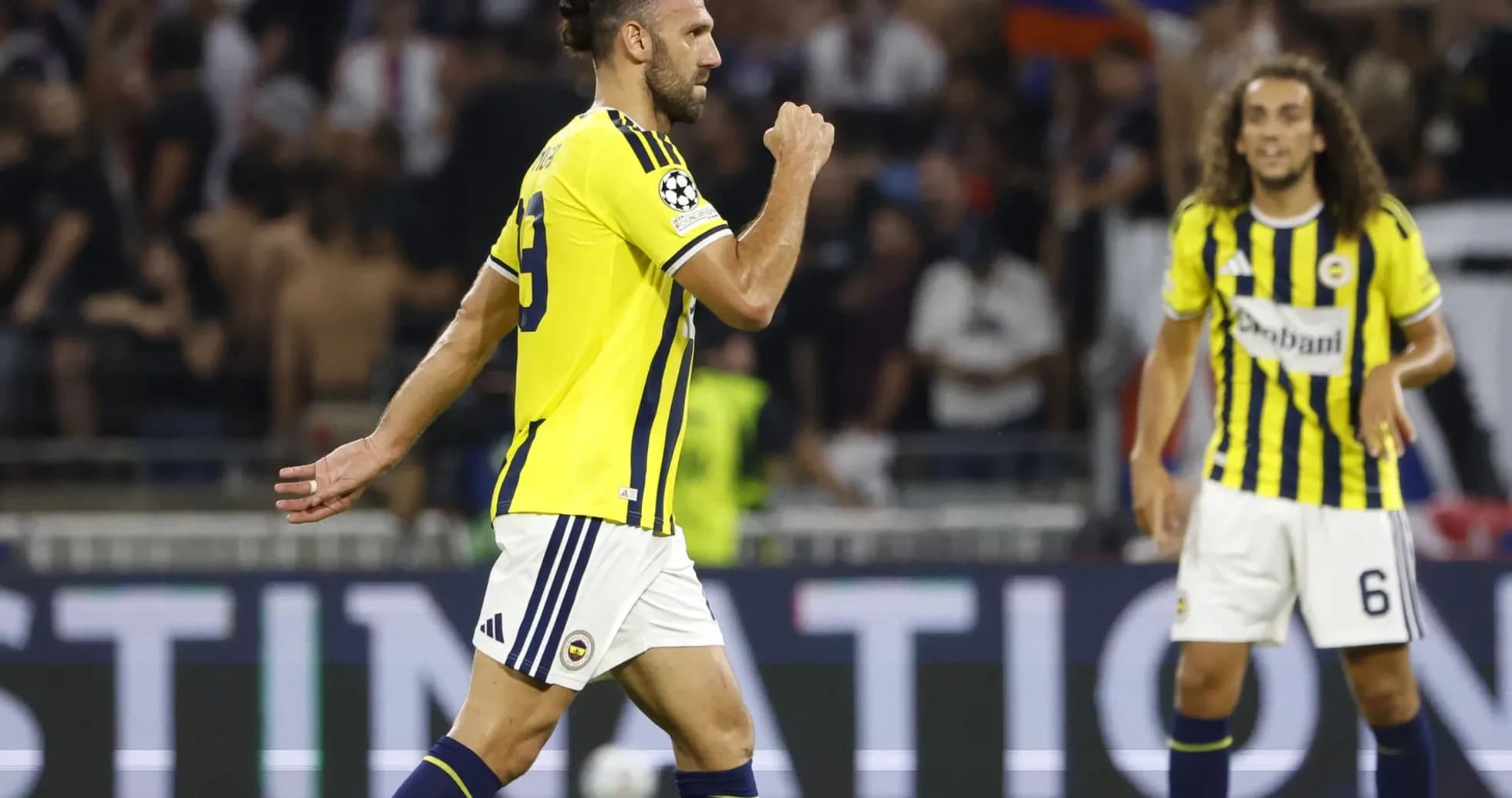
Under the lights of Chobani Stadium Fenerbahce Sukru Saracoglu, this League Stage opener in the UEFA Champions League brought together two sides at very different stages of their European story. Fenerbahçe arrived with a six‑game unbeaten run in the competition this season already behind them, while AS Roma stepped into their first continental minutes of the campaign. The 1–1 draw that followed felt less like a stalemate and more like a tactical statement from both dugouts.
I. The Big Picture – Two Structures, One Narrative
İ. Kartal set Fenerbahçe up in a 4‑3‑3 that was notably different from their usual 4‑2‑3‑1 seen overall this campaign. The shift from a double pivot to a three‑man midfield looked designed to control Roma’s half‑spaces and to protect against transitions.
Ederson anchored the back, shielded by a back four of M. Müldür, M. Škriniar, N. Aké and A. Brown. Ahead of them, N. Kanté was the fulcrum at the base of midfield, with İ. Yüksek and B. Elmaz as shuttlers tasked with stretching Roma’s compact block. The front three of M. Greenwood, V. Muriqi and K. Aktürkoğlu gave Fenerbahçe width and verticality, a natural extension of a side that, heading into this game, had scored 8 goals in total in this Champions League run, split evenly between home and away (4 at home, 4 on their travels), at an overall rate of 1.3 goals per match.
On their travels, Roma lined up in a 3‑4‑2‑1 under G. Gasperini, a shape that underlined their intent: three centre‑backs (G. Mancini, E. Ndicka, Hermoso) to deal with Fenerbahçe’s front line, a four‑man band across midfield with D. Rensch and Wesley as wing‑backs, B. Cristante and M. Koné inside, and a creative double‑ten pairing of P. Dybala and M. Soulé behind lone forward D. Malen. With no prior Champions League matches played this season, Roma came in as a tactical unknown in statistical terms, but their structure screamed control and counter.
In the standings, Fenerbahçe’s previous work gave them a platform: 6 matches played overall, 4 wins, 2 draws, 0 defeats, with 8 goals for and 3 against, an overall goal difference of +5. At home they had 3 matches played, 2 wins and 1 draw, scoring 4 and conceding 1. Roma, by contrast, were starting from zero across all columns.
II. Tactical Voids – The Missing Pieces
Both sides were shaped as much by who was absent as by who started.
Fenerbahçe were without M. Asensio (muscle injury), a natural half‑space playmaker whose absence helped explain Kartal’s more workmanlike midfield trio. The suspension of M. Guendouzi after a red card removed another high‑intensity option between the lines, while J. Oosterwolde’s Achilles tendon injury and Rodrigo Becao being off the roster reduced depth and flexibility in the back line. A. Diouf and A. Fall, also off the roster, plus M. Yandas, further thinned the rotation.
Roma travelled without M. Bah (knee injury), an energetic option for the wide lanes, and, crucially, L. Pellegrini, whose thigh injury deprived Gasperini of his most natural conductor between midfield and attack. That absence elevated the creative burden on Dybala and Soulé and forced Cristante and Koné into dual roles: screeners and first passers.
Disciplinary data added another layer. Fenerbahçe’s yellow card profile this season shows a pronounced late‑game spike: 30.77% of their yellows in the 31–45 minute window, another 30.77% between 76–90, and a striking 38.46% from 91–105. That tendency to collect cards late suggested emotional, high‑tempo finishes, something Roma’s game plan could exploit by drawing fouls in advanced areas as Fenerbahçe tired or chased.
III. Key Matchups – Hunter vs Shield, Engine Room vs Engine Room
The most intriguing “Hunter vs Shield” duel revolved around Fenerbahçe’s attacking core against Roma’s three‑man defence. Even though top scorer Talisca did not feature in this particular fixture, his season numbers framed the threat level of Kartal’s forward line: 4 goals in total from 6 appearances, with 23 shots and 13 on target, plus 2 penalties scored from 2 taken. That clinical edge set the tone for how Roma had to respect Fenerbahçe’s attacking patterns.
In this match, the live hunter’s mantle passed to M. Greenwood and K. Aktürkoğlu. Greenwood entered the game with 2 goals and 1 assist in total, 8 shots and 5 on target, and a passing accuracy of 83%. He is both finisher and connector, the type to drop into the right half‑space to link with İ. Yüksek before bursting beyond the last line. Aktürkoğlu, with 2 assists in total and 12 key passes, is Fenerbahçe’s most reliable supply line, constantly driving inside from the left to overload central pockets.
Opposite them, Mancini, Ndicka and Hermoso formed Roma’s shield. The three‑centre‑back setup was designed to always have one spare defender against Fenerbahçe’s front three, allowing the wing‑backs to step aggressively onto Aktürkoğlu and Greenwood without leaving Malen isolated up front. The duel along Fenerbahçe’s right – Greenwood and Müldür versus Hermoso and Wesley – was a recurring tactical hinge: if Fenerbahçe could pin Wesley deep, Roma’s transitions would be blunted.
In the “Engine Room” battle, N. Kanté’s role was decisive. Tasked with screening in front of Škriniar and Aké, he had to manage both Dybala’s drifting into the right half‑space and Soulé’s movement between the lines. Cristante and Koné mirrored that task on the other side, trying to suffocate Yüksek and Elmaz before they could feed Muriqi or switch play to Aktürkoğlu.
Without Pellegrini, Dybala became Roma’s primary creative outlet. His starting position as a nominal midfielder in the 3‑4‑2‑1 was deceptive; he repeatedly sought pockets behind Kanté, looking to drag Fenerbahçe’s shape out of symmetry. The battle between Dybala’s timing and Kanté’s reading of space was the cerebral axis of the evening.
IV. Statistical Prognosis – What the Numbers Whisper
Even though this fixture ended 1–1, the broader statistical context hints at how this matchup is likely to evolve over the League Stage.
Heading into this game, Fenerbahçe’s overall attacking output – 1.3 goals per match in total, with the same 1.3 at home – combined with a defensive record of only 3 goals conceded overall (1 at home, 2 on their travels) at an overall rate of 0.5 goals against per match, paints the picture of a side that controls matches through structure and efficiency rather than chaos. Their 3 clean sheets overall, including 2 at home, underline a defensive solidity that should remain a foundation in future meetings.
Roma’s statistical slate was blank before kick‑off, but the tactical discipline of their 3‑4‑2‑1 and the quality of their central spine suggest that their defensive numbers will likely be competitive once the sample grows. With no penalties taken or missed in total so far, there is no spot‑kick narrative to lean on; instead, their fate in tight games like this will hinge on how effectively Malen, Dybala and Soulé can convert limited chances against well‑drilled blocks like Fenerbahçe’s.
For Fenerbahçe, the late‑card profile is both a warning and an opportunity. Their tendency to accumulate bookings after 76 minutes and into added time could invite pressure in future high‑stakes phases, particularly against a Roma side adept at drawing contact around the box. Yet their perfect record from the spot overall – 2 penalties taken, 2 scored, 0 missed – means that any penalty‑area incursion carries disproportionate value.
Taken together, the numbers and structures suggest that future chapters of Fenerbahçe vs Roma in this League Stage will be defined by fine margins: the timing of Aktürkoğlu’s runs, the precision of Dybala’s final ball, and whether Kanté or Cristante can keep their lines intact as the match stretches into those emotionally charged final minutes where Fenerbahçe so often walk the disciplinary tightrope.
Related News

Bayern München vs Bodo/Glimt: Champions League Clash in Munich

Complete UEFA Champions League Winners History

UEFA Champions League 2026-27: Complete Fixtures, Dates, and Match Times
Kylian Mbappe Matches Raul’s Champions League Goal Record in Real Madrid Win Over Inter
Serhou Guirassy Surpasses Lewandowski with Key Goals in Borussia Dortmund's Champions League Win
Marquinhos Signals Tough Standards as Luis Enrique Prepares PSG for Champions League Clash