
Ferencvarosi TC's Tactical Mastery Against Gornik Zabrze
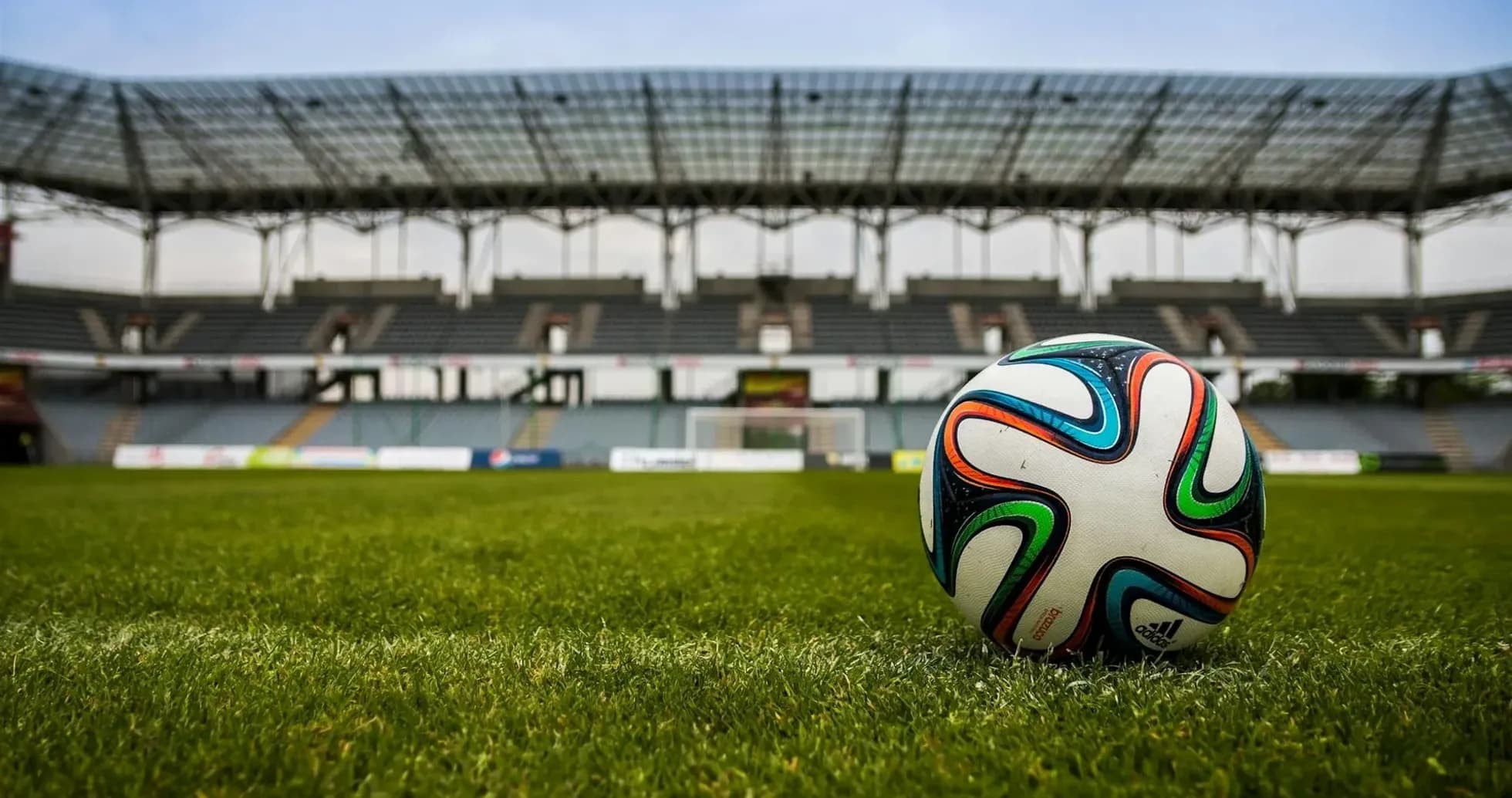
Ferencvarosi TC’s 1-0 win over Gornik Zabrze at Groupama Aréna was a textbook example of how to control territory and rhythm without statistical dominance in possession. Both sides were officially recorded with 0% ball possession, so the usual territorial lens is unavailable, but the shot and set‑piece profile paints a clear tactical story: Ferencvaros built a higher-quality attacking structure, while Gornik leaned on width and restarts without ever truly stretching the home block.
Ferencvarosi TC set up in a 4-3-3 under Balazs Borbely, but the personnel and grids suggest a fluid, midfield-heavy shape. With D. Dibusz in goal, the back line of M. Gomez and T. Raemaekers centrally, flanked by Cadu and A. Osvath, formed a narrow, compact base. In front, a dense midfield band of M. Corbu, G. Kanichowsky and J. Levi supported advanced midfield runner K. Zachariassen and the front pair of L. Joseph and Dele. On the ball, this allowed Ferencvaros to create a 2-3-5 or 3-2-5 structure, with full-backs and interior midfielders stepping into half-spaces and the front line occupying all five vertical lanes.
The attacking numbers underline that structure: 4 shots on goal, 5 off goal and 6 blocked shots. Even without a total shot count, Ferencvaros clearly generated volume and sustained pressure around the box. The six blocked efforts indicate that many attacks were carried into congested central zones, forcing Gornik’s defenders to defend deep and often inside their own penalty area. Corner Kicks were limited (2), which suggests Ferencvaros were able to create chances from open play combinations rather than relying on repeated set-piece recycling.
The decisive moment came on 65 minutes, when M. Corbu scored the only goal, assisted by Cadu. Tactically, this is consistent with the pattern of the match: a wide defender or wide midfielder (Cadu) stepping high to deliver the final action, and an advanced midfielder (Corbu) arriving in a scoring position rather than a pure centre-forward finishing move. It reflects Ferencvaros’ use of third-man runs and midfield overloads to break Gornik’s lines, rather than simple crosses to a static No. 9.
Out of possession, Ferencvaros’ foul count (12) points to a proactive counter-press and a willingness to stop transitions early. With no yellow or red cards, these interventions were controlled rather than reckless. The 4-3-3 shape, with multiple natural midfielders, allowed Borbely’s side to swarm the ball-carrier quickly after turnovers, particularly against Gornik’s central trio.
Gornik Zabrze's Formation
Gornik Zabrze also lined up nominally in a 4-3-3 under Michal Gasparik, but their attacking pattern was more fragmented. P. Schulze started in goal behind a back four of M. Sacek, R. Janicki, Josema and E. Janza. The midfield triangle of L. Sadilek, M. Dietz and K. Urbanski supported a front line of Y. Ikia Dimi, E. Prekop and T. Ismaheel. Despite this attacking 4-3-3, Gornik produced only 1 shot on goal and 6 off goal, plus 4 blocked shots. The volume is reasonable, but the lack of accuracy underlines how effectively Ferencvaros forced them into low‑percentage efforts from wider or deeper zones.
Gornik’s 5 Corner Kicks to Ferencvaros’ 2 suggest a plan to use wide areas and crosses to threaten. However, the shot-on-goal count shows they rarely converted these territorial moments into clear chances. The single yellow card for Josema at 10 minutes hints at early strain on the defensive line, possibly from Ferencvaros targeting the left side and forcing last-ditch interventions.
Tactical Adjustments
The substitution pattern from 62 minutes onward reveals both coaches’ tactical adjustments. At 62', S. Liseth (IN) came on for E. Prekop (OUT), and M. Khlan (IN) came on for Y. Ikia Dimi (OUT) for Gornik. This double change in the front line indicates Gasparik’s attempt to refresh the attack, perhaps to add more mobility and pressing intensity. Later, at 80', Peter Federico (IN) came on for T. Ismaheel (OUT), completing a full turnover of the original front three. Gornik thus ended with an entirely new attacking trio, underlining their struggle to find the right connections in the final third.
Ferencvaros, having taken the lead, used substitutions primarily to manage energy and reinforce control. At 70', C. O'Dowda (IN) came on for Dele (OUT), and at 71' D. Arzani (IN) replaced J. Levi (OUT). These changes refreshed the wide and central creative roles, keeping the pressing and ball circulation sharp in midfield and the half-spaces. At 83', A. Nagy (IN) came on for G. Kanichowsky (OUT), a move that further stabilized central zones and game management.
The late double substitution at 90+1' — K. Kodro (IN) for L. Joseph (OUT) and A. Cirkovic (IN) for Cadu (OUT) — was clearly about protecting the lead. Kodro’s introduction for Joseph added fresh legs to press and contest long balls, while replacing Cadu with Cirkovic on the flank ensured defensive security against any last Gornik surge. On the Gornik side, the 85' change of B. Donio (IN) for M. Dietz (OUT) pointed to a late attempt to add more verticality or directness from midfield, but by then Ferencvaros had already tightened their block.
Discipline and Tactical Balance
Discipline-wise, the contrast is clear: Ferencvaros committed 12 Fouls but received no cards, reflecting controlled aggression and good spacing behind the ball. Gornik committed fewer Fouls (9) but did collect the game’s only booking, Josema’s Yellow Card at 10', which likely influenced his defensive behaviour for the remainder of the match and may have constrained Gornik’s ability to defend high and aggressively on that side.
Even without recorded xG or passing data, the shot profile and event sequence are enough to define the tactical balance. Ferencvaros built a multi-layered, midfield-centric 4-3-3 that generated consistent pressure, numerous blocked efforts and the game’s only clinical finish through an advanced midfielder. Gornik’s 4-3-3 never fully connected its lines: the frequent refresh of the front three, the reliance on corners, and the lack of shots on goal all point to a side more dangerous in appearance than in actual penetration. In a tight Europa League 3rd Qualifying Round tie, Ferencvaros’ structural coherence and game management after 65' were the decisive tactical edges.
Related News
Ferencvarosi TC Secures Narrow 1-0 Victory Over Gornik Zabrze

Jagiellonia vs Rangers Prediction: Key Stats and Betting Tips
Benfica vs Heart Of Midlothian Prediction: Key Stats and Betting Tips

PAOK vs Anderlecht Prediction: Key Stats and Betting Tips
Larne vs Saburtalo Prediction: Key Stats and Betting Tips

FC Thun vs Vikingur Reykjavik Prediction: Key Stats and Betting Tips