
FIFA's Punishment of Argentina: Is It Too Lenient?
The confetti has long been swept away from Spain’s World Cup triumph, but the fallout from that ill-tempered final against Argentina is only just landing. And Henry Winter does not like the balance of the punishment.
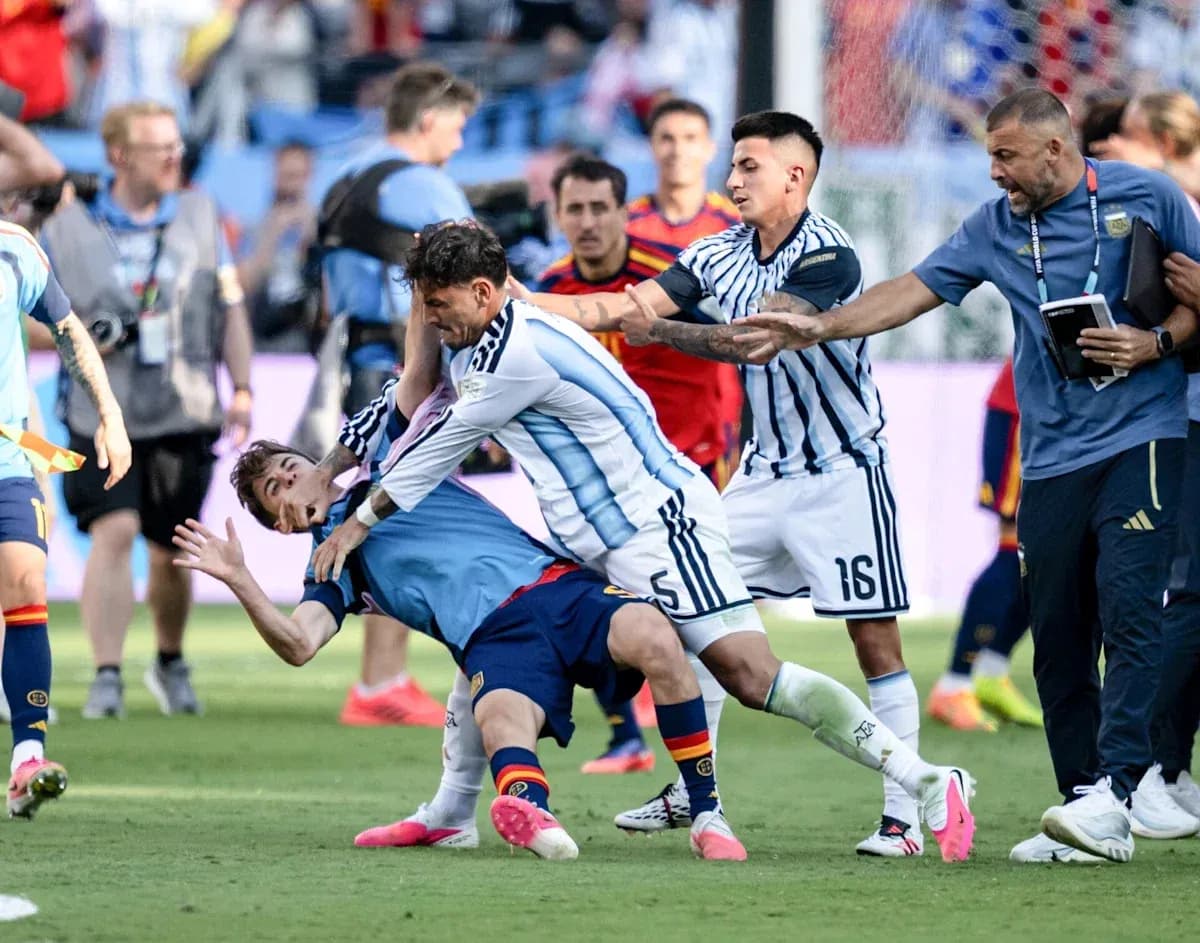
More than a month after Spain’s 1-0 extra-time win, FIFA finally delivered its verdict. The harshest blow fell not on the federation, but on Leandro Paredes.
Ten games.
$90,000.
That is the price Paredes will pay for his role in the chaos. Nahuel Molina is not far behind: seven-match international ban, the same $90,000 fine.
For Winter, that contrast is the story.
On X, he summed up the mood: this is exactly what many expected from FIFA – “relative leniency” for the Argentine Football Association, and “chunky bans” for what he called “scrap-happy individual players.”
The numbers back up his argument.
The AFA has been fined $321,000 for a string of disciplinary breaches. The charge sheet is long: the Falkland Islands banner displayed after the semi-final win over England, team misconduct, and discriminatory chants and gestures from sections of the support.
There are sporting sanctions too. Argentina must play their next two home games at 50% capacity, though one of those restrictions is suspended. Of the $321,000 fine, $100,000 is also suspended, dependent on a probationary period.
This is where Winter sees the imbalance. Argentina’s World Cup run reportedly brought in around $33 million. Set against that windfall, $321,000 barely registers. It is a slap on the wrist, not a body blow.
Individual figures, by contrast, feel the full weight. Thiago Almada gets a one-match ban. Roberto Ayala is out for three. On the Spanish side, Gavi also receives a one-game suspension.
But Paredes has become the symbol of the crackdown and he is furious. He insists FIFA ignored the provocation and focused solely on his response.
“I get 10 games ban and $90,000 after I defended myself,” he said, arguing that the governing body had no interest in what was said to him, only in how he reacted.
He pushed the point further: if the situation were reversed, he claimed, the narrative would be that FIFA was protecting Argentina. Instead, he sees silence.
The AFA is not taking the decision as final either. It intends to demand the full written grounds, then appeal to FIFA’s Appeals Committee. If that fails, the case could go to the Court of Arbitration for Sport.
For now, the sanctions stand. Yet the argument that Winter has pushed into the spotlight is not about whether Argentina should be punished, but about scale.
Is a $321,000 fine any kind of real deterrent for a federation that banked roughly $33 million from the same tournament?
Related News

Barcelona’s Squad Numbers Confirmed for New Season

Coventry City Returns to Premier League After 25 Years

Manchester United’s Left-Back Hunt and Liverpool’s Striker Puzzle
FIFA's Punishment of Argentina: Is It Too Lenient?

Curtis Jones Joins Inter Milan for £30m as Liverpool Era Ends
Arsenal's Title Defence Starts Strong with 3-0 Victory