
Folarin Balogun's Transfer Saga: Everton's Last-Minute Drama
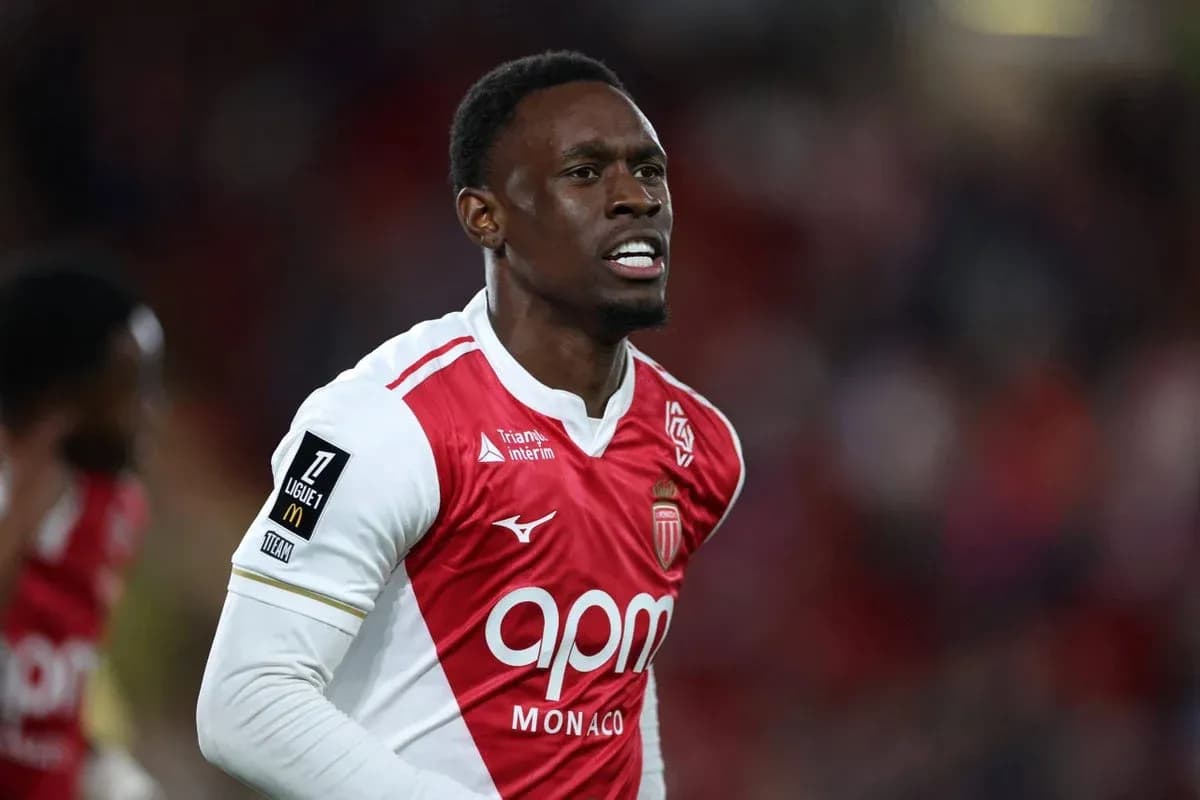
When Folarin Balogun stepped off a private jet at Liverpool John Lennon Airport on Tuesday lunchtime, Everton thought the hard part was over.
They had the agreement. They had the green light from Monaco. They finally had the striker they had chased all summer.
A €45million deal was in place, with a further €5m in add-ons. Beto was already on his way to Fiorentina for €18m. The squad and the budget had been reshaped around Balogun’s arrival.
By the end of the night, nobody had what they wanted.
Optimism at Finch Farm
Everton’s Finch Farm training ground crackled with rare deadline-day optimism on Tuesday.
Balogun, Ainsley Maitland-Niles from Lyon and Jack Grealish returning on loan from Manchester City all went through their medicals on site. For a club that has spent the summer scratching around for solutions, this felt like a statement.
Balogun was the jewel. He had been at the top of Everton’s list for weeks, his World Cup form – three goals in four games for the United States – pushing him into a bracket they assumed was beyond them. Only in the final days of the window did Monaco’s openness to a sale make the move realistic.
Had he signed, Balogun would have joined Jordan Pickford, Jarrad Branthwaite and Kiernan Dewsbury-Hall among the club’s top earners. He was being brought in as a centrepiece, not a gamble.
Monaco were ready to let him go. After three seasons in the principality, including a 19-goal campaign last term with a blistering run of 10 in 10, the French club saw this summer as his step up.
“We had already worked in advance to replace him, and we were fully ready to do this,” Monaco CEO Thiago Scuro said on Wednesday.
They had planned the exit. They had planned the rebuild. Then the clock and the medicals started to bite.
The first warning signs
Balogun’s flight from Nice was supposed to leave early on Tuesday morning. It didn’t. Departure was pushed back, and he only landed at lunchtime.
Everton, like many clubs now, asked for GPS data to check the player’s physical status. What they saw concerned them. By early evening, that concern had hardened into something more serious.
Around 7pm, Scuro’s phone rang.
“Around 7pm we were contacted by Everton, raising questions on the medical of Balogun, which for our medical staff, and for the personal medical staff of the player, made totally no sense,” he said. “The explanations were not enough to justify or bring concerns of the future of the player, which there is not.”
Everton’s doubts did not just threaten one deal. They blew open the door to another.
Chelsea smell an opening
Monaco’s stance for most of the window had been clear: Balogun could go, Lamine Camara could not.
Chelsea had been in touch for 10 days about the 22-year-old Senegal midfielder, but Monaco wanted to keep him another season. Camara was non-negotiable.
Then Everton wavered.
“And then of course, Chelsea saw the opportunity,” Scuro said. With Enzo Fernandez on his way to Manchester City, Chelsea needed a midfielder. “Balogun is struggling there. Let’s go. Let’s try.”
By 8pm, Monaco and Chelsea were in full negotiations over Camara. Just over an hour later, the clubs had a deal: €55m, a six-year contract for the player with an option for another 12 months, and a completed medical. Camara, by then, was all-in on Chelsea.
Monaco, suddenly, were selling the player they had wanted to keep to protect the sale of the one they were ready to lose.
Everton scramble, United and Villa say no
While Monaco and Chelsea pivoted to Camara, Everton were left trying to patch up their attack.
With Balogun in doubt, they sounded out Joshua Zirkzee at Manchester United and Tammy Abraham at Aston Villa. Zirkzee had even played in an Everton youth tournament during a trial as a youngster; there was at least some history there.
Initial contact over Zirkzee came at 5pm. A first offer went in at 8pm. United turned it down. They felt they had no time to find a replacement.
Abraham, meanwhile, wanted to stay at Villa.
The market was closing, the options were shrinking, and the original plan was still hanging by a thread.
A deal revived… then destroyed
Then came the twist.
Everton and Monaco reworked the Balogun agreement. The structure changed: less money up front, more performance-related add-ons. The player’s personal terms stayed the same.
On paper, the move was back on.
With that, Monaco pulled the plug on Camara to Chelsea. At 11pm, they informed the London club the deal was off. Chelsea were furious. Camara, who had agreed terms and passed his medical, had his heart set on the move. Inside Stamford Bridge, Monaco’s conduct is viewed as extraordinary and deeply unprofessional.
Everton and Monaco, meanwhile, rushed to get Balogun over the line. They used the Premier League’s dealsheet system, which allows clubs an extra hour after the deadline to complete paperwork if a basic agreement is lodged in time.
“The Premier League has a mechanism in which you can request one extra hour to finish the paperwork,” Scuro said. “This was done. Five minutes to close the transfer window for us to finish all the paperwork between Monaco and Everton and Balogun. I signed the contract, Everton signed the contract.
“At the last moment, the player decided not to sign.
“And basically, Balogun’s allegation is that I’m not feeling well because of the way the club treated me. I’m not feeling well because Everton’s medical department raised doubts about my future or my health. I have nothing, so I’m not comfortable to sign a long contract here. And that’s the way we finish our transfer window.
“It’s the first time in my career that I saw a last day like this.”
With no Monaco signature on Chelsea’s dealsheet for Camara, there was no way to revive that transfer either.
Nobody wins
By the time the windows shut — 8pm in France, 11pm in England — the wreckage was clear.
Monaco still had Balogun and Camara but had failed to bank the major sale they had been counting on. Everton, having sold Beto, were left with just one senior striker, Thierno Barry. Chelsea had lost Camara and spent the night stewing over Monaco’s U-turn. Lira stayed in Mexico.
Camara’s agent, former Fulham forward Diomansy Kamara, did not hide his anger. On Instagram, he wrote that African players deserved greater respect and should not be treated as mere commodities.
“We need to move away from this way of thinking in which an African player can sometimes be made to feel like a mere commodity: we buy him, set his price, negotiate his future, and too often, his own wishes seem to come second,” he wrote. “A transfer should not be merely a matter between two clubs and numbers.
“Behind every contract, there is a person, a career, dreams, and life choices. Clubs may sometimes have the final say — that is a reality of professional football. But one question remains: what about the player’s career and his own wishes? The player must be heard and respected in the decisions that determine his future.”
Chaos at Everton, anger in the stands
For Everton, the collapse capped a bleak window.
Fan favourite Iliman Ndiaye left for Manchester City. A proposed sale of homegrown talent Harrison Armstrong to Nottingham Forest was abandoned after a fierce backlash from supporters.
As the Balogun saga unfolded, the club’s official X account posted about a “Toffee Doughnut” at 10.10pm on deadline night. The timing drew ridicule from a fanbase watching the striker search fall apart in real time.
The Friedkin Group, Everton’s owners, were firefighting on multiple fronts. They also own Roma, and Italy’s deadline day brought its own drama: head coach Gian Piero Gasperini blocked the sale of key midfielder Manu Kone to Chelsea, while Jamie Leweling’s move from Stuttgart collapsed.
Everton now intend to go back into the market for a striker in January. Until then, they will lean heavily on Barry. Tyrique George could be used centrally if required, with Brennan Johnson and Tyler Dibling seen as other attacking options.
For a club that thought it had secured a World Cup goalscorer, it is a sobering reality.
Monaco regroup, Balogun in limbo
Monaco, still reeling from the chaos, must now prepare for Paris Saint-Germain away on Friday. Scuro cut a tired figure at Wednesday’s press conference, stressing he did not want to “create a war” with Chelsea or Everton.
According to French Football News, Camara was back in training on Wednesday. Balogun was not.
“For Balogun, I only spoke to him by phone,” Scuro said. “His arguments are clear. He’s coming back. I think he took the decision. There is not a big reason for him to be affected too much because it’s his decision.
“On Lamine, I really respect and understand. Because the player might have got excited during the day by conversations with the coach, by everything that a club like Chelsea can propose and promise to a player.”
Scuro also railed against France’s earlier deadline, which shuts at 8pm.
“Maybe we should start discussing following other countries that stay one day more, two days more,” he said.
Monaco head coach Filipe Luis expects Camara to feature against PSG.
“He is 100% able to play, and he needs to play. His head needs to be where he loves, on the pitch,” he said.
Balogun, meanwhile, finds himself in an awkward spotlight again. At the World Cup, he became a global talking point when his red-card suspension was controversially overturned before the knockout tie against Belgium after an intervention from U.S. President Donald Trump.
He has since changed agents, switching from Eddie Bonsu of Elite Project Group to Jorge Mendes. His Monaco contract runs until summer 2028, with Arsenal holding a 17.5 per cent sell-on clause after selling him for €40m in 2023.
The Premier League door has closed for now. Markets in Turkey and Saudi Arabia remain open.
After a deadline day like this, who dares predict where he plays next?
Related News
Nick Woltemade's Juventus Loan: A New Challenge for the Forward
Hugh Jackman in Talks to Buy Stake in Norwich City
Manchester United Faces Contract Decisions for Key Players
Bradley Barcola's Journey to Liverpool: From Lyon to Record Transfer
Liverpool's Late Lifeline: Camara Could Change Everything for Iraola
Transfer Theatre Continues: The Latest Headlines