
From Back-Garden Dreams to Helsinki Nights: A Football Journey
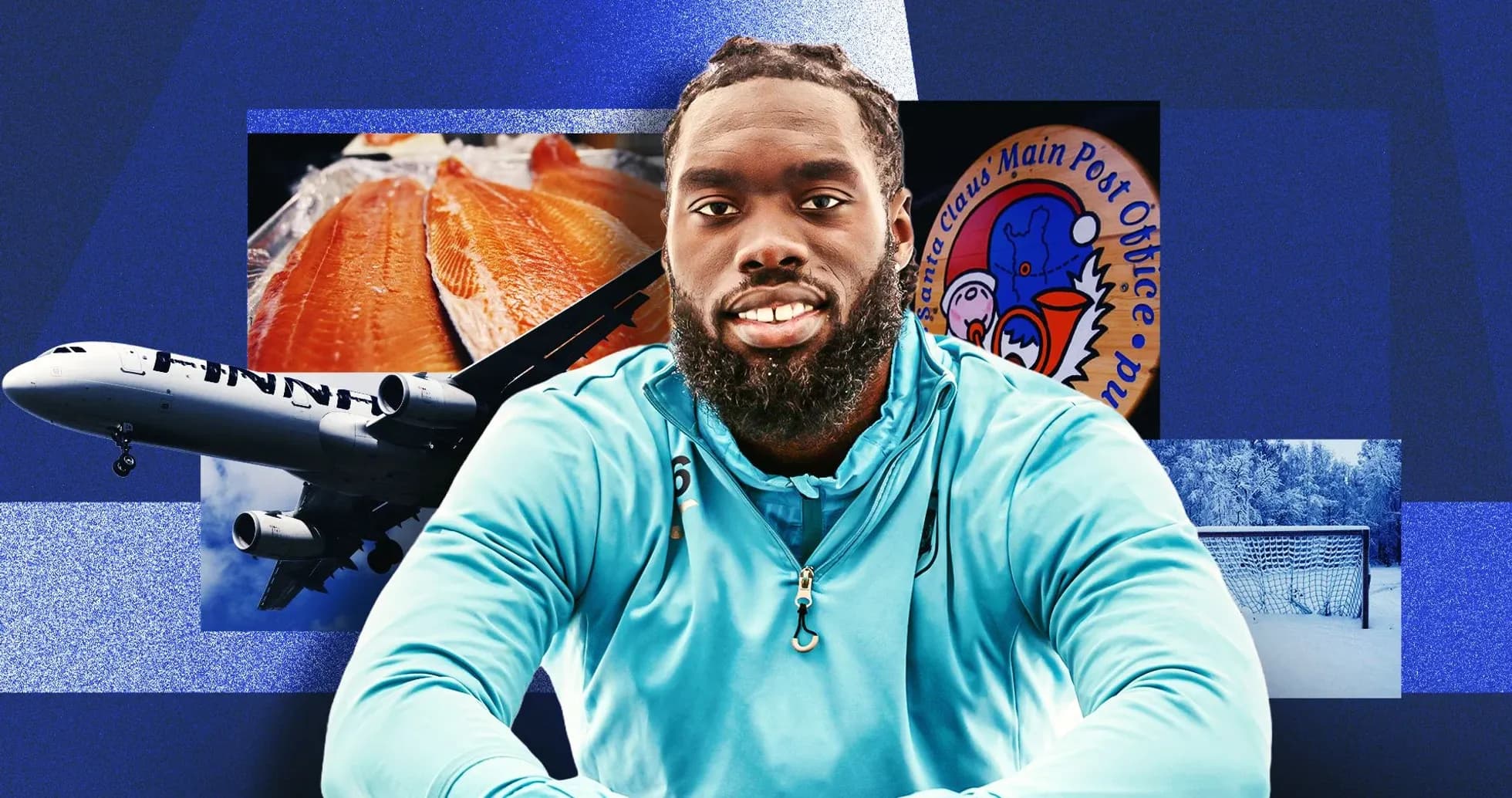
He started where so many English football stories begin – a ball, a wall, and a back garden.
Eight, maybe nine years old, kicking around behind the house, then straight into the east London conveyor belt. Senrab first, the famed grassroots club that has fed the professional game for decades. From there, Buckhurst Hill – the same Buckhurst Hill that once gave a skinny kid called David Beckham his first taste of organised football.
By nine he was there. By 11, he had stepped into Leyton Orient’s development system. From 11 to around 13 or 14, the dream took on structure: proper coaching, a pathway, the sense that this might actually go somewhere.
Then came a different kind of education.
From 14, he worked with Lester Thomas, a name barely known outside his patch but hugely influential inside it. Thomas, a Chelsea scout with a serious reputation in grassroots, was running intense academy-style sessions near West Ham train station. Young boys who wanted to be footballers turned up. Some would make it. Some already have Premier League careers.
He was in that group from 14 to 16. Thomas had contacts. He took players into Chelsea. Scouts dropped in, watched, made calls, offered trials. The defender’s reward for those two years of hard graft? Trials at Manchester United, Blackburn, West Brom. Then, at 16, the big one: a contract at Chelsea.
Chelsea’s Golden Generation – And a Door That Slammed
Cobham at that time was stacked.
Nathaniel Chalobah was already floating between the reserves and the first team, a level above his age group. The new arrival found himself alongside John Swift, Lewis Baker, Adam Nditi, Charlie Colkett. Ola Aina was two years younger but already training up. Jeremie Boga, even younger, was stepping in with them. Ruben Loftus-Cheek was there too.
The quality was obvious. So was the hierarchy.
Many of the squad had already signed scholarships at 15. They were entrenched, part of the Chelsea machine from the age of eight. The newcomer sensed the reality: the club didn’t quite see him on the same level as those boys – or better. Then came the decisive blow.
A month or two after he signed, Chelsea brought in Nathan Ake.
That one move effectively closed the door. At centre-back, spaces were gone. Alex Davey, Dion Conroy, Jordan Houghton – players a year below – already had two-year scholarships and two-year pro deals in place. The club liked what the late arrival showed. They were surprised by his ability. But loyalty, time served, and family ties weighed heavily in the academy’s thinking.
With Ake signed, the route to a scholarship vanished. So he left. Sheffield Wednesday became the next stop.
The Leap Abroad – and a Brutal Lesson in China
Years later, after spells in England and Scotland, the idea of going abroad arrived quickly.
He was on holiday, away for a best friend’s wedding, when the message dropped. An agent, a club, interest from China. It lit something in him. Playing abroad had always been on his list.
He had spent three or four years in Scotland, tried to manoeuvre his way back into the English system, targeting the Championship. It never quite materialised. There was interest, but the numbers didn’t work. He was, in his words, outpriced.
China offered something different: a new culture, a new league, a new challenge.
He liked the idea. He liked Chinese people, Chinese food, the thought of testing himself somewhere completely different. He backed his own adaptability. He had already learned to live away from home. This, he felt, was just another step.
He signed an 18‑month deal, arriving in June 2024. Six months in, the cracks in Chinese football’s financial structure began to show.
Payments in China can be complicated. He was paid, but there were late wages for local players. Tension built. At the end of the season, every club has to sign a document confirming players have been paid, send it to the Chinese Football Association, and get approval to play in the Chinese Super League the following year.
They did that. On paper, everything was fine.
Then some local players spoke out on their own social media platforms – not Instagram, but local equivalents – questioning payments. The CFA saw it. The response was ruthless.
Clubs were told to prove, with statements, that what they claimed was true. Lawyers joined the group chats. Players watched the situation unravel in real time.
The money to cover things was coming from the provincial government, as is common in China. The deadline was Boxing Day. The funds landed on the 27th. One day late.
That was enough.
The authorities ordered the club to disband or declare bankruptcy. No CSL. No Chinese Football League. No way back. They were not alone. Guangzhou, one of the giants of Chinese football, the club that once fielded Paulinho and stacked up titles, were also disbanded. It was a statement from the league: obey the rules or disappear.
Points deductions followed for other teams. The message was clear. His opportunity in the CSL was collateral damage.
Timing, Contracts, and a Closed Window
By early January, he was stuck.
Foreign players in the CSL are limited to five per team. Those spots are usually filled by November or December. By the time his club collapsed, the market had moved on.
He had options – other countries, and chances to stay in China, but only in the division below. Dropping down didn’t appeal. In that part of the world, once you go down, climbing back up is notoriously difficult.
So he waited. He banked on another move abroad while still under contract. Both possibilities fell through.
The window closed. Squads were set. He was left without a club for four or five months, watching from the outside, waiting for the next door to open.
It finally did in May. Finland called.
From Seinäjoki Silence to Helsinki Heat
Finland was not glamorous. It was necessary.
He first landed in Seinäjoki, a small city many outside the country have never heard of. To a Londoner, it felt tiny. The city centre, he says, is about the size of one Westfield shopping centre – Stratford or Shepherd’s Bush. That’s it. Compact, familiar, everyone knowing everyone.
But he didn’t go there for bright lights. He went there to play.
He had been out for five months. He needed minutes, rhythm, data. The club was in Europe. That mattered. European football had always been a target. It offered a platform, a shop window, a way back towards the levels he believed he should reach.
The city could be small. The football had to be big.
Now he’s in Helsinki, the capital. A different pace, a different energy. The move within Finland mirrors the arc of his comeback – from survival mode to something more ambitious.
A Message to the Next Generation
At 32, he can map his career in clear stages.
Sheffield Wednesday from 16 to 19. Charlton from 20 to 21. The National League at 21. Looking back, he is blunt about one key decision: instead of dropping into the National League, he feels he should have gone straight to Finland or Sweden, or even straight to Scotland earlier.
The lesson has become his message to younger players.
If you’re not breaking through in England, look elsewhere.
England is sold as the pinnacle. The message inside the system is simple: stay here, keep grinding, your chance will come. That mindset can trap players, leave them buried in under-21 football, waiting for debuts that never arrive, feeling like their careers are already over.
His experience says something different.
Scandinavia is full of young players, many under 25, plenty under 23. The football is sharp. The pathway is clear. Perform there and you have value – in that market and back in England.
Life off the pitch is calmer too. Less noise, less pressure, more room to breathe.
For him, Finland has been a reset button. For the next wave of English talent stuck on the fringes, it might just be a starting point.
Related News

Arsenal Faces Early WSL Title Threat Despite Strong Transfer Window
Recent Transfer News and Updates You Might Have Missed
Luis Binks: From Hotel Lockdown to Scotland Debut

Joe Hart Predicts Manchester City Will Compete for Title
Lionel Messi's Final Match with Argentina: A Farewell Tribute
Gabriel's Future at Manchester United: Rooney Warns of Massive Blow