
Frenkie de Jong's World Cup Exit: A Night of Criticism
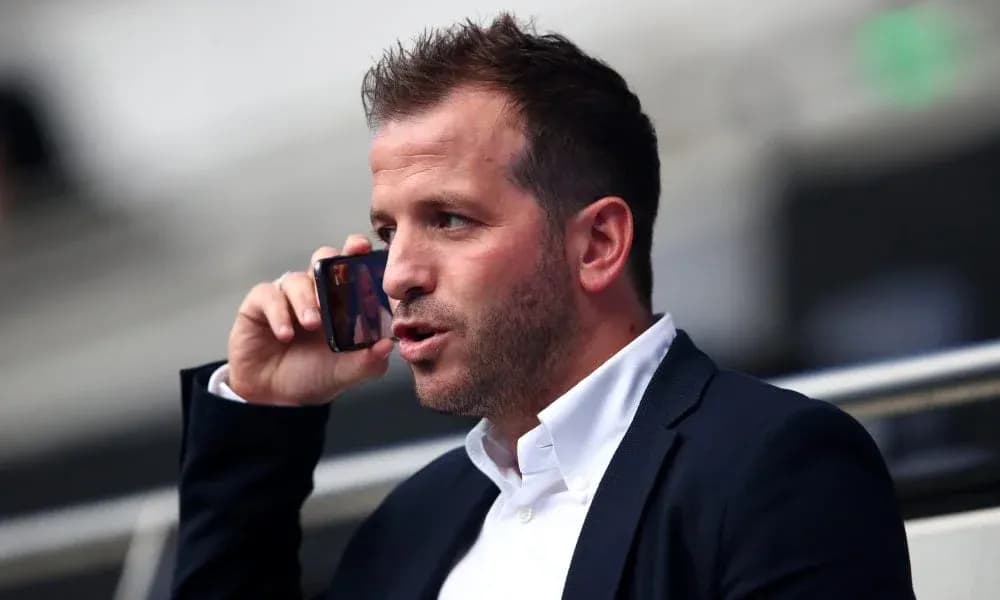
Frenkie de Jong walked off into the night with nothing left to give and nowhere to hide.
The Barcelona midfielder, the heartbeat of the Netherlands through the group stage, watched from the sidelines as Morocco dumped Ronald Koeman’s side out of the World Cup on penalties. He had played close to 110 minutes, emptied the tank, and then saw the Oranje fall apart from 12 yards.
For a player who had spent the tournament insisting that many people “watch football without truly understanding it,” the post-mortem was always going to be ruthless. It was.
Van der Vaart leads the backlash
On Dutch television, Rafael van der Vaart did not bother softening the blow. Speaking on NOS, in comments carried by Mundo Deportivo, the former international tore into De Jong’s display.
“Frenkie de Jong played the worst match I have ever seen from him,” he said.
No nuance. No caveats. Just a brutal verdict on a night when the Netherlands’ midfield never found its feet.
The criticism cut deeper because De Jong’s authority had seemed to grow with every game in the group stage. He dictated tempo, broke lines, and carried the ball under pressure with his usual calm. Against Morocco, that composure never translated into control. The game kept slipping past him, and with it, the tie.
System under the spotlight
Van der Vaart did not stop at the player. He turned his fire on the tactical plan that left De Jong exposed.
“It was really disappointing, but that is also because of the system. I consider midfield to be Morocco’s strongest point, and even so we decided to play against them with only two midfielders.”
That was the heart of it. Koeman chose to face a powerful, technically secure Moroccan midfield with a structure that left his own playmaker outnumbered and often isolated.
“I am very disappointed with Holland. We got through the group stage quite well,” Van der Vaart added. “Things were starting to work, so what goes through your mind for you to suddenly have to do things completely differently against Morocco? I do not understand anything at all.”
The shift in approach stripped the Netherlands of their rhythm. Where there had been triangles and passing lanes, there were now gaps. Where De Jong had previously received the ball with options around him, he often found only pressure and no obvious outlet.
Caution, control, and a crowded midfield
Jan Mulder joined the chorus, focusing on De Jong’s decision-making on the ball.
“He was too cautious, I only saw sideways passes,” Mulder said.
That accusation stings a player renowned for progressive passing and daring carries through the lines. But it also reflects the reality of the match: every time De Jong received the ball, Morocco’s midfield swarmed. The safe ball became the only ball.
The Netherlands lacked numbers in the centre, and with that went their control. Morocco’s midfield dictated the terms. They pressed in waves, forced turnovers, and disrupted any attempt to build from deep. De Jong, usually the bridge between defence and attack, looked more like a man trying to stop a tide with a bucket.
He was not at his best. That much is clear. His touch was not as sharp, his influence not as constant. Yet the structure around him did little to shield his weaknesses or highlight his strengths. Against this Morocco, in this shape, he was always going to be firefighting.
One bad night, not a new reality
What this game does not do is redefine Frenkie de Jong.
Barcelona know his value. The Netherlands know it too, however loud the reaction in the heat of elimination. One knockout match, however poor, does not erase what he brings: the ability to carry the ball out of pressure, to resist the press, to progress play and link defence with attack in a way few midfielders can.
Across the group stage, he had been sublime for the Oranje. He set the tempo, covered ground, and offered the kind of calm that drags a team through awkward spells. Against Morocco, that same player ran into a wall of bodies and a tactical plan that left him overrun.
The World Cup ends for him in frustration, with harsh words ringing in his ears and a performance that will be replayed and dissected at home. The real question now is not whether Frenkie de Jong is still that player. It is how the Netherlands build a system that allows their best midfielder to decide the biggest nights, instead of being swallowed by them.
Related News

Anthony Joshua Names Murat Gassiev as Next Opponent if He Defeats Tyson Fury

UFC 332: Start Time and Fight Highlights for Natalia Silva vs. Wang Cong
Court McGee Opens Up About Choosing UFC 332 as His Final MMA Fight
WBC Orders Lightweight Title Unification: William Zepeda vs Jadier Herrera
BCCI Pension List: Monthly Payments to Retired Indian Cricketers in 2025

Why Fury vs Joshua Is Set for Cardiff, and Dua Lipa’s Unexpected Role