
Gabriel's Tug-of-War Exposes Manchester United's Fragile Future
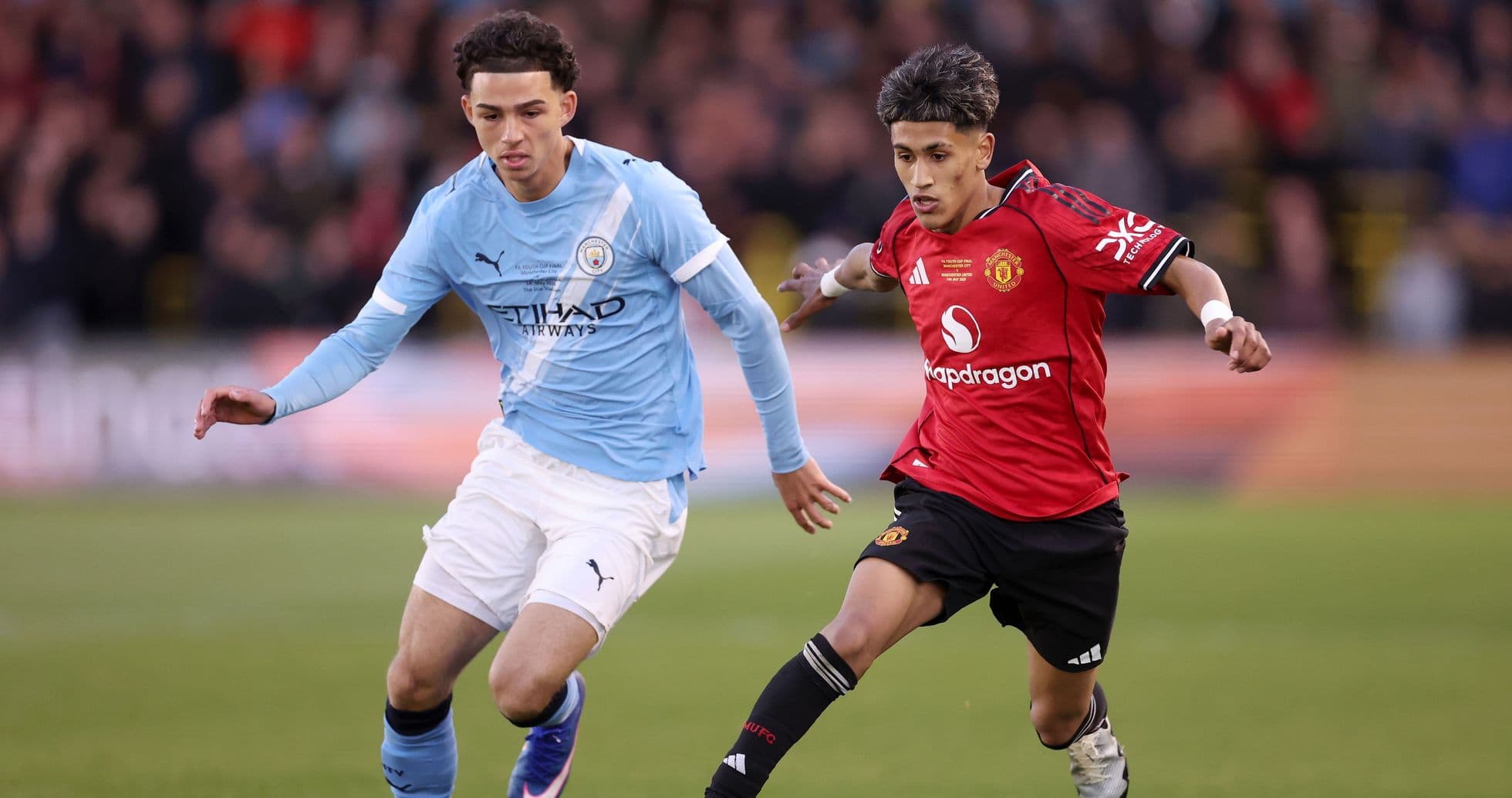
Manchester United thought they had already won this battle once. They kept Gabriel out of Manchester City’s hands last year. Now Real Madrid, Barcelona, Paris Saint-Germain and Bayern Munich are circling, and this time the teenager might just slip the net.
United insist they will not sanction his exit. Behind the scenes, senior figures are scrambling to change his mind.
For Sir Jim Ratcliffe, the stakes are brutal. The INEOS chairman has already been targeted by supporters over a string of unpopular calls in his short spell fronting football operations. Letting a prodigy widely regarded as a once-in-a-generation talent walk away for nothing would ignite a firestorm.
The problem? United’s grip on Gabriel is looser than they would like.
A contract that doesn’t quite protect United
Gabriel is tied to the club only until next summer. He is not a full-time scholar, nor part of the club’s long-term professional model. Technically, when he turns 16 on October 16, he could walk away if he holds a European passport.
United are urgently exploring that angle. His father, Joe O’Cearuill, is a former professional who represented Ireland twice. His mother is of Greek Cypriot descent. Under post-Brexit rules, that dual-nationality route could allow Gabriel to move to an EU club before turning 18.
That loophole is exactly what Europe’s giants are trying to exploit.
United fought off City last year. This fight feels different. It feels like his head may already be elsewhere.
Evidence? Gabriel was due to join first-team training on Saturday. He didn’t turn up. He hasn’t been seen at Carrington all week.
Michael Carrick had planned to name him in the squad for Wednesday night’s Carabao Cup third-round tie against Brighton at Old Trafford. Had he stepped onto the pitch, he would have become the youngest player ever to feature for United’s senior side.
That debut is now off the table.
The prodigy United can’t afford to lose
United’s academy has not produced a true global superstar since Marcus Rashford emerged. Gabriel has carried the hopes of the youth system since joining at 11.
He is a two-footed forward, slippery in tight spaces, nimble enough to wriggle away from challenges that swallow others. When he sees the whites of the goalkeeper’s eyes, he finishes with a cold, clinical edge.
Comparisons to Lionel Messi are unfair and unhelpful. The more accurate – and still lofty – parallel is Neymar. Same swagger, same low centre of gravity, same love of a one-v-one. Gabriel even wears the same model of Nike boots, after signing a lucrative extension with the brand in March 2025.
The numbers back up the hype. At 14, he forced his way into United’s Under-18s, another record, and promptly scored 20 goals in 21 league matches. He walked off with the first ever Premier League U18s Player of the Year award and became the youngest winner of United’s Jimmy Murphy Young Player of the Year.
This season, he stepped up to the U21s. On debut against Ipswich, he produced two assists and a delicate chip in a 5-0 rout. A week later he scored again as United hammered Leicester City 4-1.
This is not a normal 15-year-old. He is operating ahead of schedule.
So the clamour is inevitable. United’s senior side lacks spark in the final third. Arsenal have shown what can happen when a club trusts a special teenager. The temptation to fast-track Gabriel is obvious.
The Dowman effect – and the danger of shortcuts
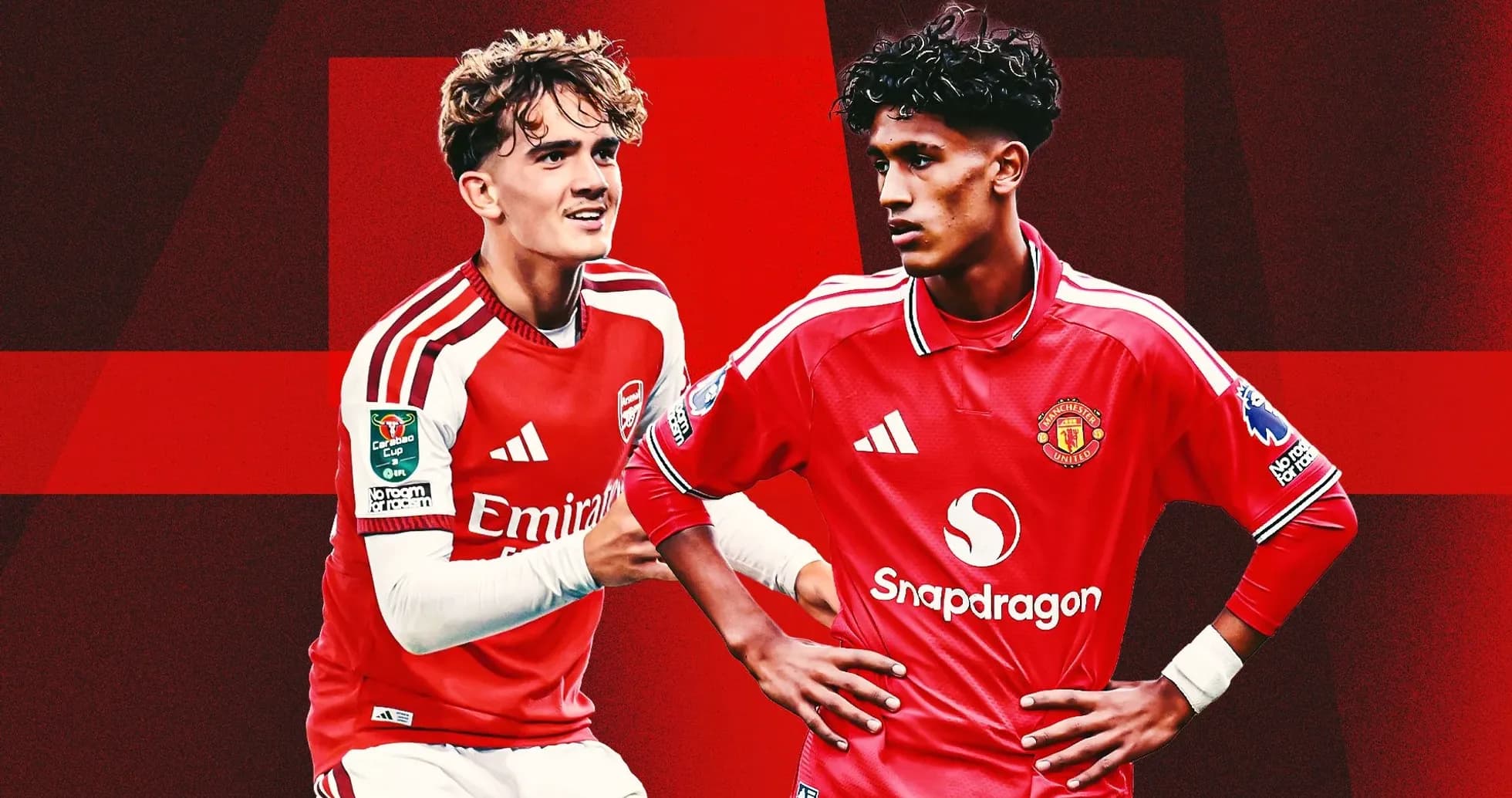
Max Dowman has become the poster boy for the “if you’re good enough, you’re old enough” mantra at Arsenal.
Ethan Nwaneri broke the Premier League age record in 2022 when he came on at 15 years and 181 days against Brentford. His path has been uneven since, with loans to Marseille and Borussia Dortmund, but he already has more than 50 appearances for Arsenal and remains only 19.
Dowman has gone even further, even faster. He became the Premier League’s second-youngest player when Mikel Arteta sent him on against Leeds in August 2025. In March, he smashed James Vaughan’s record as the league’s youngest scorer, netting a stunning solo goal against Everton at 16 years and 139 days.
By May, he was the youngest title-winner in Premier League history. This week, he joined Wayne Rooney in an exclusive club as only the second 16-year-old to score a brace for a Premier League team in a major competition, helping Arsenal beat Ipswich 4-2 in the Carabao Cup.
Fourteen senior appearances already. Flair, physical power, and the presence of a player years older. Arteta has even mentioned him in the same breath as Messi, then carefully reined in the noise, drip-feeding him minutes at carefully chosen moments.
“We have to look after him. He’s 16 years old. You don’t see that in this league,” Arteta said after the Ipswich game, stressing the unique demands of English football and the need to pick the right context every time Dowman plays.
That luxury is not available at Old Trafford.
Gabriel does not have Dowman’s frame. He is slight, often the smallest player on the pitch. His courage and determination compensate, but only up to a point. Throwing him into a struggling senior side, with the physicality and scrutiny of the Premier League, could easily backfire.
Imagine he explodes onto the scene. Carrick would immediately be under pressure to start him every week. A teenager still growing, still developing, suddenly carrying the burden of a broken attack.
Arteta can rotate Dowman because Arsenal are stacked. They win with or without him. United are the opposite. Their performances swing wildly. Take Gabriel out after a few games and Carrick would be accused of stifling a phenomenon. Leave him in and he risks breaking a boy’s body and confidence.
If Gabriel comes in and struggles, the narrative flips. Overhyped. Not ready. Another prospect crushed by the weight of the shirt.
Carrick’s caution has been deliberate.
A different landscape at Old Trafford
Former United defender and academy graduate Danny Simpson understands the nuance. He came through in the final years of Sir Alex Ferguson’s dynasty and knows the difference a dominant team makes for a kid breaking through.
Speaking to GOAL courtesy of Free Bets, Simpson drew the line between Dowman’s world and Gabriel’s.
“You've seen Arsenal do it, haven't you, with Max Dowman,” he said. “He's come in, then he takes him out, then we don't know about him for a bit, then he might come back in. I think it's easier for Dowman.
“I came through United and United were great. I could come on for 10 minutes because most of the time we were 2-0 up, 3-0 up. I would play, I'd get my debut or a second game and I'd be playing with the second XI who could win the Premier League! I think that's Max Dowman. He's coming into a team that's flying in confidence, full of top, top talent, winning games.
“People in the second XI, a bit like United back in the day, just as good. It's easy to come on and have an impact and play well. I think maybe United at the minute is a bit different.”
Simpson knows the excitement around Gabriel. He feels it too. But he backs Carrick’s approach.
“I know we all want to see Gabriel play and it's exciting, but it's just a very different situation to Max Dowman at Arsenal.
I just think that Michael Carrick will know what to do and when to. We've seen it a little bit with Shea Lacey. I've trained with Shea and I've been around him and I'll say he's a top talent. Just let him [Gabriel] train and be around the team and his time will come.”
Patience, not panic. That is the message from someone who has walked the path.
Yamal, Europe and the lure of the fast track
Patience is hard to sell to a teenager watching his peers conquer Europe.
Even if Gabriel accepts that his situation is not identical to Dowman’s, he only has to glance at Barcelona to feel the pull. Lamine Yamal made his debut at 15 years, nine months and 16 days. He was as skinny as Gabriel, just as vulnerable to heavy tackles, yet his pace and intelligence allowed him to thrive.
La Liga, with its emphasis on control and tactical structure rather than end-to-end chaos, gave Yamal room to breathe. The Premier League offers no such grace period. Time on the ball is a luxury.
From Gabriel’s perspective, Barca or Real Madrid might look like a shortcut to superstardom. On paper, it makes sense. In reality, timing is everything.
When Yamal broke through, Barcelona were on their way to the title under Xavi but had crashed out of the Champions League in the group stage. Raphinha, Ousmane Dembele and Ferran Torres were still finding their feet. Space existed for a fearless teenager to disrupt the hierarchy.
Now the picture is different. Barca have Yamal established, Raphinha at his peak, plus Anthony Gordon, Karim Adeyemi and Gabriel Jesus up front. At Real Madrid, Jose Mourinho can call on Kylian Mbappe, Vinicius Junior, Jude Bellingham and Yan Diomande.
Where does a 16-year-old fit in that pecking order? He waits. He watches. He trains. He hopes.
The irony is stark. Gabriel’s clearest route to regular senior football still runs through Old Trafford, the very place he is threatening to abandon.
United’s line in the sand
United cannot let themselves be held hostage by a player who is still 18 months away from sitting his GCSEs. Talent does not change that basic truth.
Carrick and the academy staff have managed Gabriel’s rise sensibly so far. If he stays, that careful work will continue. If he insists on forcing the issue, United have to be ready to walk away.
Dragging this saga out would only feed the turbulence around a club already trying to recover from a poor start to the season. Whether Gabriel is acting alone or being pushed by those around him, his stance reeks of entitlement.
Old Trafford’s greats did not build their legacies this way. George Best, Sir Bobby Charlton, Ryan Giggs, David Beckham, Paul Scholes, Gary Neville – none of them were handed anything. They fought, they waited, they endured.
Former manager Ruben Amorim, heavily criticised and ultimately sacked in January, still cut to the heart of the matter before he left.
“There is a feeling of entitlement we have in our club,” he said. “Sometimes, difficult moments is not a bad thing for the kids. We don't always need accolades in everything. We are not helping.
“Nowadays, they [players] speak and go against the club because they feel entitled. Let's stay. Let's fight. Let's overcome. That is the way we can solve things.”
He failed in many areas. On this, he was right.
With his current mindset, Gabriel is not ready to transform United’s first team. The most important lesson for any young player is simple: no one is bigger than the club.
If that principle does not land, if the badge and the opportunity in front of him are not enough, United may be better off letting him chase the dream elsewhere – and discovering, the hard way, that the quickest route to the top is rarely the straightest one.
Related News
Liverpool's EFL Cup Victory Highlights Squad Concerns
Gabriel's Tug-of-War Exposes Manchester United's Fragile Future
Luis Diaz on Bayern Munich: Language Challenges and New Signings
Yves Bissouma Signs with Ajax Until 2027
Cork Football Team of the Week: Stars Shine in Group Stages
JJ Gabriel: Manchester United's Rising Star Faces Transfer Turmoil