
Golden Boot Race at the 2026 World Cup: Messi, Mbappe, and Haaland
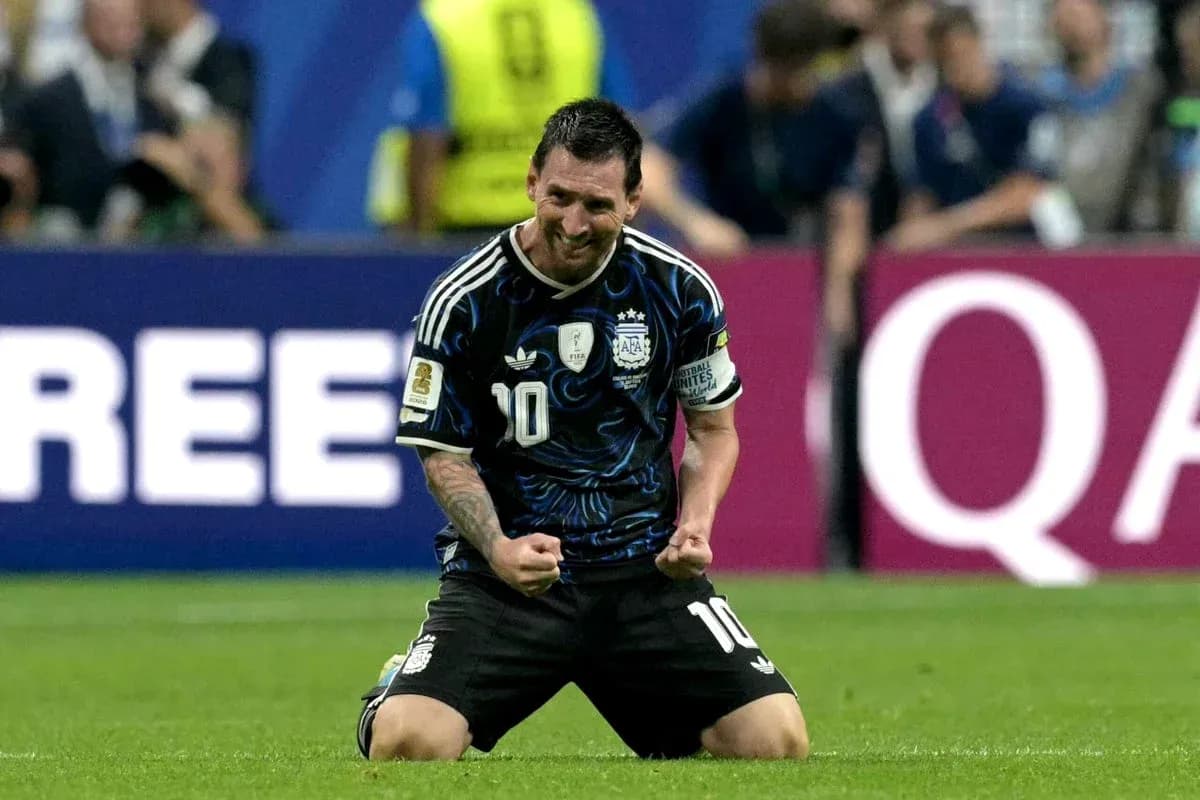
“Sometimes in football, you have to score goals.”
Thierry Henry tossed that line out in 2008. Eighteen years on, with four games left at the 2026 World Cup, it feels less like a quip and more like the tournament’s guiding law.
The trophy is the prize everyone came for, but the Golden Boot is stalking the final week too, shaping substitutions, sharpening finishing, and adding a private war inside the public one. History says the top scorer and the world champion rarely share the same podium — not since Ronaldo’s eight-goal rampage for Brazil in 2002 has the winner of this race also lifted the World Cup itself.
This time, with 48 teams, 104 matches and a record avalanche of goals, the shoot-out for that award has turned into a genuine epic.
How the Golden Boot is decided now
Since 1992, the rules have been simple: if players finish level on goals, the one with the most assists takes the Golden Boot.
That nuance decided the 2010 race. David Villa, Diego Forlan and Wesley Sneijder all finished on five goals, the same as Thomas Muller. The Germany forward walked away with the prize because he had three assists; the others had just one each.
In 2006, another layer was added. If goals and assists are identical, the award goes to the player who needed the fewest minutes on the pitch. Every touch, every late substitution, every extra-time sprint now carries weight.
With that in mind, here is how the 2026 race stands.
1. Lionel Messi (Argentina) – 8 goals
(4 assists – 712 minutes)
Even at his sixth World Cup, Messi has found new ways to stretch his legend.
He thought he had opened his account in Argentina’s first game against Algeria, only to see the flag go up for offside. No matter. When the ball came to him 20 yards out later in the first half, he curled it home with that familiar, ruthless precision.
After the break, he pounced on a mistake. Luca Zidane spilled Alexis Mac Allister’s low drive, and Messi, alert as ever, walked in the rebound. The hat-trick goal was pure theatre: a bending strike from the edge of the box, shaped like a pass to a ghost runner behind the goal, Zidane stranded and beaten again.
His fourth arrived against Austria, only after he had already missed a penalty. Facundo Medina slid a pass into the area and Messi, first time, swept it in. That finish pushed him clear as the men’s World Cup all-time top scorer. He then added a fifth in the same match, reacting quickest after his initial effort had been blocked and stabbing in from close range.
Rested at the start against Jordan in the final group game, he still found time to step off the bench and whip in an 80th-minute free kick, the kind of set piece that feels almost inevitable as he stands over the ball.
Knockout pressure has not slowed him. He struck again in the round of 32 against Cape Verde, then delivered an eighth in the most dramatic fashion — a late equaliser against Egypt that kept Argentina alive and tightened his grip on the Golden Boot race.
Eight goals. Four assists. A captain dragging numbers into storybook territory.
2. Kylian Mbappe (France) – 8 goals
(3 assists – 666 minutes)
If Messi is writing the final chapters of an era, Mbappe is trying to rip the book out of his hands.
France’s new Real Madrid forward burst into this World Cup with two goals in a 3-1 win over Senegal, the kind of start that announces intent. Against Iraq, he opened the scoring with a strike from distance, then, after a lengthy weather delay in Philadelphia, re-emerged to double the lead in the second half.
When the tournament flipped into knockout mode, he did not blink. Two clinical finishes against Sweden in the round of 32, another from the penalty spot versus Paraguay, and a further goal in the quarter-final against Morocco pushed him to eight.
Then came Spain. In a tight, high-level semi-final, France finally met a defence they could not crack. Mbappe ran, probed, tried to force the issue, but the 2-0 defeat shut the door on his World Cup and left him stranded on eight goals, one assist behind Messi and with no more minutes to change that.
His race is run. His tally, though, still sets the bar for the next generation.
3. Erling Haaland (Norway) – 7 goals*
(0 assists – 537 minutes)
Haaland arrived at his first World Cup carrying a country’s hopes and his own reputation as the most brutal finisher in club football. He left having proved that his game translates perfectly to the biggest stage.
Norway’s opener against Iraq became his personal introduction. First, a trademark six-yard-box finish, sliding in to meet David Moller Wolfe’s low cross. Then, pure aggression: he chased down the goalkeeper, forced the error and bundled the ball into the net.
Against Senegal, he stayed icy. A composed finish for his third of the tournament, then a clever volley for his fourth in the same match.
The knockouts turned his goals into currency. In the round of 32 against Ivory Coast, he struck late from close range, the winner in a 2-1 victory that sent Norway through. Then came the shock: Norway stunned Brazil, and Haaland scored twice more. His second that night carried a hint of surprise, a finish that caught everyone — including Brazil — off guard.
Seven goals, no assists, and now no more games. His Golden Boot chase is over, but his first World Cup has left a mark.
4. Jude Bellingham (England) – 6 goals
(1 assist – 574 minutes)
Jude Bellingham has turned from midfield conductor into penalty-box predator.
He scored in both of England’s opening group wins — a 4-2 victory over Croatia and a 2-0 win against Panama — arriving in the right spaces, timing his runs like a seasoned No 10 rather than a deep-lying playmaker.
Once the knockouts arrived, he accelerated. Two goals against Mexico in the last 32, then another brace in the quarter-final against Norway. Each strike nudged him higher in the Golden Boot standings and shifted the conversation about what kind of player he really is.
On six goals, with one assist, he edges ahead of his captain Harry Kane by virtue of playing fewer minutes. If this becomes a photo finish, those 53 minutes could matter.
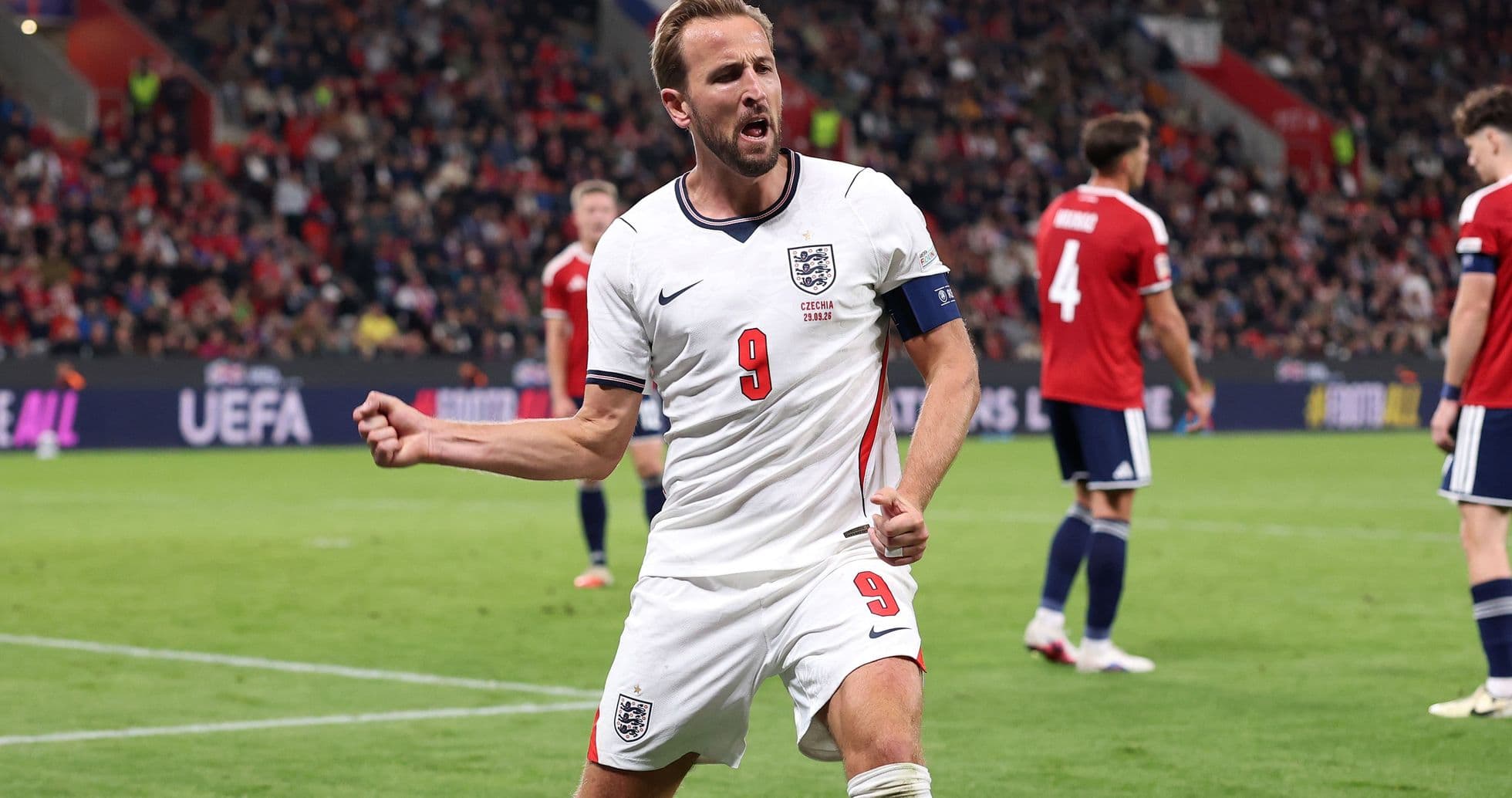
5. Harry Kane (England) – 6 goals
(1 assist – 627 minutes)
Kane has been here before. In 2018 he walked away with the Golden Boot. In 2026, he is trying to chase it down from his own dressing room.
He started strongly, scoring twice in that same 4-2 win over Croatia. The follow-up against Ghana was a grind — a 0-0 stalemate in which England’s attack stalled. He responded by scoring the second goal in the final group match against Panama, restoring rhythm and belief.
The knockout rounds have long been his stage. Against DR Congo in the round of 32, he produced two second-half goals to drag England through. Then, against Mexico, he kept his nerve from the spot, adding another penalty to a career built on precision under pressure.
Six goals, one assist, but more minutes than Bellingham. The numbers are close. The internal rivalry is very real.
=6. Ousmane Dembele (France) – 5 goals
(2 assists – 492 minutes)
Ousmane Dembele arrived at this World Cup with a curious record: 19 major-tournament appearances, no goals. That statistic is gone now, obliterated in a flurry of finishing.
He finally broke his duck in France’s second game, scoring the third in a 3-0 win over Iraq. Then he exploded. Against Norway, the PSG winger produced a first-half hat-trick, a blistering showcase of movement, timing and sharpness.
He added his fifth of the tournament in the quarter-final win over Morocco, rounding off a World Cup that has transformed his reputation on the international stage, even as France’s run ended in the semi-finals.
=6. Mikel Oyarzabal (Spain) – 5 goals
(1 assist – 519 minutes*)
Spain’s opening draw with Cape Verde felt flat. Their response, and Mikel Oyarzabal’s, set a different tone.
In a 4-0 win over Saudi Arabia, the Real Sociedad forward scored twice, ghosting into space and finishing with calm authority. He repeated the trick in the round of 32, another brace in a 3-0 win over Austria that underlined his importance to Spain’s attack.
His fifth goal, the most significant of his tournament, came from the penalty spot in the semi-final against France, breaking the deadlock and tilting a heavyweight contest in Spain’s favour.
Five goals, one assist, and still time to climb further.
=8. Vinicius Junior (Brazil) – 4 goals*
(1 assist – 505 minutes)
Vinicius Junior arrived in North America expected to dazzle. He also rescued.
In Brazil’s opener against Morocco, with the five-time champions trailing to a surprise lead, he stepped up and lashed in an emphatic equaliser, whipped into the net with conviction.
By the time he scored his second of the tournament, Brazil were in a far better mood, already two up against Haiti through Matheus Cunha and in complete control. Vinicius simply added the flourish.
Against Scotland, he struck again, pouncing on a mistake from Scott McKenna and sliding the ball past Angus Gunn to open the scoring in Brazil’s final group game. His fourth was a simpler affair: a back-post header from a teasing Bruno Guimaraes cross, the kind of goal that looks easy only because the movement is perfect.
Four goals, one assist, and now out. His Golden Boot bid ends there.
=8. Ismaila Sarr (Senegal) – 4 goals*
(1 assist – 419 minutes)
Ismaila Sarr’s World Cup has been a story of individual spark inside collective frustration.
In Senegal’s second Group I match against Norway, the Crystal Palace winger scored twice. The first was improvised brilliance — a clipped finish while falling to the turf — the second a more orthodox, well-taken strike in a 3-2 defeat.
He added a third goal in the final group game against Iraq, then struck again in the round of 32 against Belgium, keeping Senegal competitive and himself in the Golden Boot conversation until their exit.
Four goals, one assist, and a tournament that showcased his threat on the biggest stage.
=8. Julian Quinones (Mexico) – 4 goals*
(1 assist – 440 minutes)
Julian Quinones scored the very first goal of this World Cup. That felt symbolic at the time; his full body of work has justified it.
He opened the tournament by netting in Mexico’s 2-0 win over South Africa, then struck again in a 3-0 victory against Czech Republic. In the last 32, he once more delivered the opener, this time against Ecuador, setting the tone for another Mexico performance built on his direct running and sharp finishing.
Even in defeat, he left a mark. Quinones added to his tally in the last-32 clash with England, reminding everyone why he arrived in such form after top-scoring in the Saudi Pro League with 33 goals in 31 games.
Four World Cup goals, one assist, and an exit that came too early for his numbers to climb higher.
=10. The chasing pack – 11 players on 3 goals
Behind the headline names, 11 players sit on three goals, all lurking but, for now, just out of reach of the leaders. With some already eliminated and others with only one match left, their chances of a late ambush are slim, but not entirely gone.
The history they are chasing
The Golden Boot — originally the Golden Shoe — has officially crowned the World Cup’s top scorer since 1982, though the game has always honoured its sharpest finishers. No one has yet matched Just Fontaine’s astonishing 13-goal haul for France in 1958, achieved even though his side fell in the semi-finals.
In Qatar in 2022, Mbappe scored eight, including only the second hat-trick in a World Cup final after Geoff Hurst in 1966, but still left without the trophy. His tally equalled Ronaldo’s 2002 mark for the most goals at a single modern World Cup.
Four years before that, Kane’s six goals carried him to the Golden Boot as England reached the semi-finals and then fell to Croatia.
Now, in 2026, the numbers are swelling again. Messi and Mbappe stand on eight, Haaland on seven, a pack of English, French and Spanish talent just behind. The margins are tiny: a deflection here, a saved penalty there, a manager’s decision to substitute or to trust tired legs for five more minutes.
Four games remain. One award. Who will remember Henry’s words best when it matters most — and keep scoring?
Related News
India's Record Chase of 406 Against West Indies Highlighted by Gill's 223 and Rohit's Century

Alex Pereira Hints at Major UFC Bout: 'Big Challenge' Ahead
Three Hall of Famers, Ten Fights, 109 Rounds: The Forgotten Rivalry That Shaped Lightweight Boxing's Golden Era
Khamzat Chimaev and Colby Covington Set for RAF Abu Dhabi Title Clash in November
Thomas Tuchel Confident Harry Kane Will Join 100-Goal Club for England Soon
Cristiano Ronaldo Vows to Reveal Truth After Leaving Portugal Squad Amid Conflict