
Hannibal Mejbri: From La Banane to World Cup Aspirations
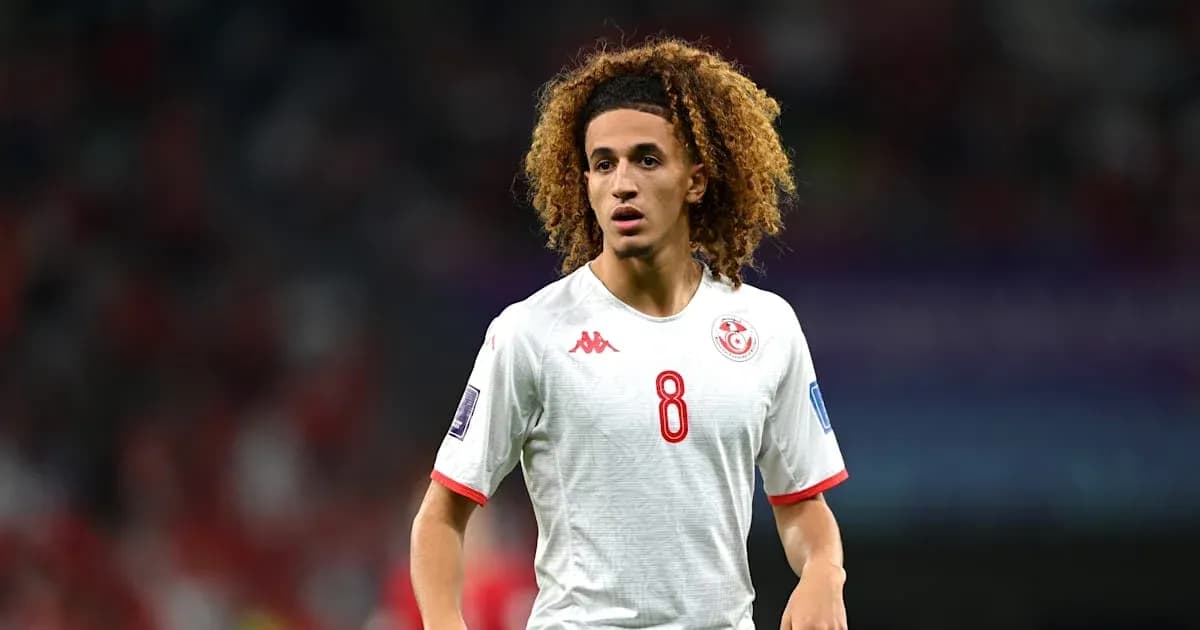
The Eagles of Carthage have carried one of world football’s great nicknames for decades. A grand, almost mythical title, borrowed from an ancient civilisation that once stared down Rome. Now, at the 2026 FIFA World Cup, the symbolism runs even deeper: their midfield is driven by a player named after Carthage’s most famous general.
Hannibal Barca took war elephants over the Alps. Hannibal Mejbri is trying to drag Tunisia over a different kind of mountain — the group stage barrier they have never yet crossed.
He is only 23. It doesn’t feel like it.
A Paris childhood, a Tunisian heartbeat
Mejbri’s story starts far from Tunis, in Paris’ 20th arrondissement, a dense, working-class corner of the French capital where the streets are tight, the blocks are crowded, and the mix of cultures is rich.
“Many Tunisians, many Algerians, many Moroccans, lots of Senegalese, Malians as well,” he says of the neighbourhood in the latest episode of World at Their Feet, an 11-episode short-form series from Olympics.com following emerging talent on the road to 2026. Football stitched them all together. It was the shared language.
At the centre of that world stands a curved block of flats known simply as La Banane — the Banana. Concrete, modest, unremarkable to anyone passing by. Yet for the boy with the big, blond hair, it was the backdrop to a quiet obsession.
“Instead of going straight up to my house, I used to stay out and play football until night fell,” Mejbri recalls. “I was a normal boy, there was no master plan. I had my friends, I was focused on my life as a kid.”
Normal, but impossible to miss.
Childhood friend Hubert Mbuyi remembers how the kid from La Banane always drew eyes. “He had a unique style, with big hair, big blonde hair. So everyone knew him and had a lot of expectations for him.
“Where you could find a pitch and a ball, you will find Hannibal.”
The hair made him recognisable. The ball made him different.
From La Banane to Monaco’s glitter
The pathway out of that Paris block began early. At six, Mejbri joined the academy of Paris FC, a club that has quietly built a reputation for polishing the city’s raw talent. He stayed for almost seven years, then moved briefly to Boulogne-Billancourt, another step on the conveyor belt.
The real jolt came in 2018. Monaco, the Ligue 1 club perched on the Riviera and long famed for its youth production line, came calling. The 15-year-old signed for a reported €1 million fee, a remarkable figure for a teenager still finding his way.
“I could feel the richness of Monaco,” he says. “So yeah, it was a little bit of a shift, a little dream, and I learned a lot there.”
The contrast was stark. From La Banane’s tight stairwells to the principality’s luxury, from street cages to manicured training pitches. The football world had opened up.
His time there was not perfect. He has been open about not enjoying the best of experiences at Monaco. Yet the talent was impossible to ignore. Bayern Munich watched. Paris Saint-Germain did too. Barcelona showed interest. The list of admirers read like a Champions League draw.
He chose a different road.
Old Trafford and a first roar
In August 2019, at just 16, Mejbri signed for Manchester United, the three-time European champions who saw in him a spiky, inventive midfielder with the energy to unsettle and the technique to create.
His rise through the Old Trafford system was quick. By 2021 he had a Premier League debut to his name, a first taste of the noise, the scrutiny, the weight of that red shirt.
The breakthrough moment came two years later. In September 2023, he scored his first Premier League goal, a crisp strike in a 3–1 home defeat to Brighton. The result hurt. The goal did something different.
“I still get chills,” he says. “I don’t know why I started to celebrate when we were losing 3–0, and you can see in my celebration that I had a certain rage in me and that I let go of everything when I scored.”
It was a snapshot of the player he is becoming: emotional, combative, unwilling to let the scoreboard dictate his intensity.
A choice of flags, a matter of heart
On the international stage, Mejbri had options. Born and raised in France, he represented Les Bleus at under-16 and under-17 level. The pathway to the French senior team was open.
He turned towards his parents’ homeland instead.
“I joined Tunisia because I chose with my heart,” he explains. “Even though I lived in France, it doesn’t take away the love I have for France. But I find that the love I have for Tunisia is greater.”
It was not a decision made for convenience or opportunity. It was emotional, rooted in family, in identity, in the stories told at home and the pride carried across generations.
Since his first call-up in 2021, he has become a fixture. Forty-four caps already. Twice named African Revelation of the Year at the Africa d’Or awards. A symbol of a new Tunisian generation that refuses to see the World Cup as a ceiling.
Yet every time he pulls on the red shirt, his mind travels back to that curved block in Paris.
“When I represent my country, I also represent my neighbourhood,” he says. “Because I know that I will represent them, and so all of that, it’s a bit related to pride.”
Mbuyi sees what that means on the ground. “All Tunisians are proud of him,” he says. “Because in the end, he’s a kid from the neighbourhood. When he plays matches, everyone focuses on the match. We’re all watching Hannibal’s hair on the pitch. We try to spot him every time.”
The hair is still the landmark. The responsibility now is far greater.
Giving back to La Banane
Success has not cut the cord to La Banane. Every summer, Mejbri goes back. Not for a photo opportunity, but to put something tangible into the place that shaped him.
He organises a football tournament for the community, a day where the next wave of kids can feel close to the professional game. Last year, he handed out around 100 shirts.
“You can just walk around here and find two or three people wearing his shirt,” Mbuyi says.
The image is striking: the Banana’s corridors dotted with the name of a Manchester United and Tunisia international, the dream made visible on polyester.
“Hannibal is a great example of what the people look for in this area,” Mbuyi adds. “Because of him, the young kids can dream.”
Now those dreams stretch to the World Cup.
As the Eagles of Carthage chase that elusive step beyond the group stage, their young general carries more than a famous name. He carries La Banane, the noise of the 20th arrondissement, the expectations of a nation and a continent that see in him not just a midfielder, but a path.
Two thousand years after another Hannibal stared at Rome’s walls, this one is facing his own frontier. The question is no longer whether people will recognise the hair on the pitch.
It’s how far he can lead them.
Related News
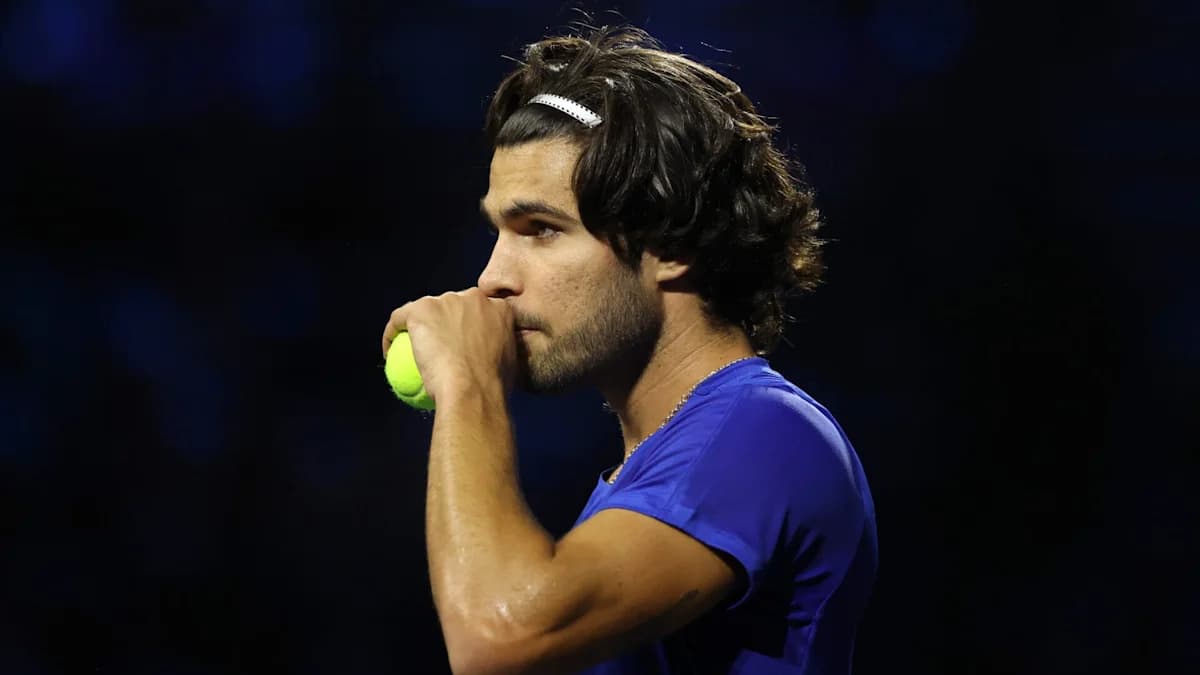
Carlos Alcaraz Calls for Change After Laver Cup Court Conditions
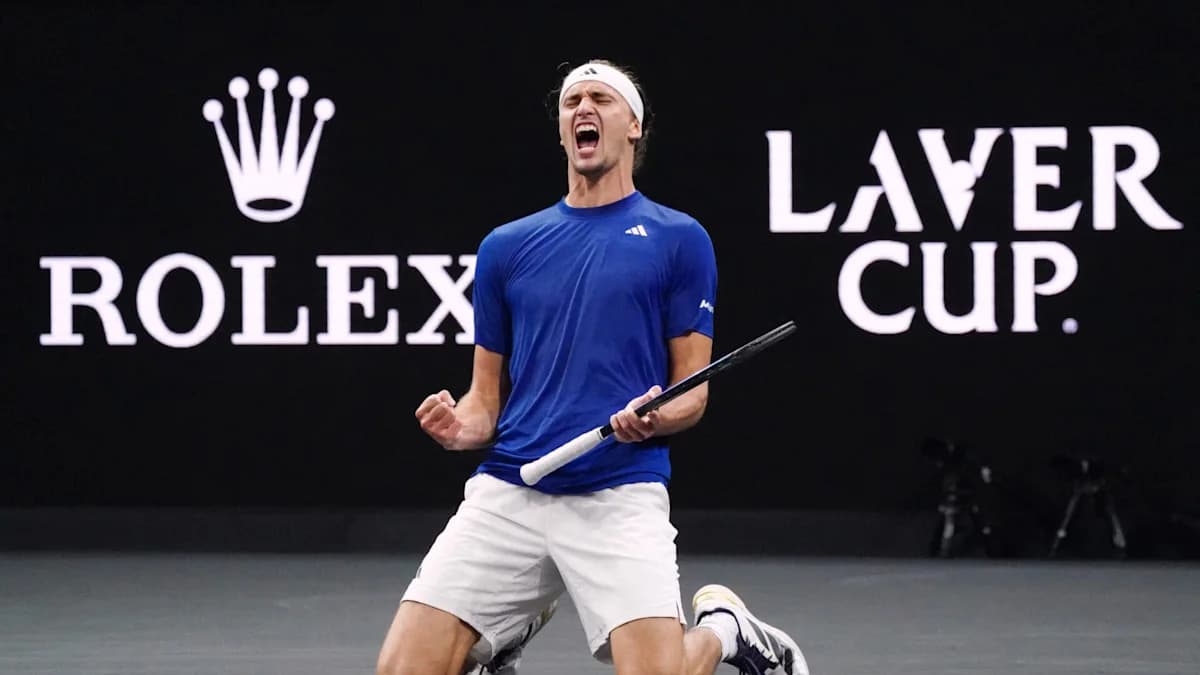
Alexander Zverev Secures Laver Cup Victory for Team Europe with Straight-Set Win Over Learner Tien
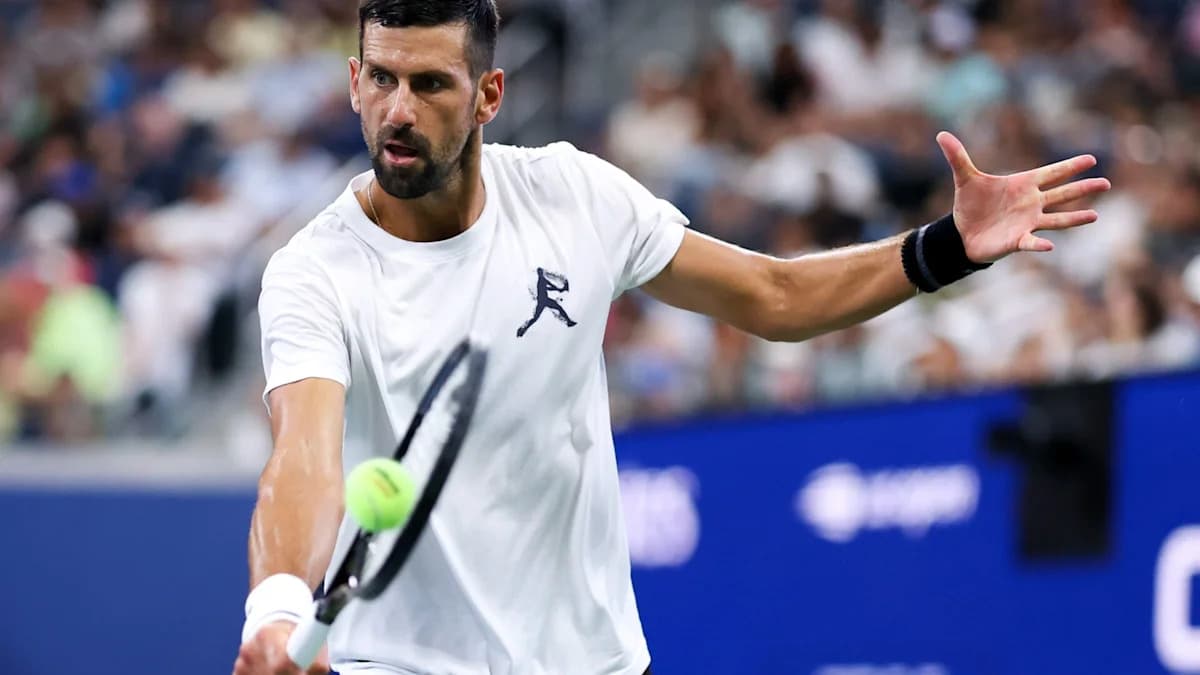
Novak Djokovic Shares Fitness Update Before China Open Return After US Open Upset
Shubman Gill's Captaincy Record Across All Formats: Tests, ODIs, T20Is, and IPL
Kuldeep Yadav Named Player of the Match Over Virat Kohli Despite Century in IND vs WI 1st ODI
India Advances to Asian Games 2026 Cricket Semi-Finals After Rain Washout Against Afghanistan