
Hartford Athletic vs Pittsburgh Riverhounds: Tactical Stalemate in Goalless Draw
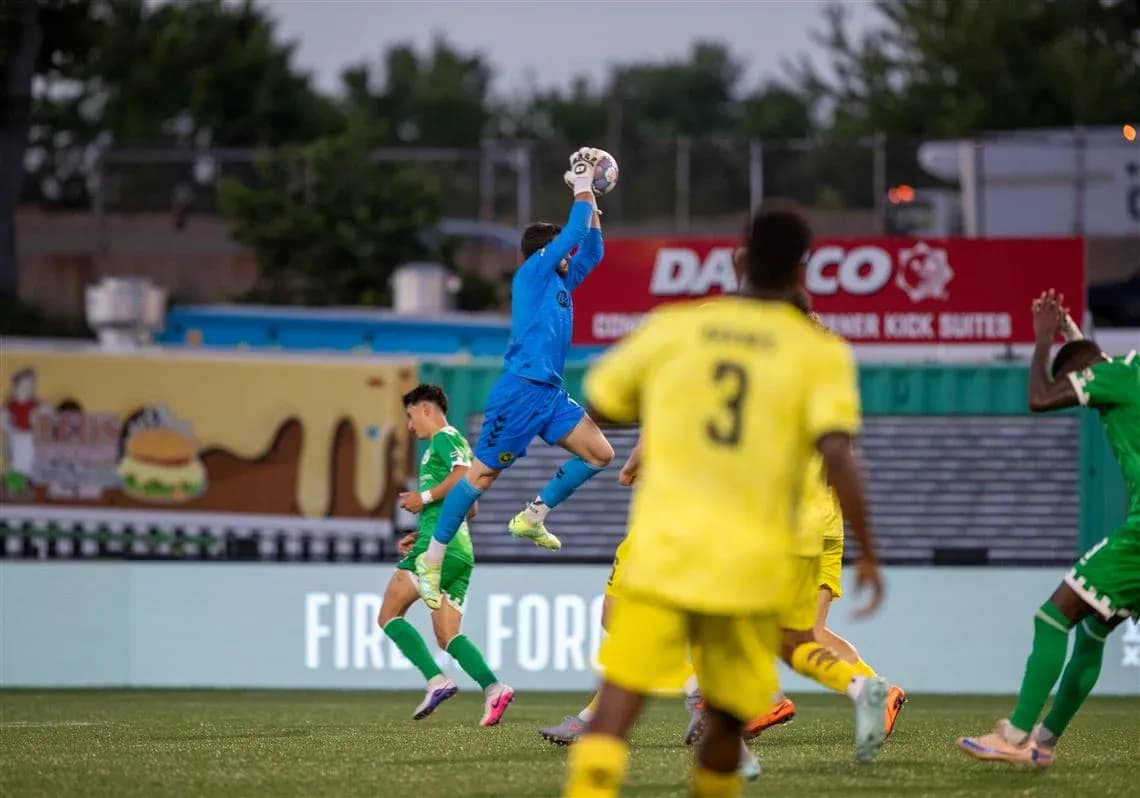
Under the lights at Trinity Health Stadium, Hartford Athletic and Pittsburgh Riverhounds played out a goalless draw that felt less like a stalemate and more like a tactical arm-wrestle between two playoff-chasing sides. In the broader tapestry of the USL Championship’s Group Stage, it was seventh against fifth, two teams already moulded by a dozen league fixtures and a clear statistical identity.
Heading into this game, Hartford’s season had been defined by balance on the table and imbalance in performance depending on venue. Overall they had 18 points from 12 matches, with a goal difference of 0 built from 10 goals scored and 10 conceded in total. Yet that symmetry masked a split personality: at home they had scored just 4 and conceded 7, while on their travels they had been far more assured, scoring 6 and conceding only 3. Pittsburgh, by contrast, arrived as a more assertive attacking outfit: 20 points from 12 games, a total of 15 goals for and 13 against, with a total goal difference of 2. Their home form had been dominant, but away from home they were less convincing, with 7 goals scored and 9 conceded on their travels.
That context shaped the tone of the match. Brendan Burke’s Hartford, without a defined formation in the data but clearly structured around defensive stability, leaned into their season-long strengths: compact shape, disciplined lines, and a willingness to trade attacking ambition for control. Rob Vincent’s Riverhounds, similarly unlabelled tactically in the dataset, brought a side that had learned to grind results, particularly with a total scoring average of 1.3 goals per game against 1.1 conceded overall.
The tactical voids in this fixture were less about missing names and more about what both teams chose to withhold. There were no listed injuries or suspensions, so both coaches had near-full squads. Instead, the absences were structural: Hartford’s chronic struggle to create chances at home, and Pittsburgh’s tendency to concede more freely on the road. Hartford had already failed to score in 7 of their 12 league matches overall, including 4 times at home. Pittsburgh, meanwhile, had kept just 2 clean sheets away, conceding an average of 1.3 goals per away game. On paper, something had to give; in practice, it did not.
Discipline was always likely to be a sub-plot. Hartford’s yellow card distribution this season shows a pronounced late-game edge: 20.00% of their cautions arriving between 46-60 minutes, another 16.67% from 61-75, and a further 20.00% in the 76-90 window, topped up by 20.00% in 91-105. Their red cards had also clustered late, split evenly between 76-90 and 91-105 (50.00% each). Pittsburgh’s bookings were more evenly spread but still peaked at 18.75% in both the 31-45 and 46-60 ranges, and again 18.75% from 76-90. This statistical backdrop suggested a contest that would grow increasingly scrappy as fatigue and tactical tension mounted, and the match duly followed that script even if the data does not list individual cautions on the night.
On the pitch, the “Hunter vs Shield” duel was conceptual rather than individual, as no top-scorer data was available. For Hartford, the attacking burden fell on the front trio of A. Williams, M. Ngalina and E. Samadia, supported by the creative presence of S. Careaga and B. Coffey. Their task was to break a Pittsburgh defence that, heading into this game, had conceded just 4 goals at home but 9 away, underscoring how different the Riverhounds look on their travels. Hartford’s own attacking record at Trinity Health Stadium – 4 goals in 6 home matches, an average of 0.7 per home game – hinted at why the Riverhounds might have been content to sit in a compact block and trust their structure.
Engine Room Battle
The “Engine Room” battle centred on Hartford’s midfield trio of J. Moreira, Careaga and Coffey against Pittsburgh’s central operators R. Mertz and D. Griffin, with E. Goldthorp and C. Ahl providing connective tissue between lines. Hartford’s season-long defensive numbers – 10 goals conceded in total, with an average of 0.8 per match overall – speak to the work done in front of the back line. At home they had allowed 7 goals in 6 games, an average of 1.2, which made the clean sheet here a notable corrective to their earlier vulnerability at Trinity Health Stadium. For Pittsburgh, the midfield’s job was to maintain the balance that had delivered 6 wins from 12, while protecting a back line that had already shipped 9 goals away.
Behind them, the goalkeepers were the quiet protagonists of the narrative. A. Siaha, starting for Hartford, anchored a defensive unit that had already produced 7 clean sheets overall this season. N. Campuzano, in the Pittsburgh goal, came in backed by 4 total clean sheets for his side, 2 of them on the road. The 0-0 final score underlined how both keepers, and the structures in front of them, lived up to their statistical billing.
From a statistical prognosis perspective, this fixture always leaned towards a low-scoring outcome. Hartford’s total goals for average of 0.8, combined with their total goals against average of 0.8, pointed to tight margins. Pittsburgh’s profile – 1.3 goals scored and 1.1 conceded per game overall – suggested they might edge an xG battle, but their away defensive frailty left the door open. Instead, the match settled into a pattern that mirrored Hartford’s season-long tendency to control risk and Pittsburgh’s capacity to accept a point when the attacking rhythm never fully clicked.
Following this result, both sides walk away with their defensive credibility enhanced and their attacking questions unresolved. Hartford can point to a home clean sheet as evidence that their previously fragile record at Trinity Health Stadium is stabilising. Pittsburgh, for their part, extend a solid if unspectacular away record, showing that while they may concede more on the road, they are increasingly capable of shutting games down when the margins are fine.
In the playoff race context, it felt like a point each that neither side will celebrate, but both will quietly value. The numbers suggested a cagey, attritional contest. The pitch delivered exactly that.
Related News
San Antonio's Tactical Edge Secures 2–1 Victory Over Colorado Springs

Charleston Battery Dominates Loudoun United 4–1 in Statement Win

Miami FC vs Orange County SC: USL Championship Clash Highlights
Colorado Springs vs San Antonio: USL Championship Group Stage Preview

Charleston Battery vs Loudoun United: Match Preview

Miami FC vs Orange County SC Match Preview