
HNK Hajduk Split Secures 2-0 Victory Over Pafos in UEFA Europa League
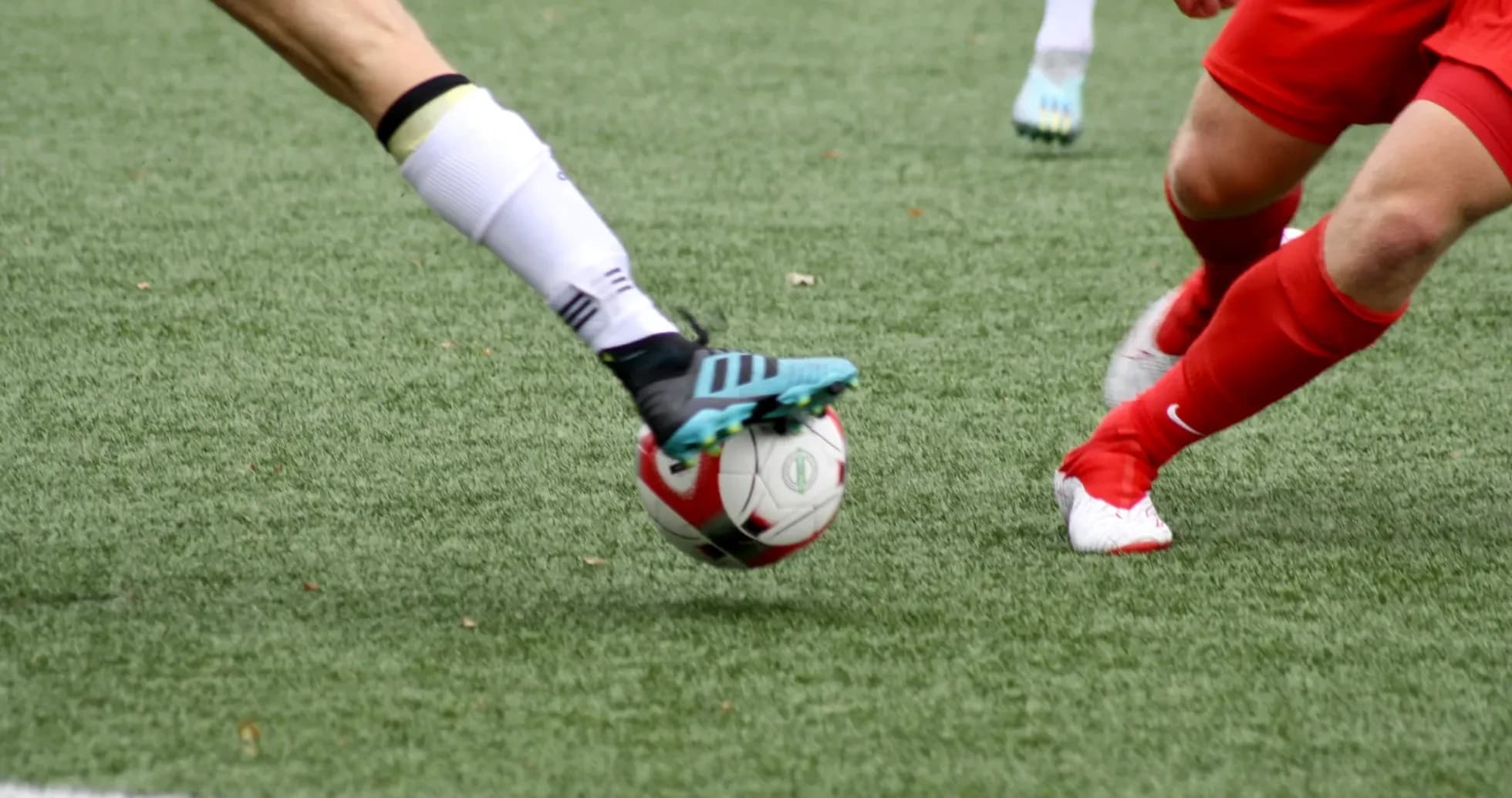
HNK Hajduk Split’s 2-0 win over Pafos at Stadion Poljud in the UEFA Europa League 2nd Qualifying Round was a classic case of strategic clarity overcoming statistical deficit. Despite having less of the ball (45% to 55%) and fewer total shots (8 to 14), Gonzalo Garcia’s side controlled the key zones, managed momentum around their goals, and used structure and substitutions to suffocate Pafos once ahead. The Cypriot visitors, under Albert Celades, produced more volume but lacked penetration and balance in their 3-4-3, leaving too many actions in front of Hajduk’s block and not enough inside decisive spaces.
The match remained goalless to half-time, with Pafos seeing more possession but Hajduk looking more coherent without the ball. The only early disciplinary note came at 4', when Adrion Pajaziti (HNK Hajduk Split) was booked — “Foul” — a sign that Hajduk were ready to break up Pafos’s rhythm high and early if needed.
Second Half
The second half hinged on a compact, vertical spell from Hajduk. At 55', Nikolas Ioannou (Pafos) collected a yellow card — “Foul” — as Pafos tried to counter Hajduk’s growing aggression. One minute later, at 56', the pressure told: M. Sego (HNK Hajduk Split) struck the opener for 1-0, finishing Hajduk’s first shot on goal of the night. That goal changed the tactical landscape; Pafos were forced to chase, and Hajduk could lean into their mid-block and transition game.
Celades reacted with a double substitution on 63'. Bruno (IN) came on for D. Goldar (OUT), and A. Brito (IN) came on for Pepe (OUT), a clear attempt to inject more progressive passing and width from deeper zones. But the reshuffle destabilised Pafos more than it helped them. At 64', Alexandre Brito (Pafos) was booked — “Professional foul” — and, in the same minute, Hajduk punished the loosened structure: D. Melnjak (HNK Hajduk Split), assisted by M. Acapandie, made it 2-0. The timing was brutal for Pafos: a new midfielder on, immediately forced into a tactical foul, and the resulting phase seeing Hajduk double their lead.
At 74', Pafos tried again to rebalance the midfield and attacking lines: D. Quina (IN) came on for V. Dragomir (OUT), and Guga (IN) came on for I. Sunjic (OUT). The idea was to add more dynamism between the lines and better ball progression, but Hajduk’s structure had already adapted to a protect-and-counter mode, and the visitors’ additional possession did not translate into clear breakthroughs.
Garcia’s in-game management was conservative and game-state aware. At 77', he refreshed the front and central corridors: M. Livaja (IN) came on for M. Sego (OUT), A. del Moral (IN) came on for D. de Almeida (OUT), and M. Skelin (IN) came on for D. Maresic (OUT). The pattern was clear: secure central stability (del Moral), maintain a counter threat (Livaja), and keep defensive intensity high (Skelin). At 83', A. Guram (IN) replaced D. Melnjak (OUT), locking down the left flank after the scorer’s work was done.
Hajduk’s late-game discipline was aggressive but controlled within the scoreboard context. At 87', Adam Huram (HNK Hajduk Split) was booked — “Foul” — followed by a yellow card at 88' for Alberto del Moral (HNK Hajduk Split) — “Professional foul”. Both incidents reflected a willingness to stop transitions at source rather than allow Pafos to exploit any disorganisation. Finally, at 90+2', R. Raci (IN) came on for S. Hrgovic (OUT), a last substitution designed to see out the remaining minutes with fresh defensive legs.
Structural Analysis
From a structural perspective, Hajduk’s 4-2-3-1 functioned more like a 4-4-1-1 without the ball. Full-backs S. Hrgovic and M. Acapandie were disciplined in their starting positions, only stepping high once the first line of pressure had forced Pafos wide. The double pivot of R. Pukstas and Adrion Pajaziti screened central lanes into Lele and Biel, ensuring that Pafos’ front three rarely received on the half-turn between lines. Ahead of them, R. Brajkovic and D. de Almeida worked as hybrid pressers and connectors, with D. Melnjak advancing aggressively from the left to create overloads in the second half — a pattern rewarded with his 64' goal.
Pafos’ 3-4-3, by contrast, struggled to convert territorial advantage into high-quality chances. With Jaja and Nikolas Ioannou acting as wide midfielders/wing-backs and Pepe and I. Sunjic central, the team often formed a 3-2-5 in possession. However, the front line of Lele, Biel, and V. Dragomir frequently ended up on the same horizontal line, simplifying Hajduk’s marking tasks. The three centre-backs — S. Mmaee, David Luiz, and D. Goldar (later Bruno) — circulated the ball but rarely broke lines early enough to disorganise Hajduk’s block. The result was a shot profile heavy on attempts (14 total shots, 11 off goal) but light on precision (only 3 shots on goal).
Statistically, the match underlines how efficiently Hajduk converted their attacking phases. With 8 total shots and 2 shots on goal, they scored with both efforts on target, maximising the value of their best moments. Pafos, with 14 total shots and 3 on goal, generated more volume but less clarity. Neither side registered blocked shots, which supports the visual pattern of many efforts either missing the target or being taken from less congested, but also less threatening, zones.
In terms of set pieces and territory, Pafos’ 7 corner kicks to Hajduk’s 8 show a relatively balanced territorial battle despite the possession split. The card count — HNK Hajduk Split: 3 yellow cards, Pafos: 2 yellow cards, Total: 5 — reflects a contest that was tactical rather than chaotic: two “Professional foul” bookings (Alexandre Brito and Alberto del Moral) underline how both teams resorted to calculated infringements to manage transitions.
Overall, Hajduk’s lower-possession, high-efficiency model proved superior. They accepted ceding 55% of the ball to Pafos, trusted their 4-2-3-1 defensive structure, and struck decisively in a 10-minute window between 56' and 64'. Pafos’ structural tweaks and higher volume of shots could not compensate for a lack of vertical incision and spacing in the final third, leaving Hajduk in command of both the scoreboard and the tie’s tactical narrative.
Related News
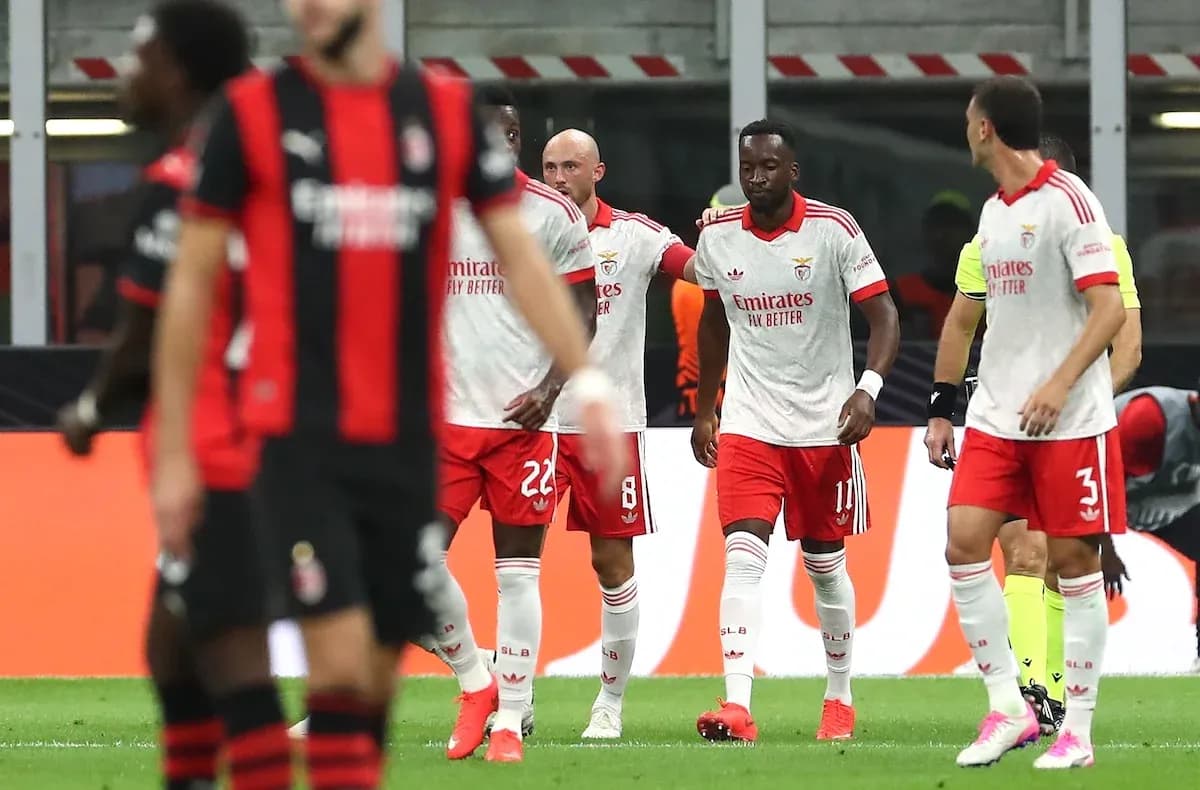
AC Milan vs Benfica: A Clash of Two Philosophies in UEFA Europa League
Five Standout Europa League Players to Watch in 2026/27
AC Milan vs Benfica Europa League Clash: Team Updates, Lineups & Broadcast Info
Omonia Nicosia vs Benfica Predicted Lineups: Team News for UEFA Europa League
Red Bull Salzburg vs Ararat-Armenia Predicted Lineups and Team News
Celje vs Red Bull Salzburg Predicted Lineups and Team News