
Iran National Team Prepares for World Cup Amid War and Uncertainty
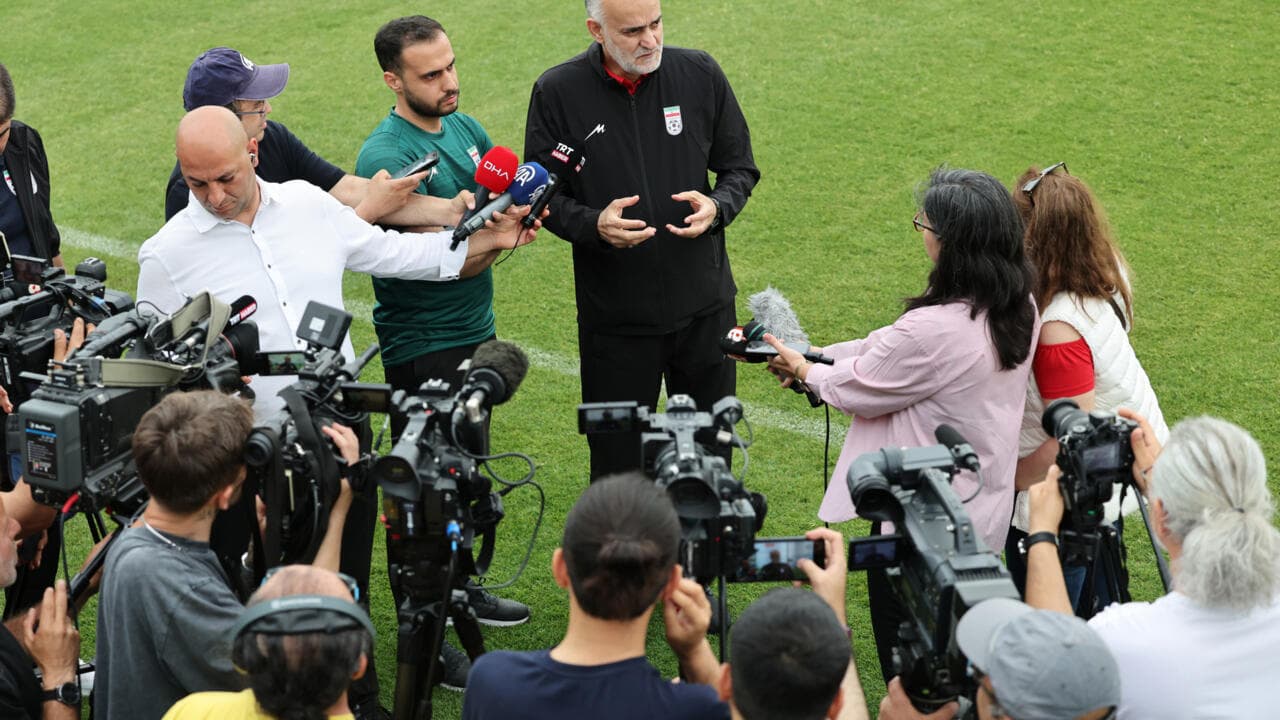
Iran’s national team slipped into Turkey on Monday, not for a friendly or a brief tune‑up, but for something far more delicate: a World Cup camp held in the shadow of war and under the weight of bureaucracy.
They are expected to stay for several weeks before flying to a World Cup co-hosted by the United States, even as the US, alongside Israel, has been bombing Iran since February 28 in a conflict that has ignited a wider war across the Middle East. It is a surreal backdrop for a team trying to focus on group tactics and set pieces.
Inside the camp, the message from the federation is one of calm control.
“Everything will proceed properly according to the protocols and what FIFA has stipulated,” said national team director and federation vice-president Mehdi Mohammad Nabi. He pointed to the machinery already in motion on the other side of the Atlantic. “Inside the United States, they also have committees in place, including a security committee that cooperates with FIFA and is responsible for security matters.”
This is not uncharted territory for Iran’s football authorities. They have lived through politically charged tournaments before, and Nabi leaned on that history.
“In past years we’ve experienced all of this and we’re fully informed about how these security committees operate at every World Cup we’ve participated in,” he said. “In this regard, we’re very confident and we have a clear plan.”
Confidence, though, meets a hard practical question: can everyone even get into the country?
Iranian officials have already admitted that players and staff still do not have US visas. The plan is to file applications through the Canadian embassy in Turkey, an extra layer in an already fraught process.
“We’re not certain yet that all the players and staff will receive US visas,” Nabi conceded.
That uncertainty cuts to the heart of one of FIFA’s most sensitive obligations. Hosts must open their doors to every qualified team, regardless of political fault lines.
“One of the rules that applies to the host country is that they must provide guarantees, according to FIFA’s statutes and the regulations of the competition,” Nabi said. “One of their commitments is the visas: they have to grant the necessary visa facilities to all the teams that have qualified for the World Cup.
“And FIFA has made arrangements so that the host country will provide the necessary cooperation to teams like Iran in this area.”
On the pitch, the picture is at least clear. Iran will launch their Group G campaign against New Zealand in Los Angeles on June 15, then stay in the city to face Belgium before heading north to meet Egypt in Seattle. Their base for the tournament will be Tucson, Arizona, a desert camp in a country currently at war with their own.
So the work begins in Turkey: training sessions, tactical meetings, fitness checks, all carried out while visas are processed and air corridors are negotiated. For Iran, this World Cup journey starts not with fanfare but with a question that hangs over every drill and every team talk: when they are finally called to the world’s biggest stage, will everyone be allowed to walk out onto it?
Related News

Carlos Alcaraz Urges an End to Matches Ending in the Early Hours

Carlos Alcaraz Criticizes Late US Open Finish After 3:30 a.m. Match

Jannik Sinner Set for ATP 500 Return in Beijing with Novak Djokovic Also Competing
Meet Iva Jovic: The American Tennis Prospect Making Waves

Flavio Cobolli Shares Insights on Practice Session with Jannik Sinner Ahead of Comeback

Till vs Romero: Fight Details, Undercard, and Viewing Info for This Weekend