
Jagiellonia Dominates FC Iberia 1999 with Tactical Superiority
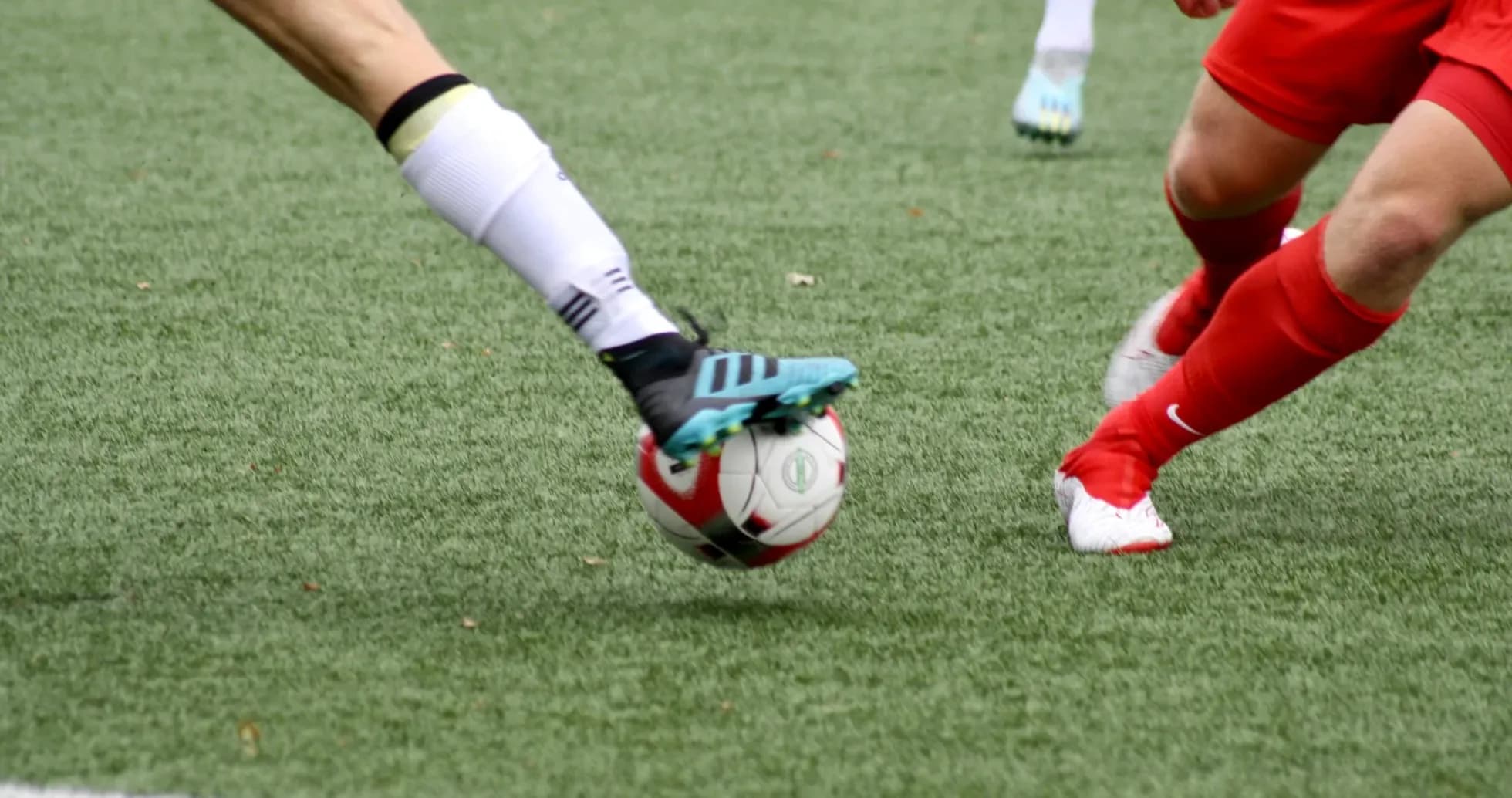
Jagiellonia’s 4-0 win over FC Iberia 1999 at Chorten Arena was built on clear structural superiority in identical 4-3-3 shapes, smarter use of territory, and a ruthless exploitation of Iberia’s defensive frailties, rather than overwhelming control of the ball. With possession almost even (49%–51%), the Polish side turned their phases without the ball and their transitions into a decisive advantage.
Adrian Siemieniec’s 4-3-3 was front-footed from the start. The back four of N. Wojtuszek, B. Vital, Y. Kobayashi and G. Montoia pushed high, compressing the pitch so that the midfield trio of T. Romanczuk, A. Klynge and Jesús Imaz could suffocate Iberia’s first build-up line. Jagiellonia’s 20 fouls underline how aggressively they defended forward; the intention was to break Iberia’s rhythm early, even at the cost of stoppages.
In possession, Jagiellonia’s structure was tilted to the right. Wojtuszek’s advanced positioning created a natural overlap for J. Agbonifo, while K. Szmyt on the opposite flank played narrower to link with Imaz between the lines. This asymmetry helped generate volume in and around the box: 8 shots on goal and 9 blocked shots point to repeated penetrations into dangerous zones, forcing Iberia’s back line into last-ditch interventions.
First Half
The first half was decisive tactically. Even though Imaz missed a penalty at 32', Jagiellonia’s ability to immediately re-establish pressure and create another penalty situation two minutes later showed their control of territory and second balls. Iberia’s midfield trio of N. Dadiani, Abdullahi Ibrahim Alhassan and B. Kardava struggled to protect the half-spaces; they were often dragged out by Imaz’s roaming and the inside movements of Agbonifo and Szmyt. The second goal, finished by Agbonifo from a Wojtuszek assist, encapsulated this: full-back underlapping into space vacated by the winger, exploiting Iberia’s weak side-tracking.
Andriy Demchenko also lined FC Iberia 1999 up in a 4-3-3, but the execution was reactive. Their 51% possession did not translate into control because too much of it was in deeper zones. The back four of J. Jinjolava, V. Selimović, A. Amisulashvili and G. Kobuladze saw a lot of the ball, yet struggled to progress cleanly through Jagiellonia’s press. When they did break lines, they could create: 7 shots on goal and 6 corners show that Iberia found moments in the final third. However, the lack of composure and the absence of a true reference point in the box meant those situations rarely turned into high-quality chances.
Second Half
The turning point in the second half was the own goal by Alhassan at 62'. It came from exactly the kind of sustained pressure Jagiellonia were engineering: Montoia high and wide on the left, a driven ball into a crowded area, and Iberia’s midfield dropping too deep, blurring the line between defenders and screeners. With their central block collapsing towards their own six-yard box, the probability of a deflection or mistake rose sharply. The own goal effectively ended Iberia’s hopes of a comeback and allowed Jagiellonia to manage the game with more composure.
Substitutions further underlined the tactical story. Siemieniec’s changes were like-for-like but maintained intensity: O. Sow (IN) came on for J. Agbonifo (OUT) at 59', S. Lozano (IN) for Imaz (OUT) at 70', and Y. Sylla (IN) for N. Prelec (OUT) plus R. Conceicao (IN) for Szmyt (OUT) at 80'. Each incoming player replicated the pressing and running demands of the system, ensuring Jagiellonia’s block never dropped too deep despite the comfortable scoreline. The fourth goal at 90', scored by Lozano from a Conceicao assist, was a direct product of fresh legs exploiting Iberia’s stretched shape in the final minutes.
By contrast, Demchenko’s substitutions for Iberia were more corrective than proactive. G. Kutsia (IN) for Alhassan (OUT) at 66' and A. Dzagania (IN) for S. Ende (OUT) at 70' were attempts to inject energy and attacking impetus, while later changes — S. Figueredo (IN) for Kobuladze (OUT), E. Kuliyev (IN) for Dadiani (OUT), and N. Bochorishvili (IN) for Amisulashvili (OUT), all at 80' — reshaped the back line and midfield. However, with the score already 3-0, these moves were chasing a game state rather than defining it. The fact Iberia ended with 5 yellow cards to Jagiellonia’s 1, despite committing fewer fouls (16 to 20), suggests their defensive actions were more desperate and often late, a symptom of being consistently half a step behind the ball.
Statistically, the match profile reinforces the tactical reading. Iberia’s slight edge in possession and their 7 shots on goal might suggest a more balanced contest on paper, but Jagiellonia’s 8 shots on goal and 9 blocked efforts show that their attacks were both more frequent and more threatening in the critical zones. Four corners to Iberia’s six indicate that the visitors did have territorial phases, yet they lacked the coordinated movements and delivery quality to convert restarts into real danger.
The card distribution also speaks to game control. Jagiellonia’s single booking, for Yuki Kobayashi, came early and did not materially alter their defensive approach. Iberia’s sequence of yellows — to Alhassan, Kobuladze, Selimović, Dadiani and Kuliiev — mapped onto phases where Jagiellonia were accelerating play or counter-attacking, forcing emergency interventions. That imbalance in disciplinary pressure mirrored the broader tactical pattern: Jagiellonia dictating where and how the game was played, Iberia reacting in increasingly risky ways.
Overall, this was a textbook example of how a well-drilled 4-3-3 can dominate without monopolising the ball: by compressing space, attacking with width and depth, and sustaining pressure until the opponent’s structure breaks, both technically and mentally.
Related News
AC Milan vs Benfica: A Clash of Two Philosophies in UEFA Europa League
Five Standout Europa League Players to Watch in 2026/27
AC Milan vs Benfica Europa League Clash: Team Updates, Lineups & Broadcast Info
Omonia Nicosia vs Benfica Predicted Lineups: Team News for UEFA Europa League
Red Bull Salzburg vs Ararat-Armenia Predicted Lineups and Team News
Celje vs Red Bull Salzburg Predicted Lineups and Team News