
Jason Wilcox: From Blackburn Winger to Manchester United's Director of Football
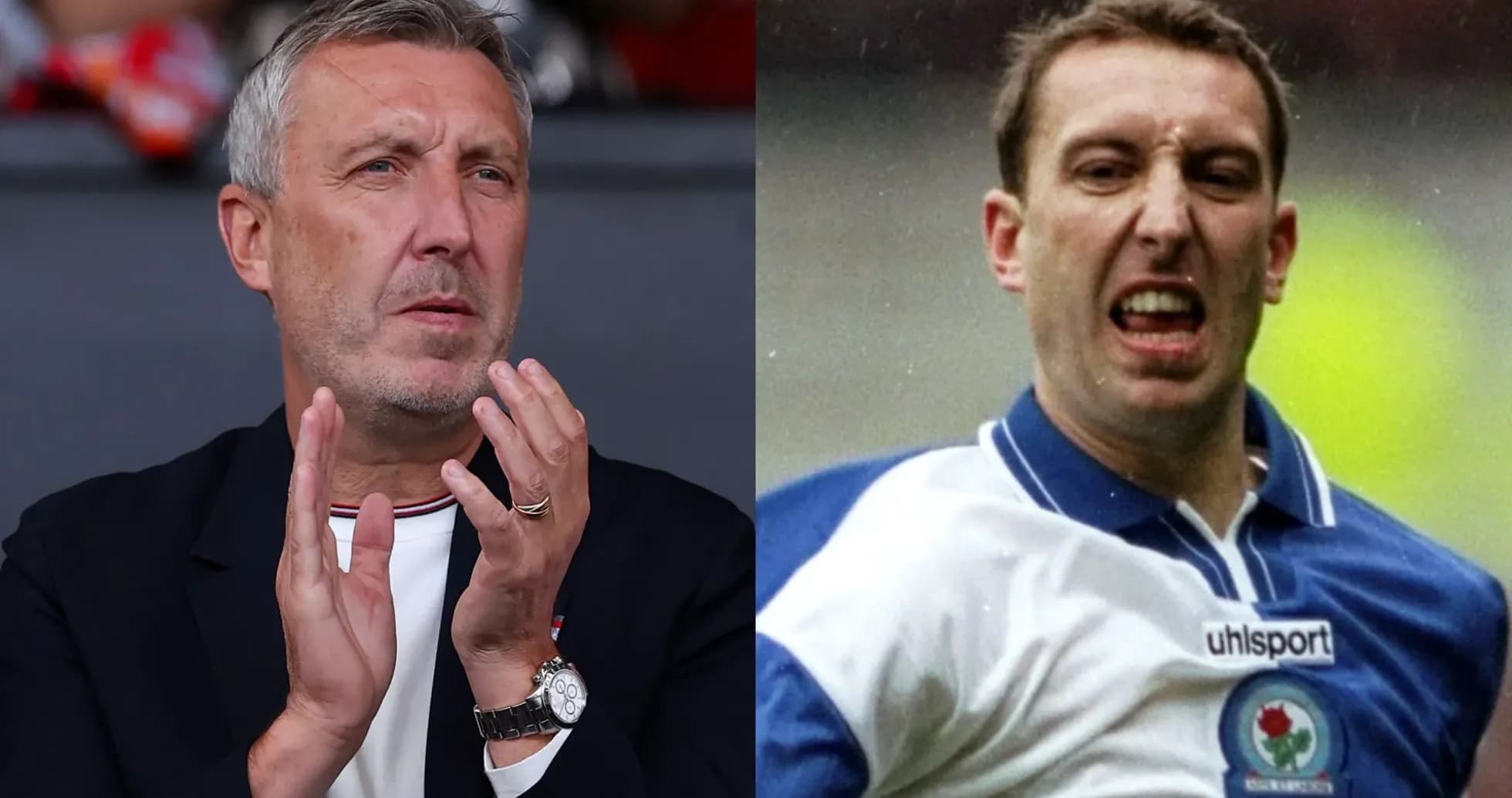
Jason Wilcox always looked like a football man. Few who watched him whip crosses onto Alan Shearer’s head at Blackburn ever pictured him as the quiet power behind the scenes at Old Trafford. Yet here he is, 55 years old, calling shots on Manchester United’s recruitment and managerial appointments, operating under the harshest glare in English football.
This is not the life many imagined for the Bolton-born winger who came through Blackburn’s youth system and grew into a mainstay of their greatest side. More than 270 senior appearances for Rovers, a decade in the first team, and a central role in that unforgettable 1994-95 Premier League title win. He earned three caps for England, then drifted out of the spotlight after retirement in 2006 following spells with Leeds, Leicester and Blackpool.
He walked away. Then came back smarter.
In 2012, Wilcox returned to the game at Manchester City, slipping into academy coaching rather than the more glamorous front-line jobs that former players often chase. He climbed. Coach, then head of the academy, then director. His reputation hardened quietly inside one of the most sophisticated football operations in Europe.
Southampton noticed. In January 2023, they lured him to St Mary’s as director of football, and his stock rose again. The work there helped pave his path to Manchester United, where he initially arrived as technical director in April 2024 before stepping into the director of football role. Now he has a major say in who United sign, who they sell, and even who sits in the dugout. Michael Carrick’s appointment to replace Ruben Amorim bears his fingerprints.
It is a job that invites scrutiny and abuse in equal measure. You need thick skin. You also need a certain type of mind.
Colin Hendry's Perspective
Colin Hendry, Wilcox’s former Blackburn team-mate and a title winner alongside him, knows that side well. Speaking to GOAL in association with IvyBet, the former defender did not hesitate when asked what sort of character now helps steer Manchester United.
"He's obviously a very clever character. He was a clever footballer," Hendry said.
On that left flank at Ewood Park, Wilcox was the steady hum of quality. “Jason was good. Jason was very effective as a winger, with Jason on the left, Stuart Ripley on the right. And when you've got two strikers, Alan Shearer and Chris Sutton, just feeding off what they provided, that's why these lads more or less won Blackburn the Premiership. But it was supply as well.”
Hendry admits he never saw this future coming. “Jason's position, I would have never thought, to be fair, that may have happened, that he would have ended up in that position,” he said. Yet the path, when you trace it back, makes sense.
After hanging up his boots, Wilcox moved into private business. Then City called. “He did a business and then he was at Man City academy, grew at the Man City Academy to the head of the Academy, got headhunted off to Southampton and from Southampton all the way along, he's been doing really well.
“And that doesn't surprise me because he was a clever footballer. Sometimes good, great footballers don't make great coaches and great managers. But then Jason's gone down a different path.”
That path has taken him into a role that barely existed when he was playing. The modern director of football is part strategist, part negotiator, part shield. They sit between ownership, coaching staff and recruitment, often absorbing blame when signings fail and managers fall.
Hendry understands how complex that job has become. “The game's moved on. So the recruitment, that's a job in itself,” he said.
Clubs no longer simply watch a player, like what they see and sign him. Layers of analysis wrap around every decision. “To a layman, you're thinking of all these different things, criteria that players have got, and they go into everything these days at the top level, they go into everything - they go on about their social aspects, their upbringing, they go so far back into things. And I do understand, but I don't know how much of that really affects that individual as a footballer.”
The tension lies where it always has: who gets the final say? The man in the dugout, or the man upstairs?
“I do think that the manager, the coach, the man, the guy that's picking the team on the Saturday to play that game should have an input into who they have in the squad,” Hendry insisted. “And I know that's not always the case because there's funding and everything else, you've got so many different things to think about.
“And what I mean by funding is what the budget is they've got to spend, the wages, and everything else, all that's going to be taken into consideration because the club's got to be run properly. I understand that as well as, but I do think the main man should have a bit of an influence as to what he's looking to bring into his squad.”
Wilcox now lives in that grey area, trying to balance financial reality, long-term planning and a manager’s immediate needs at a club that demands instant success. It is a far cry from hugging the touchline at Ewood Park, yet some traits clearly carried over.
“He's a funny guy though,” Hendry recalled. “Jason was very sharp, very quick witted. He did a really good take on Ray Harford and Kenny [Dalglish]. He did a couple of good takes on the Gaffer and Ray, God rest his soul. And even Tony Parkes as well, God rest his soul. Jason was a comedian, if I'm being honest.”
The joker in the dressing room now helps decide the fate of multi-million-pound footballers and the careers of managers at Old Trafford. United’s rebuild will be judged on the players he signs, the structure he builds and how well Carrick’s squad reflects a clear plan.
The winger who once supplied Shearer and Sutton now supplies something else entirely: the framework for what Manchester United hope will be their next great team.
Related News
Shaun Maloney Takes on Key Role with Celtic's Attack

Brian Farinas: From La Masia Exit to Barcelona's Pre-Season Opportunity

Balraj Landa Embraces New Challenge in Hong Kong Premier League

Manchester City Firm on Rodri Transfer Stance

Barcelona's Pursuit of Rodri: A Test of Nerve and Finance

Cristiano Ronaldo's Quest for 1,000 Goals with Al Nassr