
José Mourinho's Dramatic Return to Real Madrid
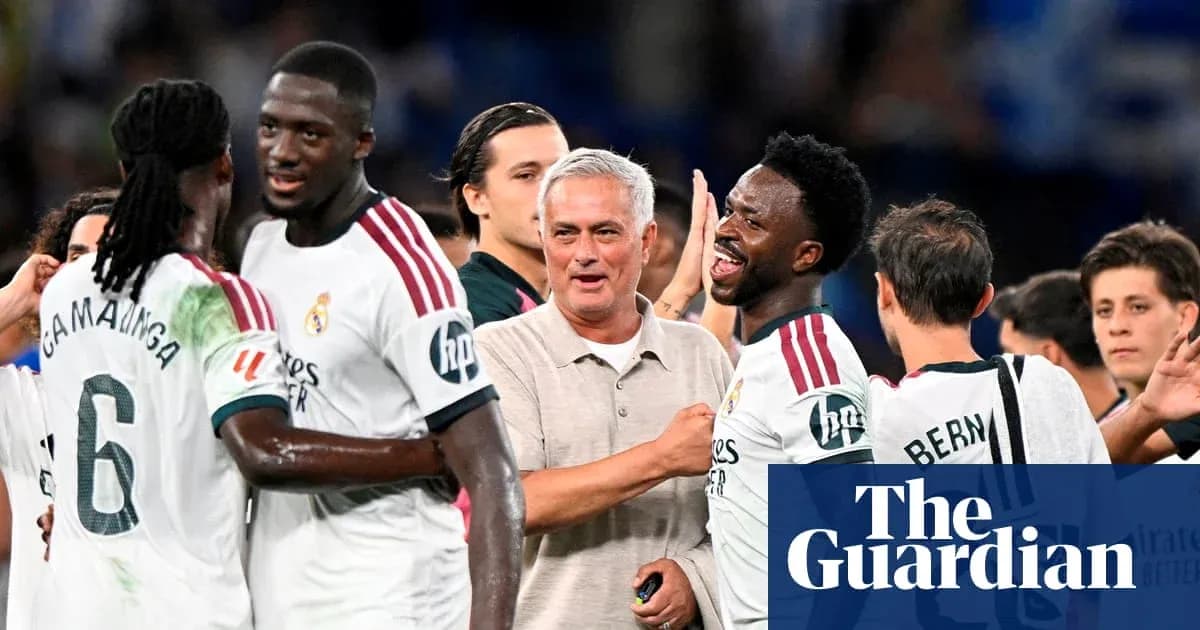
José Mourinho stood up, but he didn’t run.
As the Real Madrid bench exploded and substitutes tore down the touchline in the 90th minute, he stayed back, fists clenched, walking rather than sprinting. The celebrations surged towards Carlos Espí in the corner; Mourinho stopped Fede Valverde for a quick word instead. After 4,380 days away, his second debut as Madrid coach had been dragged to the edge. The only thing left to say, really, was: phew.
For all the star wattage around him, it was not Kylian Mbappé, not Vinícius Júnior, not Jude Bellingham, not even record signing Yan Diomande who decided it. It was a 21-year-old striker barely known outside Levante six months ago. Espí, brought in precisely to be something different, something old-fashioned, rammed home the scruffy winner that finally gave Mourinho his victory on night one back in white.
Signed after hauling Levante clear of relegation last season, Espí is still living at Valdebebas, sharing breakfast with his new coach. He was recruited to be a classic No 9, a body in the box, a finisher of untidy moves. That is exactly what this was. A messy attack broke down, the ball ran away from Mbappé in the area, and Espí was there, bullish and alive, to force it over the line. One goal, one question: is this just a Plan B profile, or something more central to what Madrid might need?
Mourinho returns to the storm
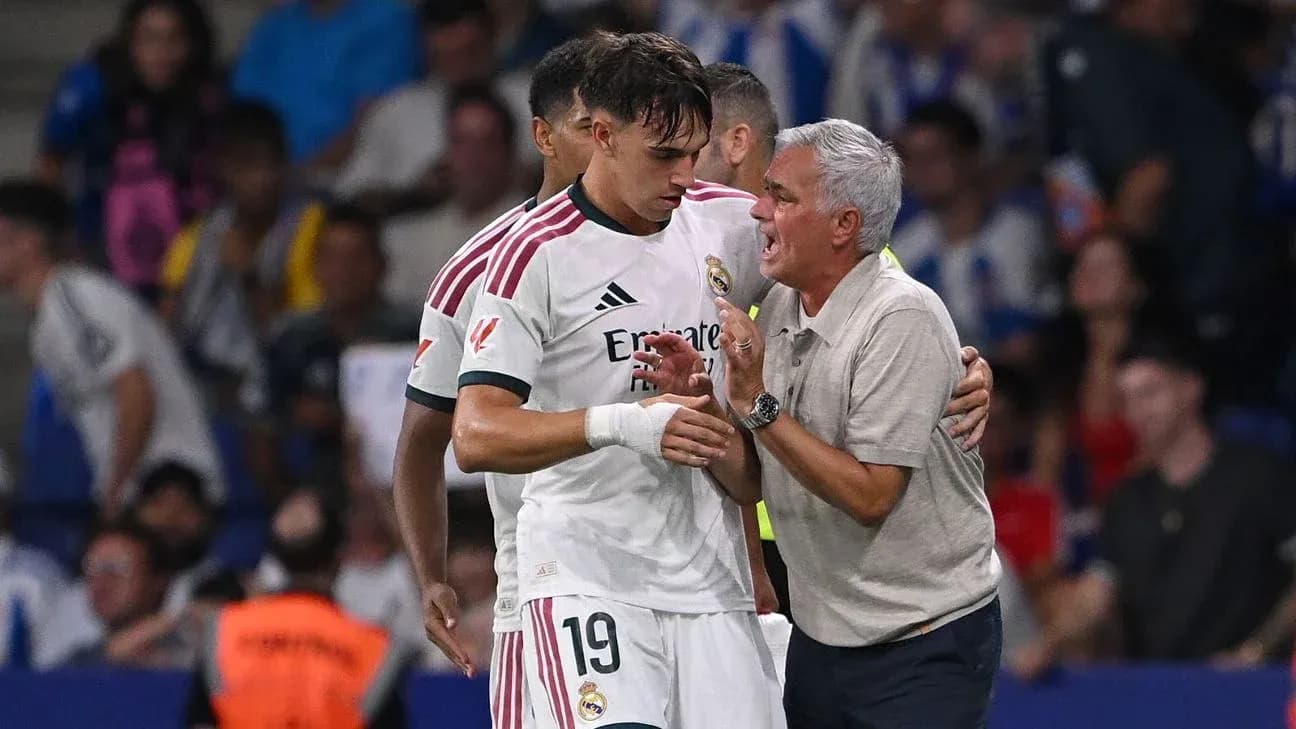
The night began with a familiar scene. Photographers abandoned their usual positions behind the goals and swarmed the Madrid bench, lenses locked on Mourinho as he took his seat for his first game since a 4-2 win over Osasuna in May 2013. It ended with him embracing Espanyol coach Manolo González, slapping hands with the referee and disappearing down the tunnel, job done but eyes wide open to the work ahead.
Between those moments, reality cut through the nostalgia. This was not a grand unveiling of a finished product. It was a first step. Mourinho had warned that Espanyol were a good side, and they proved it. Madrid had more chances, but González’s team restricted them for long spells and, at times, unsettled them.
Old flaws resurfaced. The defensive looseness, the drifting intensity, the sense that games can slip away even with all that talent on the pitch. It is only matchday one, but the doubts that have lingered over Madrid did not vanish in one evening. They were simply pushed back a little, delayed by a late goal and a coach who knows that sterner tests – of his team and of his own temperament – are coming.
In the spring, when Madrid met Benfica, Mourinho had described his first spell at the club as “three hard, intense, sometimes violent years”. Time has softened the edges. The rows, the tension, the internal wars fade; the trophies and the defiance remain. Mourinho insists he is “not the kind of man who misses anything”, a man with “regrets” rather than nostalgia. But plenty at Madrid had missed him. Florentino Pérez most of all.
For Pérez, coaches are often a necessary evil, a means to an end. Mourinho has always been the exception, the one manager he truly liked, the one he credits with changing the club’s competitive culture. In the president’s mind, the six Champions League titles that came in the 11 years after Mourinho’s departure still carry his fingerprints. He had, in Pérez’s view, shown the way.
On the eve of this game, Mourinho told a revealing story. After every trophy Madrid lifted without him, Pérez would call. Mourinho said he always replied: “I always said no, no, no, it was nothing to do with me.” Which, of course, was his way of saying it had something to do with him. Pérez has said as much himself. It took 13 years for the president to finally act on that itch and bring him back.
Culture war, round two
Why now? Because the pattern of recent years has stung. The returning heroes – Zinedine Zidane, Carlo Ancelotti – delivered. The others failed. Madrid have gone two years without a major title. Barcelona have edged back in front. For Pérez, this is not just about tactics. It is about culture, standards, the daily grind.
Mourinho framed it simply: “We have to try not to negotiate things that are non-negotiable. Commitment can’t be missing.” That is where his authority is supposed to bite. Training habits, demands, the edge around the place. Players have already spoken of a shift. Sessions feel sharper, or at least the attitude towards them does. Diomande said he was ready to “die” for his coach. Mourinho brushed it off as a phrase, but he liked the sentiment all the same.
There are other reasons Madrid believe the ground is firmer this time. Vinícius’s future has finally been resolved, no more friction over status or role. The World Cup is gone from the calendar, no competing priority looming over the season. The stage is clear for the club’s three superstars to coexist.
Mourinho pointed out that Brazil, France and England had each found a way to maximise Vinícius, Mbappé and Bellingham individually. Doing it all at once is another problem entirely. “I don’t think they’re incompatible,” he insisted. Last season, it often looked like they were. Even Bellingham admitted they sometimes drift into the same spaces.
Here, all three started. Bellingham played as a No 10, high up, Vinícius hugging the touchline. “For me this is his [Jude’s] position: the connection with the forwards, he can score goals. He has to play close to the goal. Playing at 6 or 8 we’re losing his closeness to the goal,” Mourinho said.
The impact was instant.
Bellingham strikes, then the drop
Nine minutes into Mourinho’s second era, Madrid led. Vinícius, already targeted physically, drew a foul on the left. Arda Guler, all poise and whip, delivered a delicious cross. Bellingham climbed, hung, and buried his header past Marko Dimitrovic. A new era, a familiar scorer.
Mourinho’s reaction was telling. No leap, no sprint. He rose, slid his hands into his pockets and strolled down the touchline to the far end of the bench, where the overflow of his staff sat in the stand. He shook hands with Sami Khedira, now installed as an in-house assistant, and analyst Roberto Merella. Then he sat back down.
For a brief spell, it felt like the gulf between the teams was too big to bridge. Madrid pressed high, Espanyol struggled to escape. This, you thought, might be the template. Aggressive, front-foot, suffocating. Then the intensity ebbed. The door opened.
When Dean Huijsen needed treatment for a cut, Madrid’s players drifted towards Mourinho for instructions. Yet the game was already tilting. Espanyol stepped up and stayed there. Thibaut Courtois saved from Riedel, Roberto Fernández mis-hit the rebound. The warning was clear. Madrid ignored it.
Soon the equaliser came, and it was a beauty. Espanyol stitched together a slick move, Tuy Dolan and Javi Hernández combining neatly before Alex Calatrava arrived to finish. Mourinho barely moved, his stillness almost louder than any rant.
Madrid still carved chances. Twice Mbappé burst free, once on each side of the box, only for Dimitrovic to stand tall. Espanyol, though, could have gone in ahead at the break. Another flowing attack worked the ball wide right, Omar El Hilali swung in a superb cross and Dolan, just inside the six-yard box, could not quite reach it. Fernández, behind him, headed it straight into his own feet. It was that kind of half: frantic, open, and far too loose for Mourinho’s liking.
Right after the restart, Mbappé somehow failed to restore the lead. From a Guler corner, Bellingham crashed a header against the bar via Dimitrovic’s fingertips. The rebound dropped to Mbappé at the back post, a finish he would normally pass in. He put it wide. Valverde hit the post. Mbappé dragged another shot off target. The clock ticked and the tension grew.
Mourinho turned to the bench and threw on the cavalry: Marc Cucurella, Diomande, Eduardo Camavinga, Trent Alexander-Arnold, Espí. One by one, the names filed past him and into the storm.
A scruffy winner, a pointed verdict
At last, the pressure told. The move that produced the winner was anything but pretty. It broke down, bounced, ricocheted. Mbappé lost control in the area. Espí did not. The 21-year-old muscled his way into position and forced the ball over the line. The bench emptied. Mourinho walked.
He finished the night with a line that cut through the noise. “I think we deserved to win, but Espanyol didn’t deserve to lose,” he said. A nod to the balance of the game, a hint of humility, and a reminder that this was no procession.
Madrid have their win, their late hero, their returning icon back in the dugout. The nostalgia is over. The hard, intense years he once described are waiting for them again. The only real question now is whether this time, with Mbappé, Vinícius, Bellingham and an unlikely No 9 in Espí, that violence he spoke of turns into something more enduring: a new era of control.
Related News
Newcastle v Liverpool: New Challenges for Jaissle and Iraola
Dom Ballard's Incredible Backheel Goal Sparks Bristol City Draw
Arsenal Urges Osimhen to Lower Wage Demands in Transfer Saga
Cristiano Ronaldo Breaks Record with 25 Consecutive Scoring Seasons
Hull City Triumphs Over Manchester United as Lucas Herrington Makes History
José Mourinho's Dramatic Return to Real Madrid