
Just Fontaine's Legendary 13 Goals in World Cup History
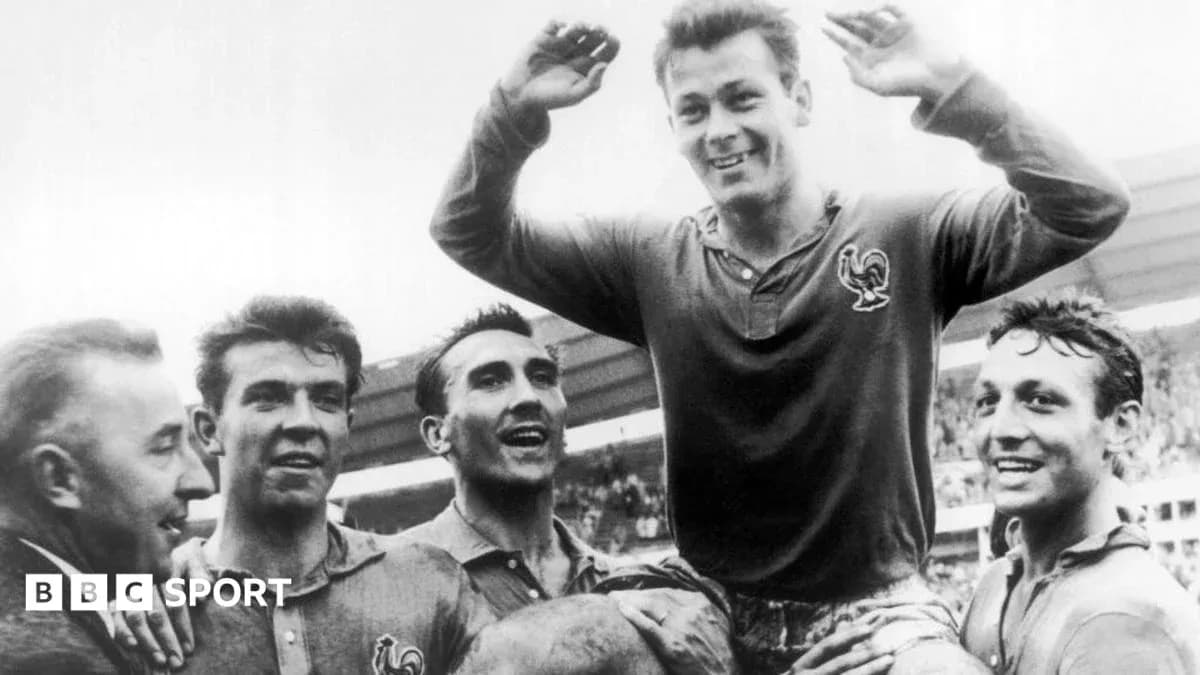
Just Fontaine’s 13 goals at a single World Cup already sound like a myth. Then you remember he did it in borrowed boots and was never meant to start.
No sculpted Golden Boot, no glittering gala. His prize for eviscerating Sweden 1958? An air rifle from a local newspaper for being a “sharp shooter”. The greatest World Cup haul of all time, rewarded like a fairground sideshow.
Every four years his name resurfaces, a line in a graphic, a benchmark for the latest generation. Then it slips back into pub quiz folklore while the modern giants dominate the conversation.
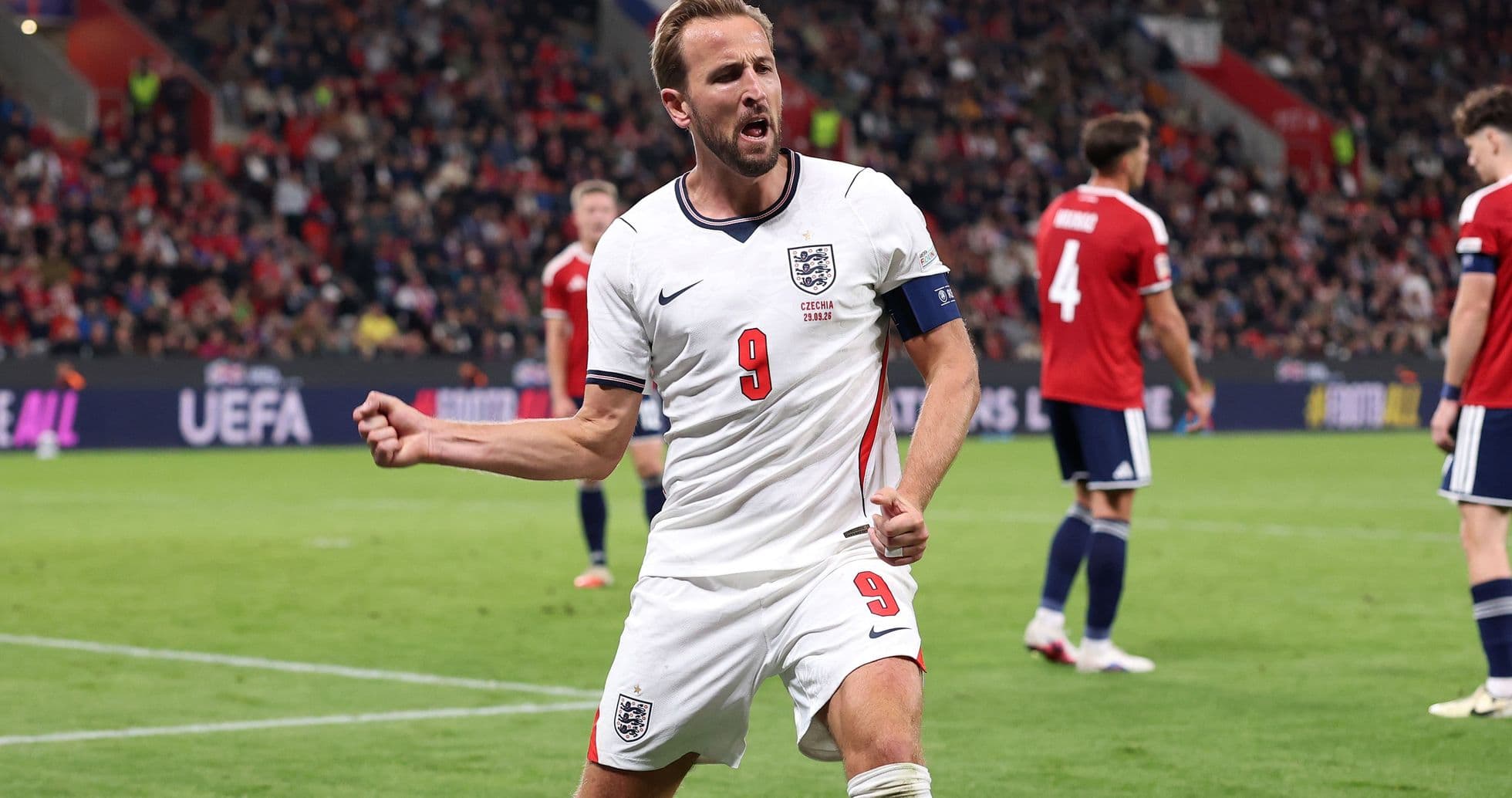
Yet here in 2026, with Lionel Messi, Kylian Mbappe, Erling Haaland and Harry Kane trading blows in a Golden Boot race of rare intensity, Fontaine’s ghost lingers over the tournament like a watermark. Mbappe already has eight, Messi and Haaland seven, with Kane and Jude Bellingham just one back. The numbers are swelling in a way we have barely seen since Fontaine’s era.
Since 1970, only three World Cup top scorers have reached more than six goals. This time, the expanded 48‑team format is pushing the limits. Sides that go deep will play up to eight matches. The modern forwards are armed with better pitches, lighter balls, data‑driven conditioning and an extra round.
And still, they are chasing a man who needed just six games.
A record from another world
To younger fans, Fontaine is a name on a list, miles below Pele, Messi and the other permanent residents of football’s Mount Olympus. He has become trivia, when his story deserves a place among the great epics of the game.
The 2026 quarter-final between France and Morocco carried a quiet subtext: the Just Fontaine derby. He was born in Marrakesh in August 1933, when Morocco was still a French protectorate. By the time Morocco gained independence, two years before that 1958 World Cup, Fontaine was already established in French football and tied to Les Bleus.
He could easily have been the icon of another nation. Instead, he became the most lethal finisher France has ever sent to a World Cup.
And he nearly missed the stage altogether.
“He was not actually first choice – a team-mate, Rene Bliard, got injured in a warm-up game,” sports journalist and historian Philip Barker told BBC Sport. The change was so late Fontaine didn’t even have boots that fit. He had to borrow a pair from team-mate Stephane Bruey for the opening match.
Imagine it now: a World Cup striker turning up short of footwear.
Fontaine had undergone meniscus surgery during the season and was a serious doubt for the tournament. The operation, though, left him fresher than most. While others staggered into Sweden after long, punishing campaigns, he arrived with legs that still had a spring.
He had only five caps when Albert Batteux promoted him to the starting XI. But he was no mystery man.
At club level, Fontaine was already a star. He played for Reims, who completed the French league and cup double in 1957-58. It was one of four Ligue 1 titles he won – one with Nice, three with Reims. A year after the World Cup, he would fire Reims to the European Cup final, top scoring in the 1958-59 competition with 10 goals before losing to Real Madrid.
He shared a room for France with Raymond Kopa, the dazzling playmaker who would win the 1958 Ballon d’Or, with Fontaine finishing third. They talked football deep into the night, sharpening their understanding of space and timing. When Fontaine finally got his chance, he stepped into the side as if he had always belonged.
“He came into the team, and took to it like a duck to water,” Barker said.
Lighting the fuse
The World Cup announced him in a blur. A hat-trick in a wild 7-3 win over Paraguay in France’s Group Two opener lit the blue touch-paper.
From there, he scored in every single match.
The pressure that now suffocates modern superstars simply did not exist. Speaking to the BBC in 2002, Fontaine recalled a very different world.
“In those days there was not so much pressure on us,” he said. “Only two journalists followed the team around.
“Our team bosses were so convinced we would be knocked out that they only gave us three shirts each, so we were totally free from pressure.
“My mind was not on the goals record at all. I even turned down the chance to take a penalty in the third-place game!”
That casual remark jars with the scale of what followed. Fontaine kept scoring: group stage, quarter-final, semi-final. He even found the net in a 5-2 defeat to a Brazil side powered by a 17-year-old phenomenon called Pele.
The third-place play-off against West Germany offered one last chance. Fontaine did not waste it. He scored four in a 6-3 win, filling those borrowed boots to the brim and setting a record that has survived every tactical revolution since.
Thirteen goals. Six matches. A number that still feels outrageous.
A striker ahead of his time
The raw total is extraordinary. The quality of the goals is what really jars with the grainy black-and-white footage.
This was an era of heavy leather balls, lenient referees and goalkeepers who could be clattered with impunity. Yet Fontaine does not look like a battering ram. He looks like a modern No 9.
Against Paraguay, he times late runs into the box to perfection, darts behind the defensive line, shapes his body and slides finishes into the corners. Barker sees a forward who would not look out of place in 2026.
“Fontaine looks like a modern striker, he has so much pace,” he said. “He was a leader of the attack in the English style, said L’Equipe – courageous, combative, stubborn.
“Then scoring a hat-trick in your first game of the tournament, that must give you so much confidence.”
His third goal against West Germany stands out even now. He collects the ball around halfway, surges past defenders and tucks it into the far corner. The run and finish would be replayed endlessly if it happened today. The closest modern echo might be Michael Owen’s famous solo effort for England against Argentina in 1998.
Fontaine’s spree fitted the tone of the tournament. Sweden 1958 produced 126 goals, the second-highest tally in a 16-team World Cup after 1954. France alone scored 23, the most of any side.
With Fontaine and Kopa at the heart of it, that French team belongs in the same breath as the nation’s more celebrated vintages.
“The 1958 tournament was the last real goal-fest tournament,” Barker said. “You had the emerging Brazil team with Pele, but also the French team were all-time greats.
“We talk about the 1998 and 2018 teams, but this was the first great French team. The front five scored 22 goals, that shows how powerful they were.
“Yes, the defences are a bit slow, but the way France move the ball, they would score against any team. Fontaine was also setting up goals for Kopa, they are such a slick team.
“France were only stopped by 1958 Brazil, one of the greatest teams of all time. We are not talking school five-a-side, these are real standards.”
Brazil closed the door. Fontaine never returned to a World Cup.
You cannot help but wonder what France might have done in 1962 or 1966 with that kind of ruthless edge still leading their line.
Beyond the goals
Fontaine’s contribution to football did not end when his knees gave way. Forced to retire early, he stayed close to the game and to the players who came after him.
In 1961 he helped form the French players’ union, the UNFP, and became its first president, giving a generation of professionals a collective voice. On the touchline, he took charge of France for two games in 1967, then coached PSG and Toulouse before spending two years in the dugout with Morocco, the country of his birth.
He also ran sports shops, a reminder that even the greatest goalscorer in World Cup history still needed a life beyond the stadium lights.
“He set up the union, he coached, he ran a couple of sports shops. From time to time, people would ask who the World Cup record holder was, and he would still relish the fact people would remember him,” Barker recalled.
Fontaine liked to joke that if he came back in 200 years, his record would still be standing. L’Equipe simply called it “unbeatable”.
He died on 1 March 2023, aged 89. He lived long enough to watch France lift the World Cup twice and to see Mbappe explode onto the scene as the new spearhead of Les Bleus, the man most likely to stalk his record.
“How appropriate it would be if Mbappe beats him?” Barker said.
Maybe that is the question hanging over this World Cup. Not whether anyone can reach 13 – but what it would mean if they did. Would it finally drag Fontaine out of the trivia rounds and back into the pantheon?
Because 13 is not just a number. It is a standard that has survived generations, a reminder that one of football’s greatest feats was achieved by a man in borrowed boots who was never meant to start.
Related News
India's Record Chase of 406 Against West Indies Highlighted by Gill's 223 and Rohit's Century

Alex Pereira Hints at Major UFC Bout: 'Big Challenge' Ahead
Three Hall of Famers, Ten Fights, 109 Rounds: The Forgotten Rivalry That Shaped Lightweight Boxing's Golden Era
Khamzat Chimaev and Colby Covington Set for RAF Abu Dhabi Title Clash in November
Thomas Tuchel Confident Harry Kane Will Join 100-Goal Club for England Soon
Cristiano Ronaldo Vows to Reveal Truth After Leaving Portugal Squad Amid Conflict