
Kairat Almaty vs Levski Sofia: Tactical Analysis of UEFA Champions League Clash
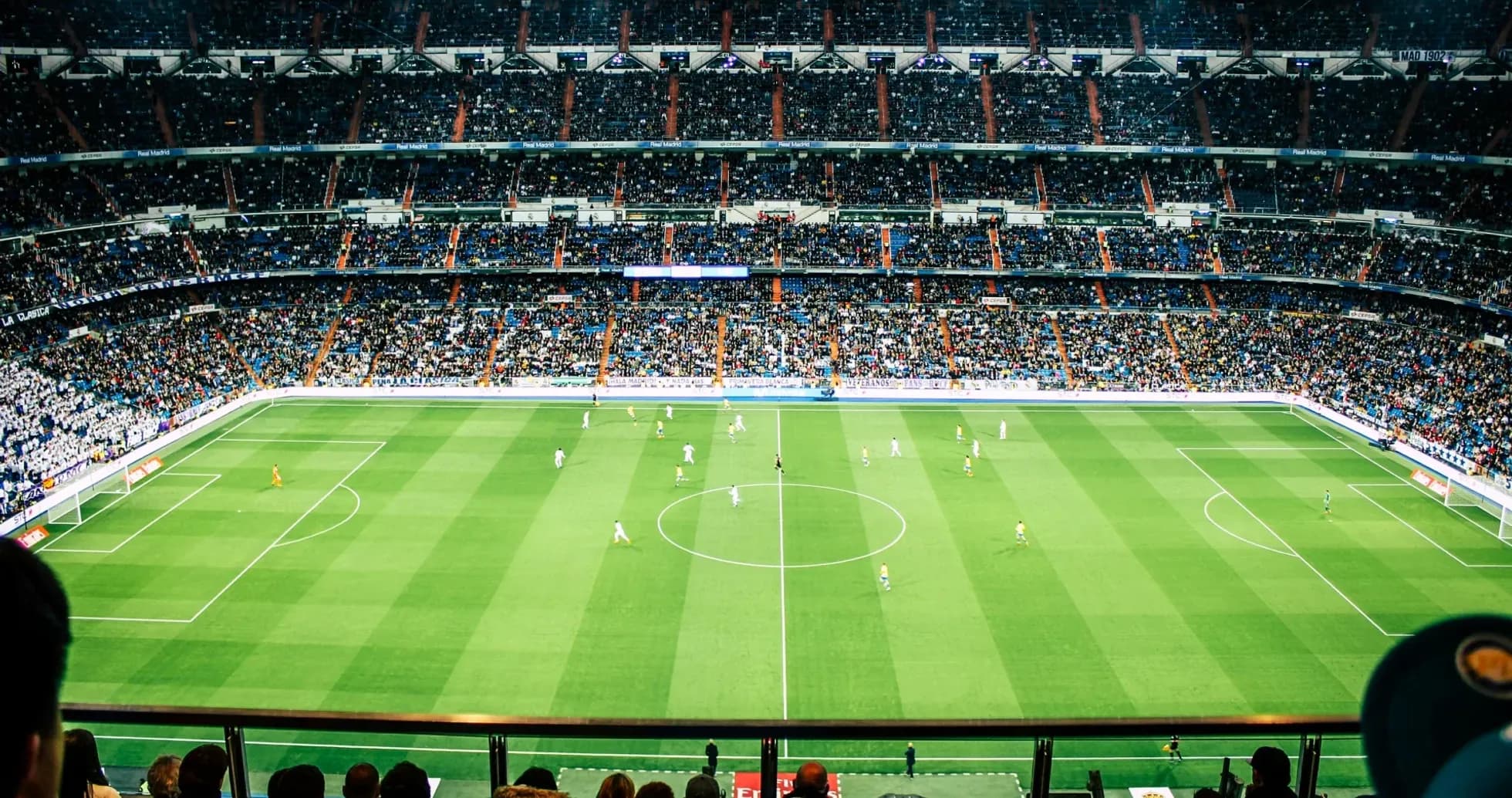
Kairat Almaty’s 1-0 defeat to Levski Sofia at Turkestan Arena in the UEFA Champions League 3rd Qualifying Round was defined by contrasting efficiencies rather than territorial dominance. The hosts controlled more of the ball, generated far more attempts, and forced Levski into a deep, reactive block, yet a single early transition goal from Reinaldo proved decisive. Both sides lined up in a 4-2-3-1, but interpreted the shape very differently: Kairat used it as a possession and territory platform, Levski as a compact, counter-attacking shell built to protect the box and maximise the value of their few entries.
Kairat’s 4-2-3-1 under Rafael Urazbakhtin was clearly constructed to progress through structured possession. With 56% ball possession and 496 total passes (421 accurate, 85%), they circulated well in midfield and into advanced areas. The double pivot of O. Baybek and J. Oksanen provided stability and distribution, allowing the attacking line of A. Mrynskiy, G. Mendonsa and O. Jukkola to occupy high pockets between Levski’s lines. Their shot profile reflects a side that reached the final third frequently: 20 total shots, 13 from inside the box and 7 blocked. That volume, plus 9 corner kicks, underlines sustained pressure.
Yet the quality of that pressure was inconsistent. Only 6 of those 20 attempts were on goal, and Levski’s defensive line, led by K. Dimitrov and N. Serafimov, consistently got bodies in front of efforts. The high blocked-shot count hints at Kairat often shooting through traffic rather than creating clear separation. Marc Gual as the lone forward had to operate against a narrow back four that rarely vacated central zones, forcing many actions into crowded channels.
Levski Sofia, by contrast, accepted territorial inferiority and built their game plan around compactness and direct threat. With 44% possession and 416 passes (343 accurate, 82%), they were more selective in their use of the ball but notably more efficient in turning attacks into danger: 9 total shots, 7 from inside the box, and crucially 2 on goal — one of which was converted by Reinaldo. Their 4-2-3-1 flattened into a 4-4-1-1 out of possession, with wide midfielders Everton Bala and A. Oko-Flex dropping to support full-backs A. Centelles and A. Neves, squeezing Kairat’s wingers and forcing them either inside into traffic or back toward the pivot.
The early booking for Everton Bala for “Foul” at 7' did not fundamentally alter Levski’s aggression; they still committed 14 fouls overall, compared to Kairat’s 10, a sign of their readiness to disrupt rhythm and prevent Kairat from turning possession into clean central entries. Subsequent yellow cards for Aldair, N. Serafimov (both “Foul”) and Juan Perea (“Argument”) underline a defensive performance built on physical duels and a willingness to contest every phase in their own third.
In goal, S. Vutsov (Levski Sofia) was the backbone of this approach. He made 6 saves, matching Kairat’s shots on goal total and effectively closing the door on any comeback. His work was the logical endpoint of Levski’s compact block: forcing Kairat to shoot under pressure and then relying on the goalkeeper to handle whatever did pierce the defensive screen. At the other end, T. Anarbekov (Kairat Almaty) faced only 2 shots on goal and made 1 save, underlining how little sustained pressure Levski needed to turn the match. The single concession — Reinaldo’s 13' strike — was enough.
The substitution patterns highlight the tactical adjustments as the game state evolved. Urazbakhtin’s changes were all aimed at increasing attacking punch. At 46', Ismail Bekbolat (IN) came on for Olzhas Baibek (OUT), whose first-half yellow for “Foul” at 45+6' may have influenced the timing. This switch nudged Kairat toward a more aggressive, forward-minded structure after the break. When Damir Kasabulat was booked for “Foul” at 60' and then replaced by Edmilson (IN) at 64', Kairat effectively sacrificed a defender to add another attacking presence, pushing numbers higher and wider, especially down the flanks.
The later change at 84' — Mansur Birkurmanov (IN) for Marc Gual (OUT) — was a final attempt to refresh the front line against a tiring, but still compact, Levski defence. However, the underlying pattern remained: Kairat could reach the edge of the box and generate volume, but Levski’s structure and penalty-area density continued to limit the clarity of chances.
Julio Velazquez’s substitutions for Levski were almost entirely about energy and maintaining defensive integrity while preserving the threat in transition. At 79', Hevertton Santos (IN) for Armstrong Oko-Flex (OUT), Mazire Soula (IN) for Aldair (OUT), and Maicon (IN) for Everton Bala (OUT) refreshed both flanks and a full-back slot, ensuring that the defensive line and wide midfielders could continue to close spaces and contest crosses. Reinaldo, the match-winner, was withdrawn at 83' for Juan Perea (IN), adding a fresh runner to chase long balls and press Kairat’s build-up. In added time, Asen Ivanov Mitkov (IN) replaced Serginho (OUT) at 90', another move to inject legs into midfield and see out the final moments.
Discipline also shaped Kairat’s defensive aggression. Alongside Baibek and Kasabulat’s yellows, Gustavo Mendonca’s late booking at 90+4' for “Foul” showed a side increasingly forced into riskier challenges as they chased an equaliser. Still, with 3 yellow cards to Levski’s 4, Kairat were not reckless; rather, they were outmanoeuvred in the key early transition and then struggled to convert dominance into goals.
Statistically, the verdict is clear: Kairat Almaty controlled the ball and territory, but Levski Sofia controlled the scoreboard. The hosts’ 56% possession, higher pass volume, and 20 total shots illustrate a side structurally capable of advancing play, yet the combination of only 6 shots on target and 7 blocked attempts points to issues in chance quality and shot selection against a low block. Levski, with 9 shots and 7 inside the box, produced fewer but more central and potentially higher-value opportunities.
Defensively, Levski’s 6 saves and 2 blocked shots, plus their higher foul count, paint the picture of a team fully committed to protecting their area once ahead. Kairat’s 1 save and 7 blocked shots suggest that when Levski did attack, they did so with purpose, but without sustained volume. Over 90 minutes, the tactical trade-off favoured Levski: concede territory, compress space, rely on S. Vutsov (Levski Sofia) and a disciplined, if combative, back line — and trust that one clean attacking moment, as provided by Reinaldo, would be enough to tilt the tie.
Related News
Fenerbahçe's Narrow Win Over Sturm Graz in Champions League Qualifier
Slovan Bratislava 2-0 Mjallby AIF: UEFA Champions League First Leg
Hapoel Beer Sheva Defeats FK Crvena Zvezda 2-0 in Champions League Qualifier

Celje 2-0 Ararat-Armenia: UEFA Champions League Qualifying Round Match Report

Lyon 3-0 Sparta Praha: Champions League Qualifying Round Dominance

Kauno Žalgiris vs Dinamo Zagreb: UEFA Champions League Qualifiers Match Report