
Kauno Žalgiris vs Dinamo Zagreb Tactical Analysis
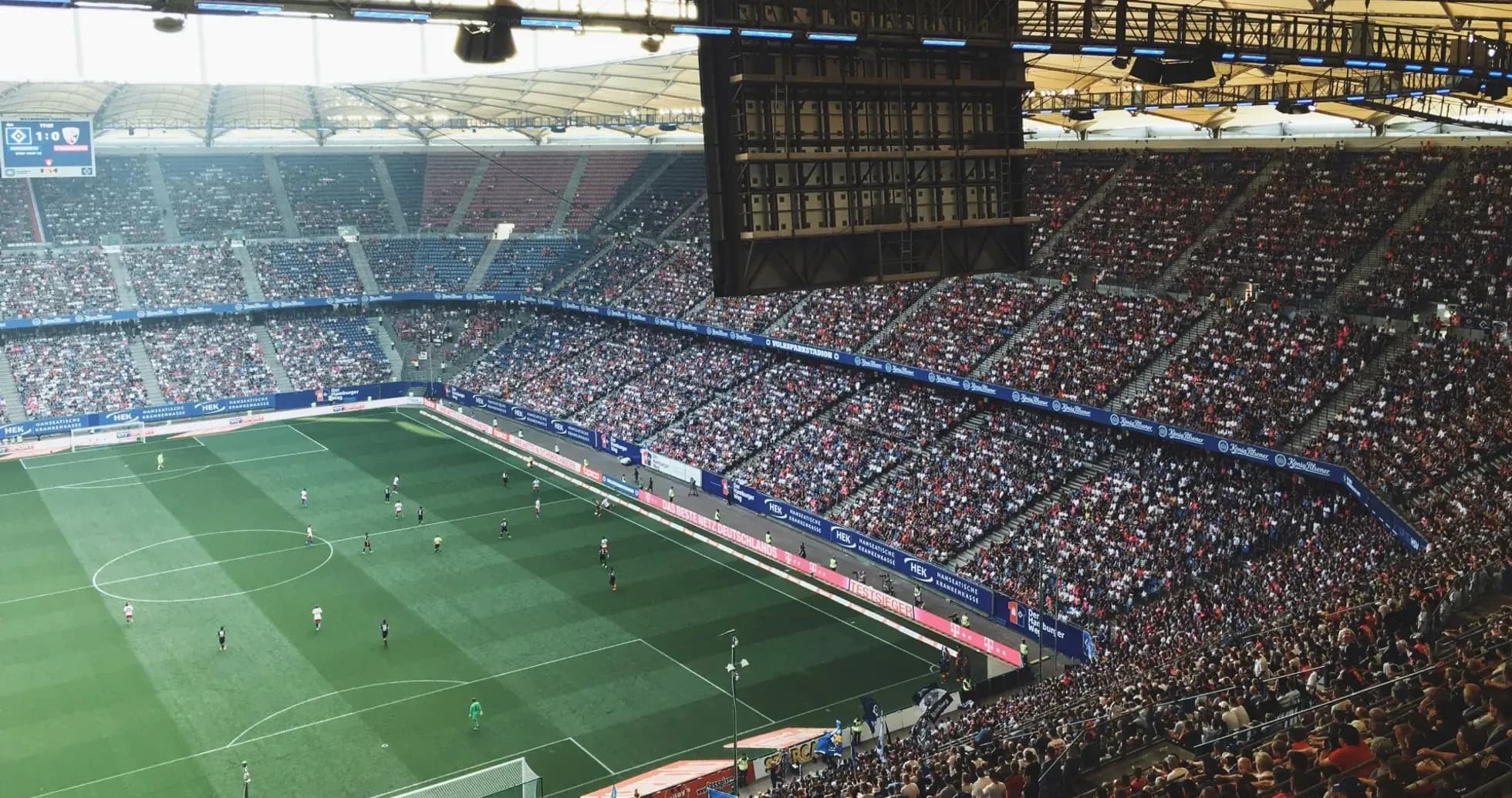
Kauno Žalgiris’ 4-1-4-1 at Steponas Darius and Stasys Girenas was built to control the ball and gradually advance through midfield, and the statistics confirm that territorial intent: 61% possession, an 8–1 advantage in corners and 14 fouls committed as they repeatedly tried to counter-press after losing the ball. Dinamo Zagreb’s 4-3-3 under Mario Kovacevic, by contrast, was unapologetically pragmatic. With only 39% of the ball, they focused on verticality and early efficiency, racing to a 2-0 lead and then surviving long spells without possession, especially after going down to ten men.
Structurally, Kauno Žalgiris’ back four of J. Moutachy, A. Tolordava, R. Lekiatas and M. Konatar sat behind single pivot F. Baldassarra, with a narrow band of four — M. Burba, A. Benchaib, V. Slivka and L. Krekovic — tasked with linking to lone striker Renan Oliveira. The shape was designed to overload central zones and create second-ball pressure. That approach is reflected in their volume of attacking actions: 7 shots on goal, 7 shots off goal and 4 blocked shots, indicating sustained pressure and repeated shot creation from similar zones rather than isolated breaks.
Dinamo’s 4-3-3 was more fluid in practice. The nominal midfield trio of L. Kacavenda, J. Misic and L. Stojkovic played with clear role separation: Misic as the deeper distributor, Kacavenda and Stojkovic stepping into half-spaces to connect with wide-leaning midfielders M. Lisica and M. Orsic around central forward D. Beljo. Despite having fewer total attempts (5 shots on goal, 3 off goal, 4 blocked), Dinamo’s early phases were sharper. The first goal from L. Kacavenda, assisted by D. Beljo, underlined how quickly they could progress through the thirds when they broke Kauno Žalgiris’ first line of pressure. Misic’s strike for 0-2 then punished the hosts’ difficulty in protecting the edge of the box and tracking late midfield runs.
Discipline and game state heavily shaped the tactical landscape. Kauno Žalgiris collected two early yellow cards — Anton Tolordava at 10' and Joris Moutachy at 11', both for “Foul” — a clear marker of an aggressive, front-foot defensive plan. They were willing to step in late and disrupt Dinamo’s combinations, even at the cost of cautions. Dinamo, with only 8 fouls overall, were more selective but suffered the game’s key disciplinary turning point: Ivan Filipović’s straight red card for “Foul” at 32'. That dismissal forced an immediate structural recalibration.
With Filipović sent off, Dinamo had to burn an early substitution at 34', bringing on goalkeeper I. Nevistic (IN) for M. Lisica (OUT). Tactically, this meant sacrificing one of the advanced midfield runners and dropping into a more conservative 4-3-2/4-4-1 hybrid out of possession. Beljo’s yellow card for “Foul” at 54' further constrained his ability to press and contest aerial duels with full physicality, nudging Dinamo deeper and making their block more compact but less aggressive.
Kauno Žalgiris’ substitutions were clearly aimed at amplifying their territorial dominance and adding penalty-box presence once the numerical advantage was established. At 46', G. Debeljuh (IN) came on for Renan Oliveira (OUT), a like-for-like switch but with a more direct, penalty-area-focused striker. That decision paid off when Debeljuh scored at 56' to make it 1-2, capping a period where Kauno Žalgiris’ 61% possession was finally converted into scoreboard pressure. Subsequent changes — Leo Ribeiro (IN) for L. Krekovic (OUT) and I. Fiolic (IN) for M. Burba (OUT) at 57', followed by A. Kalik (IN) for F. Baldassarra (OUT) at 66' and F. Ourega (IN) for A. Benchaib (OUT) at 79' — progressively tilted the side towards an even more attack-heavy profile. The pivot was refreshed, interiors were given more creativity, and wide areas were stocked with players comfortable receiving high and inside.
Dinamo’s response from the bench was almost entirely protective. At 46', B. Goda (IN) replaced M. Perez Vinlof (OUT), reinforcing the defensive line, while G. Vidovic (IN) for L. Stojkovic (OUT) rebalanced midfield legs and ball retention. Later, F. Topic (IN) for D. Beljo (OUT) at 61' gave fresh energy up front to press sporadically and hold up rare clearances, and N. Galesic (IN) for L. Kacavenda (OUT) at 72' further solidified the central corridor. The pattern is clear: once down to ten, Dinamo’s substitutions progressively traded technical risk for defensive stability.
The statistical contrast in set-pieces and territorial play is telling. Kauno Žalgiris’ 8 corners to Dinamo’s 1 underline the home side’s territorial siege, particularly after the red card. They forced Dinamo into a low block, repeatedly recycling the ball and firing from range or wide areas, hence the balanced shot profile (7 on target, 7 off, 4 blocked). Dinamo, by comparison, maximised their early phases: 5 shots on goal from limited possession, turning their best attacking window — 11' to 32' — into a decisive 2-0 cushion.
Discipline and game management ultimately decided the tactical verdict. Card totals finished Kauno Žalgiris: 2, Dinamo Zagreb: 2 (1 yellow, 1 red), Total: 4, but the distribution and timing mattered more than the raw count. Kauno Žalgiris’ early yellows were the cost of an aggressive press that later enabled them to pen Dinamo in. Dinamo’s red, combined with their willingness to cede the ball, locked them into a deep, resilient but reactive posture.
From a broader lens, this was a match where Kauno Žalgiris’ control, pressing and shot volume suggested a side capable of competing at UEFA Champions League 3rd Qualifying Round level in terms of structure and intensity, but punished for lapses in transition defence and penalty-area efficiency. Dinamo Zagreb, meanwhile, showcased a classic big-club away blueprint: strike clinically early, then compress space, accept territorial inferiority and rely on a disciplined, numerically reduced block to defend the box. The 2-1 scoreline in Dinamo’s favour reflects not who had more of the ball, but who managed the critical phases — the opening half-hour and the minutes immediately after the red card — with greater tactical clarity.
Related News

Lamine Yamal on What Barcelona Needs to Win the Champions League
Luis Díaz Confident Bayern Munich Can Win Champions League
AFC Champions League Matchday One: Insights and Team Strategies
Vincent Kompany’s Bayern Munich Future Not Tied Solely to Champions League Success
Barcelona’s Camp Nou to Host 2029 Champions League Final, Munich Confirmed for 2028
Bayern Munich's Allianz Arena Set to Host 2028 Champions League Final