
Klement's Model Predicts Netherlands as World Cup Champions
Paul the Octopus needed nothing more than a tank and a couple of mussels to become a World Cup sensation. He guessed his way into folklore in 2010 by calling every Germany result correctly.
Fourteen years on, the oracle of choice isn’t a cephalopod. It’s a German economist with a spreadsheet.
Joachim Klement, a strategist at investment bank Panmure Liberum, has built a statistical model that has done what no pundit, supercomputer or psychic animal has managed: it has correctly picked the last three World Cup winners in a row. Germany in 2014. France in 2018. Argentina in 2022. All called in advance.
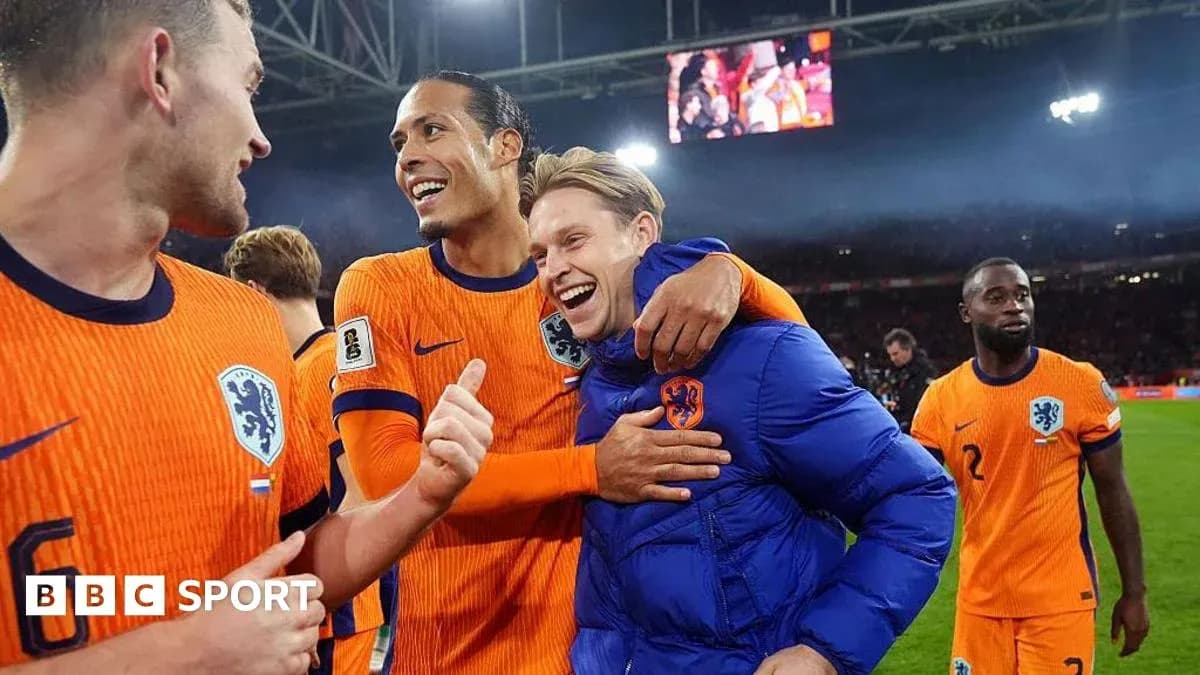
Now the model has gone again. This time, it points to the Netherlands.
If the Dutch lift the trophy in July, Klement’s record moves to four out of four – a perfect streak stretching over 12 years and four tournaments, the kind of run that turns an obscure research note into something close to legend.
The model that keeps being right
Klement never set out to become football’s numbers guru. He describes himself as a “pessimist”, and the whole exercise began as a joke at the expense of his own profession.
“This started as an exercise in showing the world a hubris of economists who think they can forecast stuff that they actually have no clue about,” he says. The idea was simple: build a model, make a prediction, and let reality expose its limits.
Instead, reality kept playing along.
After his native Germany matched his forecast and won in 2014, he expected the magic to fade in Russia. He ran the numbers again, fully expecting the model to be unmasked as a fluke. It spat out France. Les Bleus won.
He tried once more in 2022. The answer: Argentina. Lionel Messi finally got his hands on the trophy, and Klement’s quiet side project became something else entirely.
“Because I was right three times in a row, people now think that this model is unbeatable and that I obviously will have to be right as well next time,” he says.
That “next time” is here.
Why the Netherlands?
Klement’s model feeds on what he calls “systemic” factors: things that shape a country’s long-term footballing strength. Population size. National wealth. Climate. Fifa rankings. The broad structural advantages and disadvantages that sit behind any squad list.
From that base, the model simulates the 48-team tournament, round by round. It doesn’t just spit out a champion; it traces the shock waves along the way.
This time, it has Japan upsetting Brazil in the second round. It has Scotland failing to escape their group. It sends England on a familiar path of hope and frustration: a run to the semi-finals, then a meeting with Portugal. Just as they did in 2006, the Portuguese are forecast to end the English dream.
The model doesn’t go as far as scripting “penalties, again”, but it doesn’t need to. The echo is loud enough.
At the top of the tree sit the Dutch. According to the numbers, the Netherlands emerge from the chaos, history and noise of a World Cup as champions.
The other 50%
Klement is the first to insist that this is not prophecy. It’s probability dressed in orange.
He is clear about the limits. Those systemic factors, he says, only ever tell half the story.
“The other 50% is luck,” he says. And that’s not a throwaway line. It’s the heart of his argument.
“Every match – especially when you have these high-quality teams playing against each other that are very similar in skills and quality – it really depends on the form of the day, a ref call, a piece of luck in the sense of hitting the post versus the ball going in.
“Things like that are completely unpredictable.”
A deflection here, a red card there, a goalkeeper’s glove stretching one inch further than expected – none of that lives in his equations. His model doesn’t know about a winger’s crisis of confidence or a manager’s late tactical gamble. It can’t see the ball shaving paint off the post instead of nestling in the top corner.
Which is precisely his point. For all the talk of data, football still lives in those tiny, wild margins.
A serious diversion in a troubled world
Every four years, as another World Cup looms, Klement returns to the model. It’s a break from his day job, a way to step away from bond yields, economic shocks and geopolitical tension.
“In particular in 2026, when there are so many crises, wars and things going on, it is something that makes me feel good and hopefully the readers feel good and gives them a little bit of a distraction from all the kind of bad stuff that is going on in the world,” he says.
What began as a tongue-in-cheek critique of economic forecasting has turned into a cult feature of the World Cup build-up. Each successful prediction draws more attention, more readers, more pressure.
His inbox fills. Colleagues stop by his desk. They want to know how an injury here or a suspension there might twist the numbers. When Dutch Tottenham midfielder Xavi Simons suffered an ACL injury, the question came quickly: what does that do to the model?
Klement smiles at the idea of tweaking a grand, structural framework for a single player, even an important one. The model isn’t meant to be that precise. It doesn’t pretend to be a team doctor, a scout or a bookmaker.
Yet people still want answers. And some of them are willing to back those answers with cash.
“I’ve got several colleagues who bet some money on the Netherlands in response to me publishing that note,” he says.
Which leads to a different kind of forecast.
“If the Netherlands get eliminated from the World Cup, I think the next day I have to work from home.”
For now, though, the numbers say the Dutch are coming. The only question left is whether the chaos of a World Cup will finally break the streak – or extend one of the most unlikely runs in modern football folklore.
Related News
Carlos Alcaraz Calls for Change After Laver Cup Court Conditions
Alexander Zverev Secures Laver Cup Victory for Team Europe with Straight-Set Win Over Learner Tien
Novak Djokovic Shares Fitness Update Before China Open Return After US Open Upset
Shubman Gill's Captaincy Record Across All Formats: Tests, ODIs, T20Is, and IPL
Kuldeep Yadav Named Player of the Match Over Virat Kohli Despite Century in IND vs WI 1st ODI
India Advances to Asian Games 2026 Cricket Semi-Finals After Rain Washout Against Afghanistan