
Lech Poznan Overcomes Aarhus 4-1 in Tactical Showcase

Aarhus’ 4-1 defeat to Lech Poznan at Cepheus Park Randers was shaped less by volume of chances and more by structural imbalance and game-state after a pivotal first-half red card. In a UEFA Champions League 2nd Qualifying Round tie that finished 0-2 at half-time and 1-4 overall, Lech’s 4-2-3-1 systematically dismantled Aarhus’ 3-4-3 once the hosts were reduced to ten men, turning a relatively even shot profile into a controlled, possession-heavy away performance (57% to 43%).
Tactical Setup
Tactically, Aarhus’ 3-4-3 was designed to be front-foot: three centre-backs (E. Kahl, F. Tingager, J. Jensen-Abbew) behind a flat four of wing-backs and central midfielders, with S. Jorgensen, T. Bech and M. Anderson as a narrow front three. The structure initially offered decent shot volume (12 total shots, 7 inside the box) but was vulnerable in rest defence against Lech’s single striker and three advanced midfielders. The key turning point came on 37': Jesper Hansen’s (“Professional handball”) red card forced Jakob Poulsen into a radical reshuffle, with S. Jorgensen (OUT) sacrificed for substitute goalkeeper M. Hedenstad (IN) at 40'. From that moment, Aarhus effectively lost a pressing reference in the front line and dropped into a 5-3-1/5-2-2 hybrid out of possession.
Lech Poznan’s 4-2-3-1 under Niels Frederiksen was built on double pivot control and wide overloads. Radosław Murawski and A. Kozubal anchored midfield, allowing P. Walemark and L. Palma to attack half-spaces around central forward M. Ishak. Their statistical dominance reflected this: 18 total shots, 10 from inside the box, and a huge 8 blocked shots, showing sustained pressure and repeated shot attempts through crowded zones. The early opener at 29' from Ishak, assisted by right-back J. Pereira, highlighted Lech’s ability to stretch Aarhus’ back three horizontally, pulling wing-backs deep and isolating central defenders.
Game Progression
After the dismissal of Jesper Hansen, Lech immediately raised their line of engagement, using the extra player to lock Aarhus into their own half. The second goal at 42' – P. Walemark finishing from an A. Kozubal assist – was emblematic: Lech circulated through the double pivot, then broke Aarhus’ reduced midfield line with vertical passing. With Aarhus’ front press blunted by the loss of Jorgensen and their wing-backs pinned, the three centre-backs were repeatedly dragged into wide channels, leaving gaps for late runners like Walemark.
Despite the numerical deficit, Aarhus had a brief tactical resurgence after the interval. Poulsen’s side, now with Hedenstad in goal and Bech and Anderson initially retained up front, focused on quicker, more direct attacks. Their goal at 55' came from exactly that pattern: K. Arnstad arriving from midfield to score, assisted by F. Emmery. It underlined that even at 10 men, Aarhus could still exploit transitional moments when Lech’s full-backs advanced simultaneously.
However, Lech’s bench and structural control quickly reasserted dominance. The 61' goal by centre-back T. Yegbe, assisted by W. Monka, reflected Lech’s threat on set pieces and second phases, with Aarhus’ reduced numbers making zonal and man-marking assignments harder to execute. At 65', Walemark struck again, this time from a L. Palma assist, effectively killing the contest. The immediate triple substitution on 66' – Walemark (OUT) for L. Bengtsson (IN), Ishak (OUT) for Y. Agnero (IN), and Palma (OUT) for D. Hakans (IN) – showed Frederiksen managing game-state: preserving legs, maintaining vertical threats, and ensuring pressing intensity remained high even with a three-goal cushion.
Substitutions and Tactical Adjustments
Aarhus’ late substitutions at 73' and 83' were reactive rather than proactive. J. Jensen-Abbew (OUT) for J. Andersen (IN), M. Anderson (OUT) for K. Yakob (IN), and T. Bech (OUT) for J. Bogere (IN) suggested a search for fresh energy and more mobility in the front line and defence, but by then Lech’s structure was entrenched. The final change, G. Links (OUT) for T. Kristjansson (IN) at 83', removed one of Aarhus’ few consistent ball-progressors, further limiting their ability to mount sustained pressure.
Statistical Analysis
In possession, the passing data underlines the strategic contrast. Lech completed 472 total passes with 389 accurate at 82%, reflecting a composed, circulation-heavy approach through the double pivot and back four. Aarhus, with 356 passes and 276 accurate at 78%, were more direct and forced into riskier vertical balls, especially after going down to ten men. The shot profile supports this: Aarhus’ 12 shots (4 on goal) were more opportunistic, while Lech’s 18 shots (7 on goal) came from prolonged territorial control and repeated entries into the box.
Defensively, the foul and card profile tells its own story. Aarhus committed 11 fouls and saw one yellow and one red. Gift Links’ yellow at 45+6' for “Simulation” encapsulated a side under pressure, trying to manufacture moments in the box rather than constructing them. Lech’s 12 fouls and two yellows – Murawski for “Time wasting” at 50' and Yannick Agnero for “Foul” at 69' – were more about game management and disrupting rare Aarhus transitions once the match was effectively decided.
Goalkeeping Performance
In goal, the statistical picture is clear. The Aarhus goalkeeper unit (first Jesper Hansen, then M. Hedenstad) registered 3 saves, while M. Lis (Lech Poznan) made 2. The disparity between Lech’s 7 shots on goal and Aarhus’ 3 saves reflects the clinical nature of Lech’s finishing and the impact of the red card on the quality of chances conceded. Conversely, Lis’ 2 saves against 4 shots on goal indicate that while Aarhus did carve out moments, they lacked sustained pressure or volume to threaten a comeback.
Overall, this was a tactical demonstration of how a well-drilled 4-2-3-1 with superior possession structure and bench depth can systematically exploit a 3-4-3, especially once numerical superiority is established. Aarhus’ initial plan was coherent but fragile; Lech Poznan’s was adaptable, controlled, and ruthless once the match tilted in their favour.
Related News
Luis Díaz Confident Bayern Munich Can Win Champions League
AFC Champions League Matchday One: Insights and Team Strategies
Vincent Kompany’s Bayern Munich Future Not Tied Solely to Champions League Success
Barcelona’s Camp Nou to Host 2029 Champions League Final, Munich Confirmed for 2028
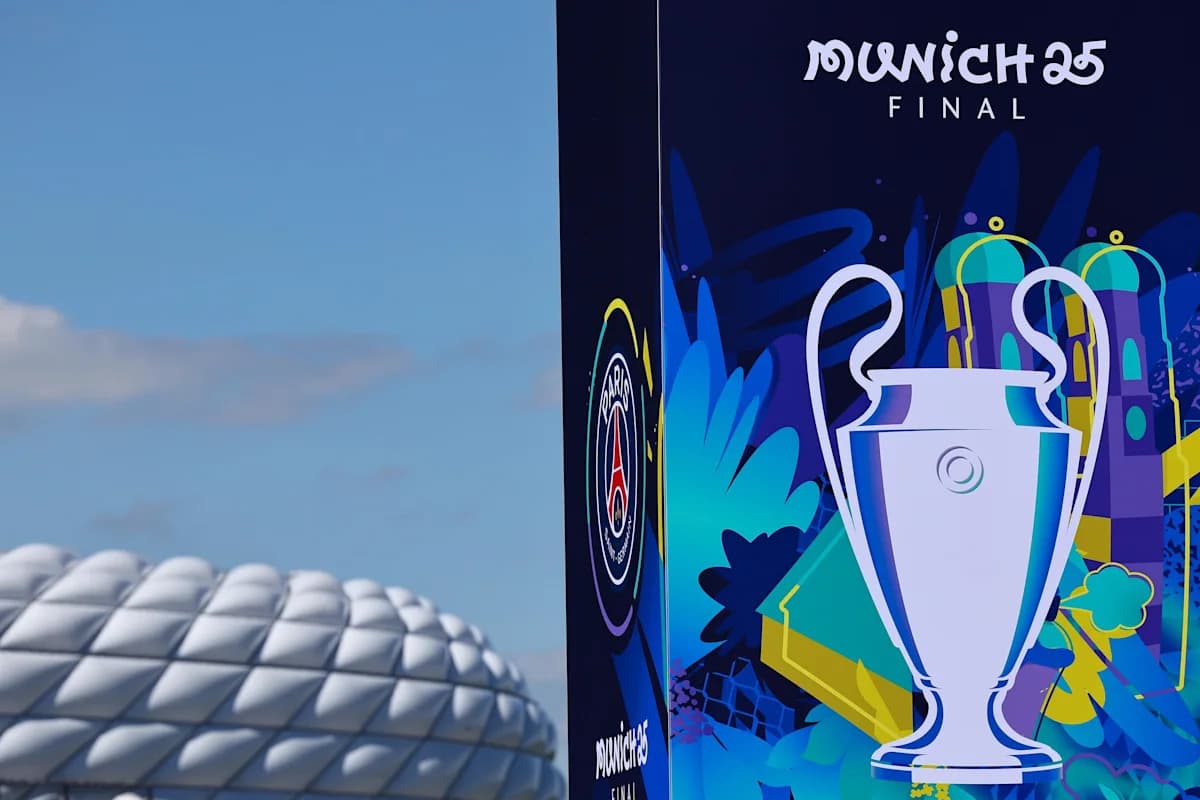
Bayern Munich's Allianz Arena Set to Host 2028 Champions League Final
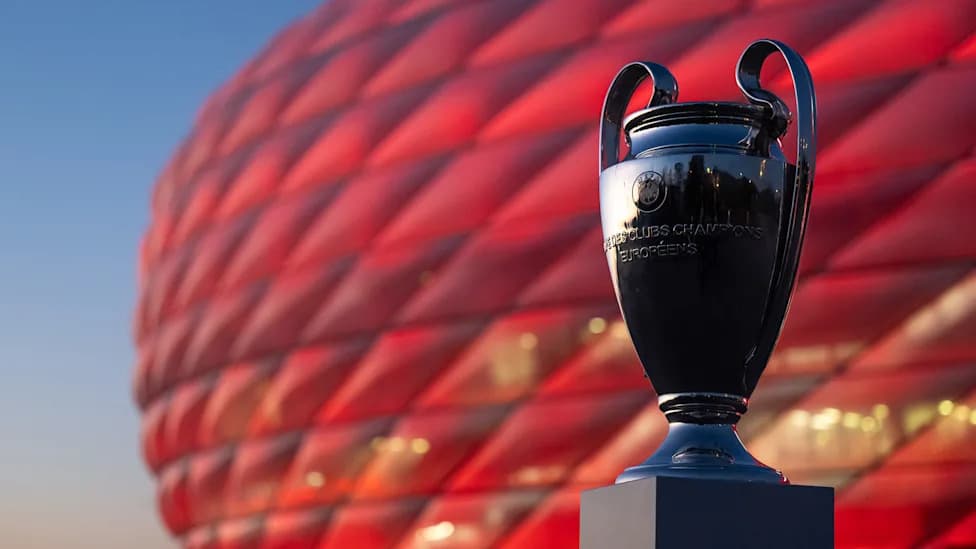
Allianz Arena to Host 2028 Champions League Final for Third Time