
Leeds United's Remarkable Rise Back to Premier League Heights
For the first time in a generation, the Premier League table looks like a relic from another era. Leeds United, a club more associated with survival battles and second-tier rebuilds in recent years, sit third after four games. It evokes memories of the early 2000s, when Elland Road regularly looked down on most of the division and five straight top-five finishes felt routine.
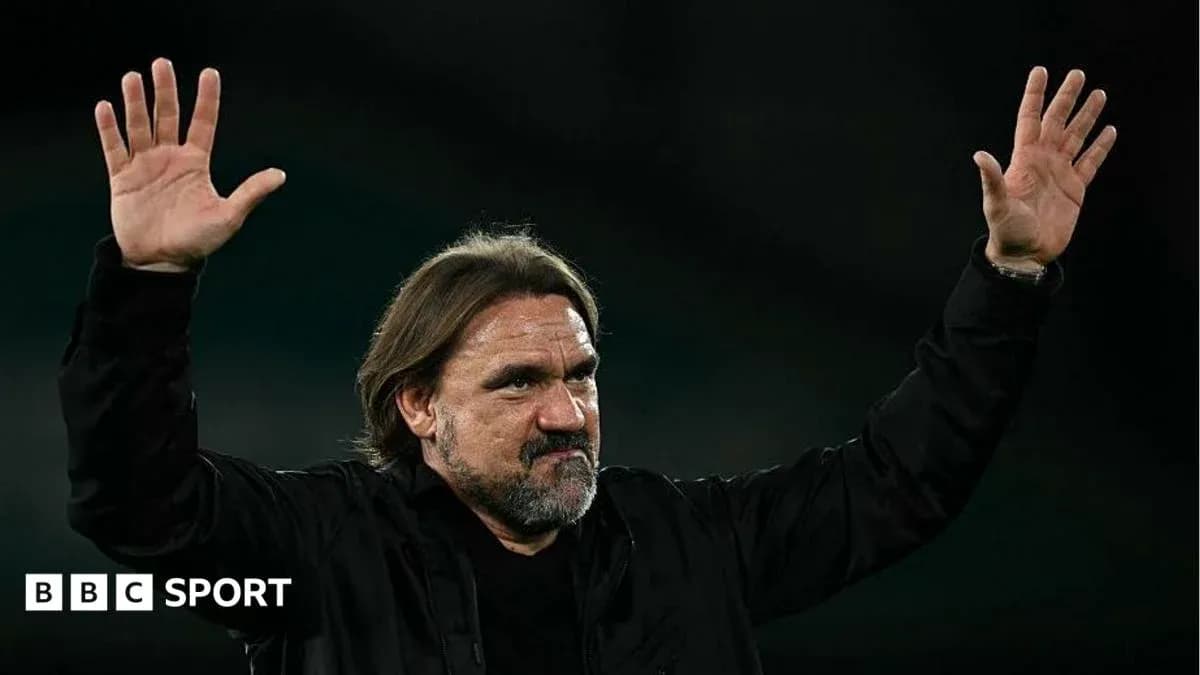
This start is no illusion. Monday’s 4-1 dismantling of Newcastle United kept Daniel Farke’s side unbeaten and confirmed their best opening to a top-flight campaign since the 2001-02 season under David O’Leary. Eight points from four games tell one story. The real tale started nine months ago.
The night everything changed
On 29 November at Etihad Stadium, Leeds went in at half-time 2-0 down to Manchester City and staring at another long, grim evening. Farke made a call that may yet define his tenure. He ripped up his back four and turned to a back three.
The response was instant. Leeds fought back to 2-2, only to concede in stoppage time. They left with nothing, but something fundamental had shifted.
From the next game – a home win over Chelsea on 3 December – the numbers hardened into a pattern. Leeds have lost only five of their past 29 league matches. Stretch that run into a hypothetical table and they sit fifth over that span. That’s not a hot streak. That’s top-end consistency.
The tactical tweak didn’t just tighten them up. It changed the way they compete in almost every phase of the game.
Built for the fight
Farke and new sporting director Adam Underwood went into the 2025 summer window with a clear brief: Leeds had to grow up physically. They had been one of the smallest sides in the Premier League. In a league of set-pieces, crosses and aerial duels, that’s a problem.
So they went big.
Of the 10 permanent signings, eight stand over 6ft: Jaka Bijol, Sebastiaan Bornauw, Dominic Calvert-Lewin, James Justin, Lukas Nmecha, Noah Okafor, Lucas Perri and Anton Stach. It was no accident.
“I wouldn't say it's coincidence that they are all tall players,” Farke said in July 2025, “but, of course, if you join the Premier League and you have one of the smallest groups, you expect that probably there is more pressure on you than there was in the Championship. You have to make sure that you're also good in defending crosses.”
The message was blunt. Leeds would not be bullied.
This summer, after losing Pascal Struijk to Brighton, Farke doubled down. In came World Cup defenders Tarik Muharemovic of Bosnia-Herzegovina and Switzerland’s Nico Elvedi to reinforce the back line. Muharemovic, despite an error that gifted Bazoumana Toure a late consolation for Newcastle, has barely put a foot wrong across the season’s opening weeks, playing every minute in front of James Trafford.
Trafford, at 6ft 5in, looms over his penalty area and the transfer record books. The England international became the most expensive British goalkeeper in history for the second time when he joined from Manchester City for an initial £40m. Behind a bigger, more aggressive defence, he has the platform to justify it.
Add Harry Wilson, one of last season’s standout performers, snapped up on a free from Fulham, and Leeds’ recruitment drive looks less like a gamble and more like a plan.
From the brink to belief
It is easy to forget how close this all came to unraveling.
Last season, Leeds lost eight of their first 13 league games. They sat 18th, staring at a return to the Championship, and the noise around Farke grew louder by the week. Reports suggested his job, barely a year after pipping Burnley to the Championship title, was under serious threat.
The formation change and the physical rebuild didn’t just steady the ship. They turned Leeds into one of the most stubborn sides in the division. Among clubs ever-present in the league over that period, only Arsenal, Manchester City and Nottingham Forest have conceded fewer goals since Farke moved to a back three.
Defensive resilience, though, is only half the story. The real transformation has come at the other end.
Calvert-Lewin unleashed
Dominic Calvert-Lewin arrived with pedigree but baggage. At Everton he had been starved of service and confidence, often isolated as a lone striker in a 4-3-3 and feeding on scraps. The early months at Leeds offered more of the same: hard running, little joy.
The new shape changed that. With Farke alternating between 3-4-3 and 3-5-2, Calvert-Lewin finally found what every centre-forward craves – company.
“I enjoy having bodies around me,” he admitted, and it shows. Since last December, only Erling Haaland, Ollie Watkins and Joao Pedro have scored more Premier League goals than Calvert-Lewin’s 14. He now attacks crosses with support close by, drags defenders into areas they don’t want to go, and knows that when he contests a header, Nmecha or Okafor will be hunting the second ball.
Okafor, in particular, has emerged as a perfect foil. Seven goals and an assist in his past 11 league appearances underline his threat. Between them, they give Leeds something they have not had for years: a forward line that scares teams before a ball is kicked.
Records in sight, doors opening
Crystal Palace visit Elland Road on Saturday, and there is a slice of history in Calvert-Lewin’s sights. Score again and he becomes the first Leeds player to net in six consecutive league home games since Arthur Hydes in 1932. Ninety-three years of club history sit between those two names.
Calvert-Lewin’s form has also reopened an international conversation that looked closed when he missed out on England’s World Cup squad. With three goals in all competitions already this season, he has put himself firmly back on the radar as Thomas Tuchel prepares to name his squad for a Nations League quadruple-header on Friday.
Leeds, meanwhile, are looking upwards. The numbers since that night in Manchester say they belong in the conversation for European football for the first time in 24 years. The table, for now, agrees.
The question is no longer whether Farke’s side can survive. It’s how far this tall, reshaped, relentlessly improving Leeds United can climb before someone stops them.
Related News
Raheem Sterling Pleads Guilty to Dangerous Driving
Ceadach O'Neill's International Choice: Football and Identity
Leeds United's Remarkable Rise Back to Premier League Heights
Luciano Spalletti Faces Pressure at Juventus Amidst Early Season Struggles
Christopher Nkunku's Return to Leipzig: A New Chapter
Yves Bissouma Set for Ajax Return