
Leeds United's Rise: From Relegation Fear to Premier League Contender
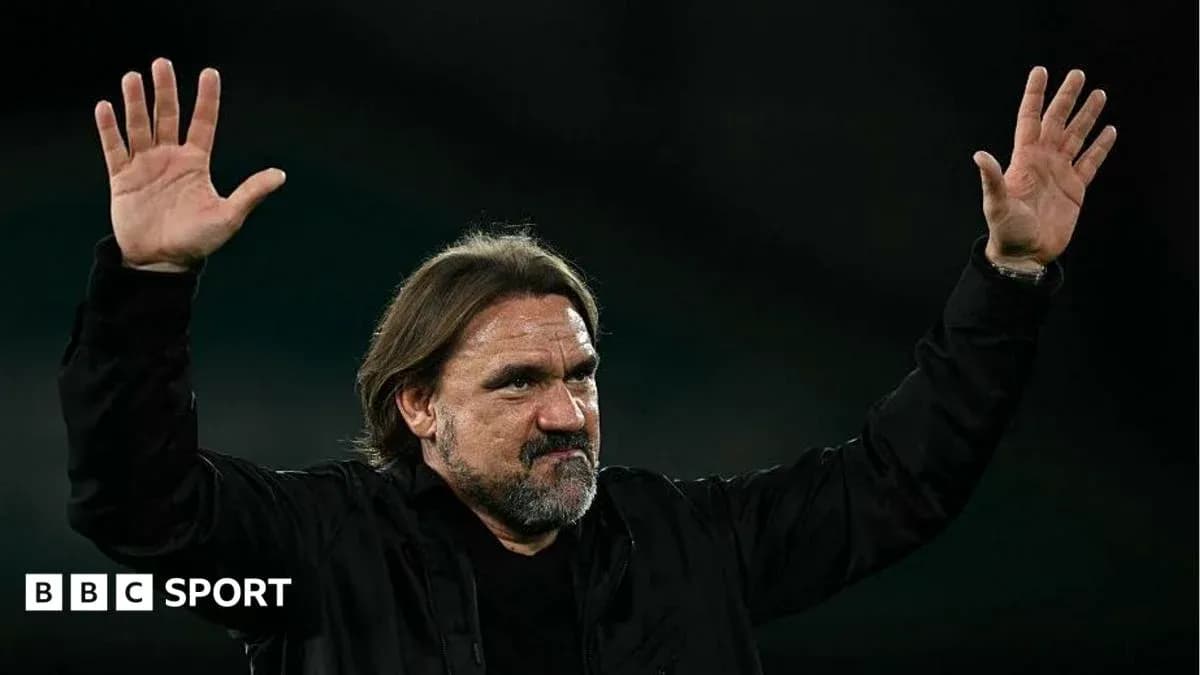
Leeds United are back near the top of the Premier League table, and the sight of them in third place carries a distinct echo of the early 2000s, when Elland Road routinely looked up at Europe rather than over its shoulder at the drop.
Monday night’s 4-1 dismantling of Newcastle United kept Daniel Farke’s side unbeaten and confirmed this is no early-season quirk. Eight points from four games, their best top-flight start since David O’Leary’s 2001-02 campaign, tell one story. The real tale started nine months ago.
The night everything shifted
It was 29 November at Etihad Stadium. Leeds trailed Manchester City 2-0 at half-time, outgunned and outmanoeuvred. Farke ripped up his back four and rolled out a back three.
The effect was instant. Leeds fought back to 2-2, only to be beaten by a stoppage-time goal. On paper, it was another defeat. In reality, it was a turning point.
From the following home win over Chelsea on 3 December, Leeds have lost only five of their past 29 league games. Stretch that run across a hypothetical table and they sit fifth over that span. That is not a hot streak. That is sustained form.
So what has changed? Shape, yes. But also size.
Building a taller, tougher Leeds
The 2025 summer transfer window told its own story. Farke and new sporting director Adam Underwood targeted height and muscle for the Premier League grind, determined to add what Farke called a “special physicality” to one of the division’s smallest squads.
Of the 10 permanent signings, eight stand over 6ft: Jaka Bijol, Sebastiaan Bornauw, Dominic Calvert-Lewin, James Justin, Lukas Nmecha, Noah Okafor, Lucas Perri and Anton Stach. Corners, crosses, second balls – areas where Leeds had been bullied – suddenly look very different.
“I wouldn't say it's coincidence that they are all tall players,” Farke said in July 2025, “but, of course, if you join the Premier League and you have one of the smallest groups, you expect that probably there is more pressure on you than there was in the Championship. You have to make sure that you're also good in defending crosses.”
This summer, after losing Pascal Struijk to Brighton, Farke doubled down. In came World Cup defenders Tarik Muharemovic of Bosnia-Herzegovina and Switzerland’s Nico Elvedi to reinforce the back line.
Muharemovic has barely missed a beat. Aside from the lapse that gifted Bazoumana Toure a late consolation for Newcastle, he has impressed in every minute of league football, stationed in front of 6ft 5in England international James Trafford. Trafford, who became the most expensive British goalkeeper in history for the second time when he joined from City for an initial £40m, adds yet more stature and presence.
Add Harry Wilson – one of last season’s standout performers in the league – on a free from Fulham, and Leeds’ recruitment looks less like a gamble and more like a carefully drawn blueprint.
From relegation fear to defensive steel
It is easy to forget how close this project came to stalling. Leeds lost eight of their first 13 league games in 2025-26, slumping to 18th and staring at another relegation battle. Reports swirled that Farke, fresh from edging Burnley to the Championship title, was in real danger.
The formation switch steadied everything. The back three, supported by wing-backs and a more compact midfield, tightened the leaks. Among the clubs ever-present in the division since that change, only Arsenal, City and Nottingham Forest have conceded fewer goals.
The improvement has not been limited to the back line. The new structure has unlocked the centre-forward Leeds thought they were signing.
Calvert-Lewin, finally unleashed
Dominic Calvert-Lewin had looked isolated in the old 4-3-3, chasing lost causes as a lone striker, waiting for wide players who rarely arrived in the box with him. The new system changed his world.
With Leeds alternating between 3-4-3 and 3-5-2, Calvert-Lewin now plays with company. Nmecha or Okafor often works alongside him, stretching defences, dragging centre-backs away, giving him the support he has craved.
“I enjoy having bodies around me,” Calvert-Lewin has admitted. The numbers back him up. Since last December, only Erling Haaland, Ollie Watkins and Joao Pedro have scored more Premier League goals than his 14.
Okafor has chipped in too, with seven goals and an assist in his past 11 league appearances. Defenders can no longer simply swarm Calvert-Lewin and suffocate Leeds’ attack. They have to pick their poison.
Eyes on Europe – and England
Crystal Palace visit Elland Road on Saturday. For Calvert-Lewin, it is more than just another home game. He is chasing a slice of club history, aiming to become the first Leeds player to score in six consecutive league home matches since Arthur Hydes in 1932.
There is another subplot. The former Everton striker missed out on England’s World Cup squad, a painful omission for a player once seen as a long-term option for the national team. With three goals in all competitions already this season and his form trending upwards, he has forced his way back into the conversation.
On Friday, Thomas Tuchel names his squad for a Nations League quadruple-header. If the England manager wants a centre-forward in rhythm, thriving in a physically demanding system and rediscovering his penalty-box instincts, the evidence at Elland Road is becoming hard to ignore.
Leeds, meanwhile, sit third, armed with height, structure and momentum. They have not played European football for 24 years. With this platform and this trajectory, how long before Elland Road hears that anthem again?
Related News

Raheem Sterling Pleads Guilty to Dangerous Driving and Drug Charges
Yves Bissouma's Move to Ajax: A Cautious Gamble

JJ Gabriel Requests Departure from Manchester United Amid Barcelona Interest
Philippe Coutinho Returns to Santos: A Fresh Start in Brazil
Said El Mala Expected in Jürgen Klopp's First Germany Squad
Lampard Prepares to Shuffle Coventry for Villa Cup Derby