
Liverpool's Financial Future: What to Expect with Bezos' Consortium
Liverpool stand on the brink of a new financial era – but supporters are being warned not to expect a transfer free‑for‑all, even if Jeff Bezos walks through the door.
The Amazon founder, one of the richest men on the planet, is part of a heavyweight consortium closing in on a deal to buy around 30 per cent of the club from Fenway Sports Group. It would be a seismic move in the boardroom. On the pitch, though? The brakes are still on.
‘A billion pounds in their pocket’
Football finance expert Stefan Borson, speaking on talkSPORT Breakfast with Alan Brazil and Gabby Agbonlahor, laid out what this actually means for Liverpool and FSG.
“They've done an amazing job since they bought the business,” he said, pointing back to 2010, when FSG picked up a distressed Liverpool for £300m. “When they bought it they were quite close to administration. It was very serious. They got it for a bargain price.”
Since then, FSG have turned Liverpool into a commercial powerhouse and a serial trophy winner. The value of the club has exploded. So has the value of FSG’s stake.
“I think from a business perspective they've done pretty much everything perfectly well since then and they've reaped the rewards,” Borson said. “By the way, they're in for zero because they've already sold bits of it off to other private equity co-investors.
This will be a billion pounds in their pocket and I think it's a precursor to a full exit in due course.”
In other words, this proposed Bezos-backed deal doesn’t just inject cash. It nudges FSG closer to the door.
Will Liverpool suddenly outspend everyone?
Agbonlahor voiced the question on every supporter’s mind.
“Liverpool fans listening will say, 'Well, we've got billion-pound owners anyway; we spend a lot of money'. Will Liverpool be able to spend money now?
“The rules are still in place, aren't they? You can't spend whatever you like, so what changes with investment?”
Borson didn’t sugar-coat it.
“I think that's the key summary,” he replied. “They're already in this world, you know, of private equity owners and high net worths.
“And actually, probably very little changes in terms of what they can spend. I mean, we are talking about a situation where they spent, you know, 400 million quid last summer.”
So even if Bezos comes on board, Financial Fair Play and the Premier League’s spending rules still bite. Liverpool can’t simply fling around limitless cash just because one of the world’s richest men has a seat at the table.
Wall Street meets the Kop
If it’s not about instant transfer fireworks, what does change?
For Borson, the bigger shift is cultural – and some fans may not like the direction.
Responding to Brazil’s call for calm among supporters, he turned the issue on its head.
“I think it's probably the other way,” he said. “They probably slightly object to the sort of commercialisation of Liverpool Football Club as a global asset.
“The language that these guys are going to talk is all about assets, asset classes, all of the sort of very much Wall Street language.
“That's the sort of thing that I think Liverpool fans are going to go, 'Hang on here; we're a football club', and it's going to get away from that.”
The reality, though, is that Liverpool are not alone.
“But that's the nature of all of the top clubs now – certainly the top six, they're in the valuation parameters, sort of six times their revenue, which makes them multi-billion pound organisations.”
In that world, Bezos, Facebook co-founder Eduardo Saverin and other ultra-wealthy investors are not outliers. They are the new normal.
Who’s actually at the table?
While FSG will retain majority control for now, the incoming group is stacked with serious financial muscle.
The consortium is led by Amit Bhatia, son-in-law of Indian steel magnate Lakshmi Mittal. The Mittal family already own a minority stake in Championship side QPR, and Bhatia now fronts the bid to take a strategic minority share at Anfield. Saverin, who helped launch Facebook, is also involved alongside Bezos.
Last month, FSG acknowledged the approach.
“An investment consortium led, managed, and represented by Amit Bhatia has expressed interest in making a strategic minority investment in Liverpool Football Club,” a spokesperson confirmed.
It all underlines one thing: Liverpool are now operating in the rarefied air of global mega-assets, traded by billionaires and private equity firms.
From distress to dominance – and now what?
Since FSG took charge in 2010, Liverpool have been transformed. The club climbed out of financial trouble, rebuilt their squad and infrastructure, and re-established themselves at the summit of English and European football.
Under their watch, the Reds have lifted two Premier League titles and claimed a sixth European crown. Anfield has grown, commercial revenues have surged, and Liverpool have become one of the most valuable sports properties in the world.
Now, with Bezos circling and a new era of investment looming, the story shifts again.
On the pitch, a fresh chapter is already starting. Andoni Iraola prepares for his first Premier League campaign as Liverpool manager, with the 2026/27 season kicking off next week.
A billionaire-backed consortium at the door. A new head coach in the dugout. A fanbase fiercely protective of its identity.
The money is coming. The real question is what kind of Liverpool emerges on the other side.
Related News
Chelsea Set to Sell Delap for £50 Million After Tough First Season
Newcastle United's New Chapter: Jaissle's Measured Optimism
Aston Villa's Right-Back Search: Wan-Bissaka Top of the List
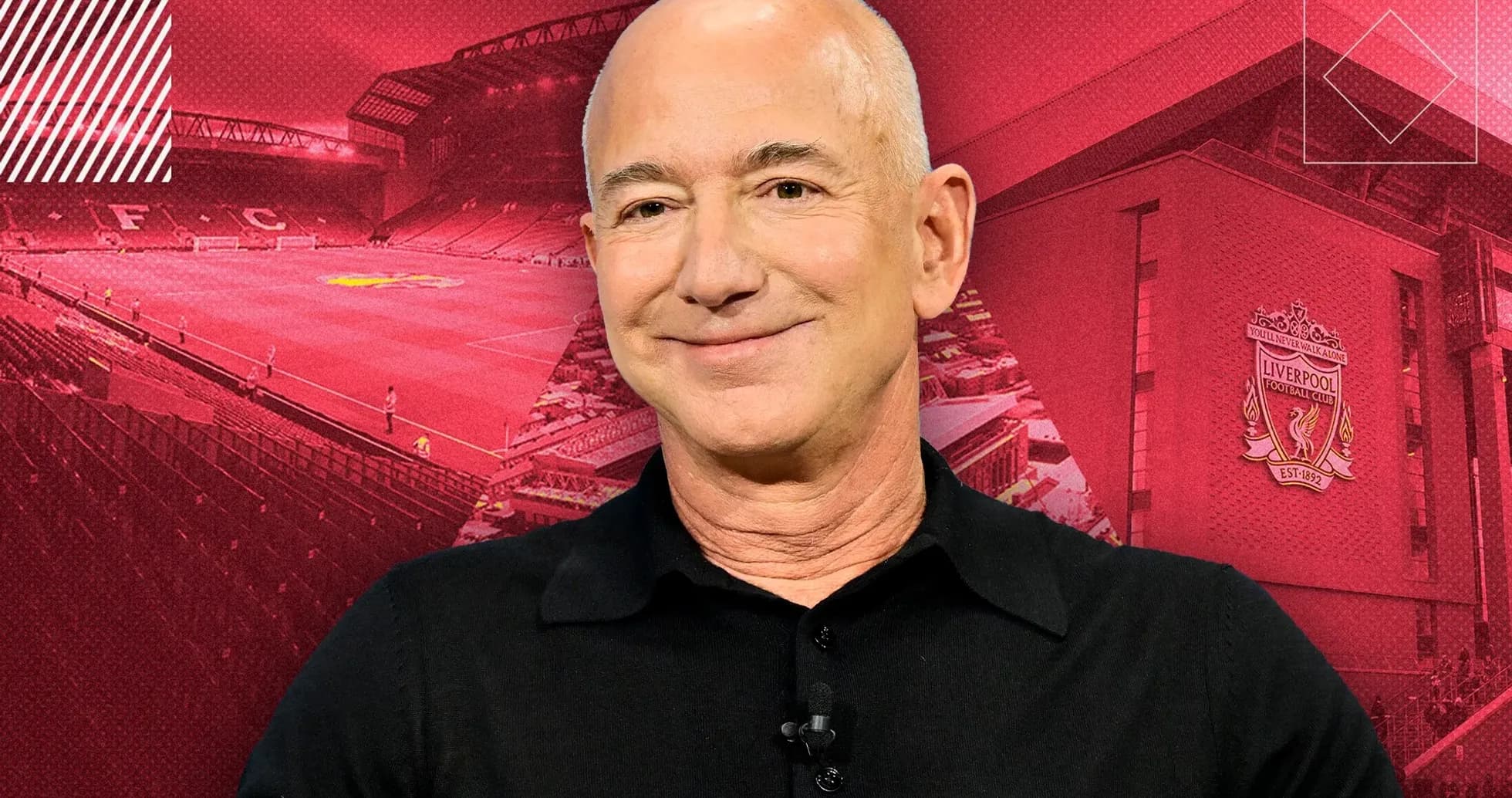
Liverpool's Financial Future: What to Expect with Bezos' Consortium
Barcelona Targets Castello Lukeba in Centre-Back Search
Al-Ittihad Loans Unai Hernandez to Girona for Season