
Liverpool vs Fulham: Goalless Draw Reflects Early Season Realities
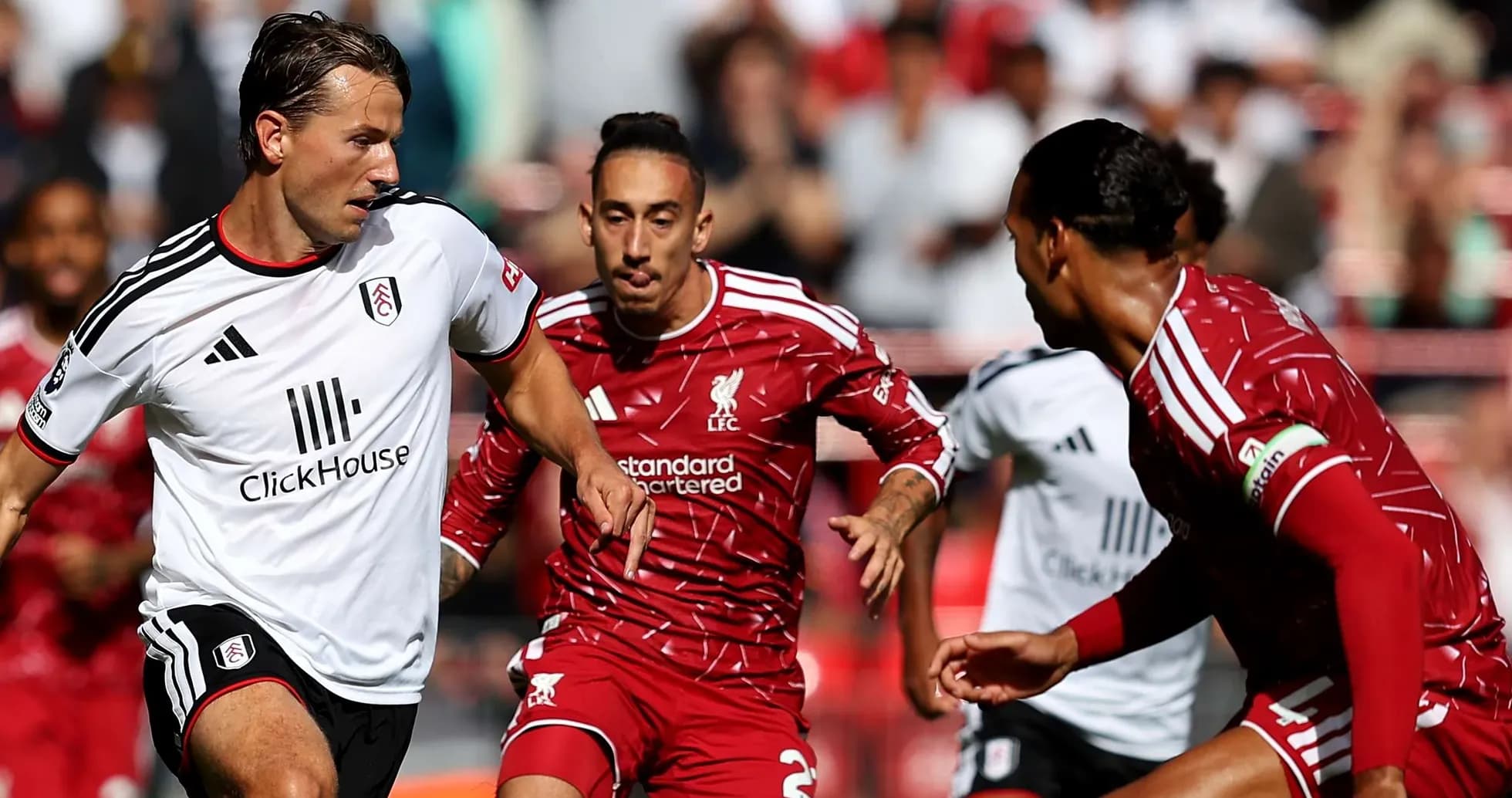
Anfield under grey Merseyside skies, a goalless scoreline, and yet a fixture that revealed plenty about where these two sides stand in the early weeks of the 2026 Premier League season. Liverpool and Fulham shared a 0–0 draw in Regular Season - 4, a result that keeps Andoni Iraola’s side in 7th with 6 points and a goal difference of 2, while Álvaro Arbeloa’s Fulham remain in 18th on 1 point, their goal difference stuck at -3.
I. The Big Picture – Two 4-2-3-1s, different agendas
Both coaches mirrored each other structurally in a 4-2-3-1, but the intentions inside those shapes were very different.
Liverpool, unbeaten overall after 4 matches (1 win, 3 draws, 0 defeats), came into this one with a strong attacking profile: overall they average 1.5 goals scored per game and only 1.0 conceded. Yet at Anfield this campaign they have been curiously blunt, averaging 1.0 goal for and 1.0 against at home and failing to win either of their 2 home fixtures (2 draws, 0 defeats). The clean sheet here gives them 2 overall this season, but the failure to score means they have now drawn all 3 of their last 4 league games.
Fulham arrived as a side living on the margins. Overall they had lost 3 of 4, with 4 goals scored and 7 conceded. The split is stark: at home they average 2.0 goals for but 3.0 against, while on their travels they have yet to score (0.0 away goals per game) and concede 0.5 away goals on average. Their single away point before this was built on defensive resilience rather than ambition, and the 0–0 at Anfield fits that pattern: another clean sheet away, another blank in front of goal.
On the day, the lineups underlined those identities. For Liverpool, Alisson Becker sat behind a back four of R. Araújo, J. Jacquet, Virgil van Dijk and Kostas Tsimikas. Ahead of them, the double pivot of Dominik Szoboszlai and Ryan Gravenberch was tasked with both tempo and counter-press, with Víctor Muñoz and Florian Wirtz flanking Bradley Barcola in the three behind Alexander Isak.
Fulham’s back four – Timothy Castagne, Dario Affengruber, Calvin Bassey and Antonee Robinson – screened Bernd Leno, with Sander Berge and Shea Charles anchoring midfield. Ahead of them, Oscar Bobb and Alex Iwobi worked the flanks, while Joshua King operated as a high-energy No.10 behind Gonzalo García.
II. Tactical Voids – Who was missing, and what it cost
Liverpool’s squad sheet had notable absences. Conor Bradley (knee injury), Federico Chiesa (back injury), Hugo Ekitike (Achilles tendon injury), Joe Gomez (muscle injury) and Gabriele Leoni (knee injury) were all ruled out. The cumulative effect was to narrow Iraola’s options in both full-back rotation and high-end one‑v‑one threat. Chiesa’s absence in particular deprived Liverpool of a natural wide finisher who could attack the far post when Isak drifted away from the box.
With Joe Gomez unavailable, J. Jacquet’s inclusion alongside Van Dijk became more than rotation; it was necessity. That pairing, however, contributed to Liverpool’s defensive control – they have yet to lose overall this season and have conceded only 4 goals in 4 matches.
Fulham’s list was lighter but still significant: Tom Cairney missed out with a knee injury, removing an experienced controller from Arbeloa’s bench. Without him, Fulham leaned fully into athleticism and verticality in midfield rather than pausing the game with possession.
Disciplinary trends framed the risk profiles. Liverpool’s yellow cards this season are spread, but with a clear spike between 46–60 minutes, where 40.00% of their cautions arrive. Fulham, by contrast, are a late‑game flashpoint side: 60.00% of their yellow cards come between 76–90 minutes. In a contest that stayed tight, that meant Liverpool could push their press hardest straight after the break, while Fulham had to manage fatigue and decision‑making in the dying stages.
III. Key Matchups – Hunter vs Shield, Engine Room battles
Hunter vs Shield was defined by Alexander Isak against Fulham’s central defence and Leno. Isak has started the season as Liverpool’s spearhead: 3 goals overall in 4 appearances, with 10 shots and 6 on target, and a rating of 7.33. He is not just a finisher but a complete forward, winning 13 of 24 duels and even blocking 1 shot defensively.
Against him, Fulham brought a unit that has been oddly split in its returns. Overall they concede 1.8 goals per game, but on their travels they allow only 0.5. That away resilience was on display again: Affengruber and Bassey stayed tight to Isak, while Berge and Charles dropped into the half‑spaces to deny the vertical feed from Szoboszlai and Wirtz. Isak’s movement dragged defenders out, but without Chiesa or a starting Cody Gakpo to flood the box, Liverpool rarely turned those rotations into clear chances.
Gakpo, though on the bench, loomed over the tactical story as one of the league’s top creative forces so far: 3 assists overall, 8 key passes and a passing accuracy of 84%. His eventual introduction (if and when Iraola turned to him) would have been about breaking Fulham’s mid-block with half-space combinations, but Fulham’s compactness meant he was always playing into traffic.
In the Engine Room, Szoboszlai and Gravenberch faced Berge and Charles. Liverpool’s double pivot wanted to keep the ball circulating in front of Fulham’s block, drawing them out to open lanes for Wirtz between the lines. Fulham, however, used Joshua King as a two-way weapon. King’s season numbers – 2 goals overall, 9 shots (5 on target), 131 passes with 4 key passes, 7 tackles and 2 blocked shots – mark him out as a rare two-phase No.10. He dropped onto Szoboszlai to disrupt Liverpool’s first progression and then sprang forward when Fulham broke, often supported by Bobb and Iwobi.
Defensively, Liverpool had their own enforcer in Miloš Kerkez waiting in reserve. His 7 tackles, 3 blocked shots and 2 yellow cards overall this season underline a combative profile. Even without starting, his presence on the bench shaped how aggressively Tsimikas could push on, knowing there was a specialist defensive full-back available if the game became stretched.
IV. Statistical Prognosis – What the numbers say about these squads
Following this result, Liverpool’s overall record of 6 goals for and 4 against in 4 matches keeps their goal difference at 2, exactly matching the standings. Their averages – 1.5 scored and 1.0 conceded overall – still suggest a side with top-four potential, particularly as they have yet to lose. However, the home pattern is more concerning: 2 goals scored and 2 conceded at Anfield from 2 games, 2 draws, 0 wins. They have already failed to score once at home this campaign and that lack of cutting edge was visible again.
Fulham’s overall picture remains fragile: 4 goals scored and 7 conceded in 4 matches, a goal difference of -3. Yet the away split offers a sliver of optimism. On their travels they have conceded only 1 goal in 2 matches and kept 1 clean sheet, with an away goals-against average of 0.5. The price is their complete lack of away goals – 0 overall, 0.0 per game – which this 0–0 does nothing to fix.
From an xG-style perspective, Liverpool’s attacking volume and Isak’s form suggest they will usually generate more than enough to win matches like this, especially once Gakpo is integrated more consistently as a creator and when key absentees return. Their defensive base, anchored by Van Dijk and Alisson, is already at a level where 1.0 goal conceded per game overall is sustainable for a top‑end campaign.
Fulham, by contrast, look built for survival through defensive structure away from home and more open, high‑risk football at Craven Cottage. Joshua King’s all‑action profile and the athleticism of Bobb and Iwobi give them a dangerous transition threat, but until they solve the away goal drought, they will live on the edge of the relegation zone.
This 0–0 at Anfield, then, felt like a snapshot of both squads’ current realities: Liverpool as a nearly-finished attacking machine still searching for its home ruthlessness, Fulham as a disciplined, stubborn traveller trying to drag enough points out of tight games to stay in the division.
Related News
Liverpool vs Fulham: Goalless Draw Reflects Early Season Realities
Manchester City vs Sunderland: Head-to-Head Stats and Historical Overview
Chelsea and Hull City Draw 2–2: A Tactical Stalemate

Tottenham vs Aston Villa Stats: Head-to-head Record Before September 2026 Clash

Brentford vs Chelsea Stats: Head-to-head and Recent Form

Manchester United vs Manchester City Predicted Lineups: Team News and Analysis