
Maccabi Tel Aviv's Tactical Dominance in 1–0 Victory Over Sheriff Tiraspol
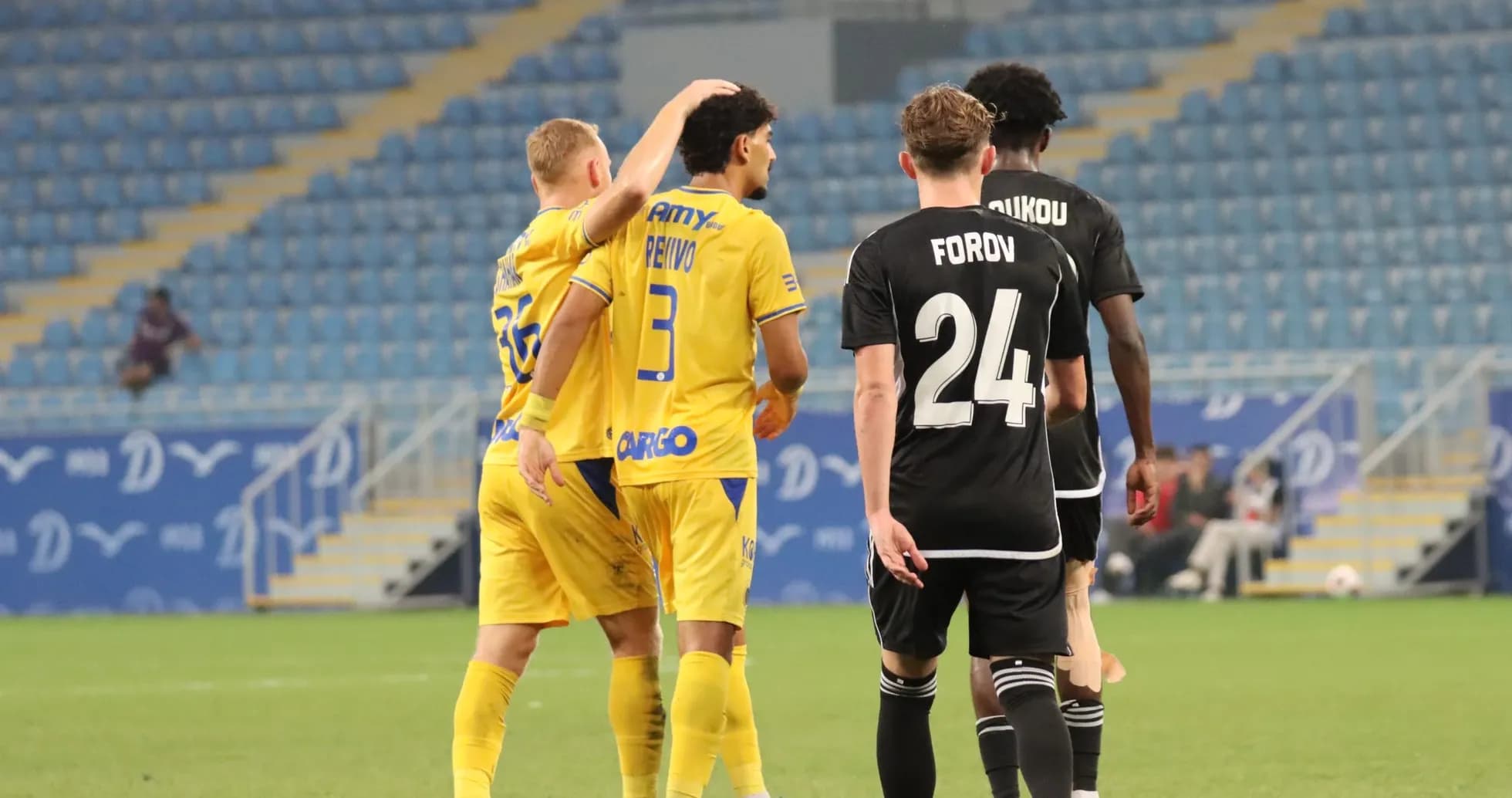
Maccabi Tel Aviv’s 1–0 win over Sheriff Tiraspol at Batumi Arena in the UEFA Europa League 2nd Qualifying Round was a controlled, structurally coherent performance built on a clear 4‑3‑3 framework and territorial dominance, even if the decisive moment arrived via an own goal. With both sides splitting possession at 50–50, the match was decided less by who had the ball and more by what they did with it: Maccabi generated the only shots on target (3–0) and forced Sheriff into deeper, reactive defending for long stretches.
Team Structure
Kenny Miller’s 4‑3‑3 for Maccabi Tel Aviv was textbook: a flat back four, a balanced midfield trio, and a front line that stretched the pitch horizontally. The full-backs N. Ben Harush and R. Revivo held high and wide positions, effectively creating a front five in settled possession as S. Jehezkel pushed up from his nominal defensive listing into an advanced right lane, with H. Varela tucking in from the left to overload the half-space. This shape underpinned Maccabi’s 12 corner kicks to Sheriff’s 7, a clear indicator of sustained pressure and repeated entries into the final third.
Central to that control was the midfield triangle of D. Peretz, I. Sissokho, and I. Shahar. Peretz anchored in front of the centre-backs M. Camara and R. Shlomo, screening transitions and allowing the two interiors to step beyond the ball. Sissokho often operated as the first receiver from the back line, turning Sheriff’s first pressing line and switching play to the flanks. Shahar provided vertical runs and late arrivals around the box, helping Maccabi keep Sheriff pinned back and contributing to the volume of crosses and set-pieces that eventually forced the 29th-minute own goal from S. Kone.
Defensive Overview
Without detailed goalkeeper data, the defensive picture must be drawn from team trends rather than individual numbers. Structurally, Maccabi Tel Aviv’s back four rarely had to defend their own box under direct threat, reflected in Sheriff Tiraspol finishing with 0 shots on goal despite 4 shots off target and 2 blocked efforts. Camara and Shlomo maintained a high line, compressing the middle third and ensuring that Sheriff’s midfielders, particularly D. Klas and A. Pergjoni, were receiving under pressure with limited time to turn. The relatively low foul count for Maccabi (9) shows they controlled duels without resorting to persistent tactical fouling, defending more by positioning and counter-pressing than by breaking up play cynically.
Match Dynamics
Sheriff Tiraspol, set up nominally in a 4‑3‑3 by Victor Mihailov, played much of the game without a consistent high press. Their front unit, with L. Jaures‑Ulrich and D. Forov starting from advanced midfield slots, often dropped into a mid-block, trying to deny central progression. However, the lack of pressure on Maccabi’s centre-backs and pivot meant Sheriff were repeatedly forced deeper, leading to those 12 corners conceded and multiple second-ball situations around their box. The 11 fouls and 2 yellow cards, both for “Tripping” (V. Nihaev on 71' and B. Ciss at 90+3'), underline a reactive defensive pattern: late challenges as Maccabi played through or around them rather than proactive ball-winning.
Mihailov’s substitution pattern was an attempt to re-balance a game that was slipping away territorially. On 57', Mota (OUT) was replaced by Sapata (IN), followed two minutes later by S. Kone (OUT) for V. Nihaev (IN), signaling a shift to fresher legs in midfield and possibly a more aggressive central presence. The triple change on 77' — A. Pergjoni (OUT) for N. Swen (IN), L. Jaures‑Ulrich (OUT) for V. Cozma (IN), and D. Forov (OUT) for J. Modelo (IN) — was a clear attempt to inject energy and push the full-backs higher. Yet with no shots on goal recorded, these alterations did not translate into genuine penalty-area threat, more shuffling the block than transforming it.
Maccabi’s own substitutions at 63' and 79' were more about game management than chasing a second goal. At 63', I. Shahar (OUT) for I. Ben Simon (IN) and S. Jehezkel (OUT) for O. Davida (IN) refreshed the wide and interior roles, maintaining the intensity of the press and the ability to carry the ball forward. Later, H. Varela (OUT) for I. Noy (IN) and N. Ben Harush (OUT) for I. Ben Hamo (IN) at 79' consolidated the lead, adding defensive solidity on the flanks and ensuring Sheriff’s late crosses and long balls were met by fresh legs and clear defensive structure.
Statistical Summary
Statistically, the verdict is clear despite the modest scoreline. Maccabi Tel Aviv produced all 3 shots on goal in the match, compared to Sheriff Tiraspol’s 0, and also led in blocked shots (3 to 2). The equal 50–50 possession figure is misleading if taken at face value; Sheriff’s share of the ball came largely in deeper zones and later phases, while Maccabi’s possession was more territorially advanced and translated into 12 corners, a strong proxy for sustained attacking presence.
Discipline tilted slightly against Sheriff — 11 fouls and 2 yellow cards to Maccabi’s 9 fouls and no bookings — reinforcing the image of a side chasing the ball and arriving late into challenges. With no xG or passing data available, the cleanest analytical takeaway is territorial and defensive: Maccabi Tel Aviv turned a balanced-possession match into a one-sided chance profile, restricted Sheriff to speculative or off-target efforts, and leveraged their set-piece volume and structural superiority to secure a narrow but tactically deserved 1–0 advantage in this 2nd Qualifying Round tie.
Related News
AC Milan vs Benfica: A Clash of Two Philosophies in UEFA Europa League
Five Standout Europa League Players to Watch in 2026/27
AC Milan vs Benfica Europa League Clash: Team Updates, Lineups & Broadcast Info
Omonia Nicosia vs Benfica Predicted Lineups: Team News for UEFA Europa League
Red Bull Salzburg vs Ararat-Armenia Predicted Lineups and Team News
Celje vs Red Bull Salzburg Predicted Lineups and Team News