
Mahmoud Bentaieb's Potential Switch to Egypt: Legal Challenges Ahead
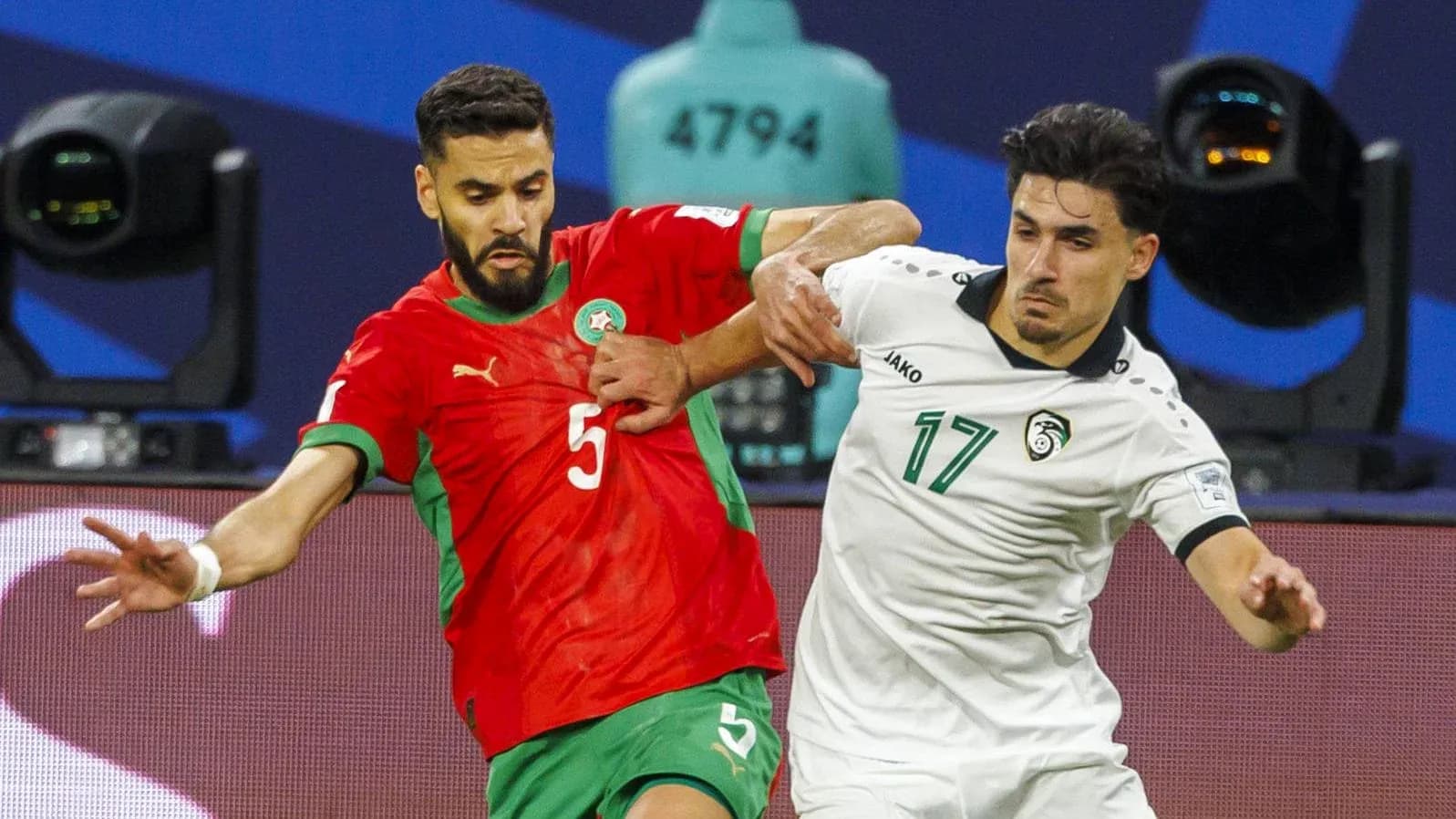
Mahmoud Bentaieb’s name has suddenly moved from Zamalek’s teamsheet to the heart of a legal and national debate.
The 26-year-old defender, capped by Morocco and settled in Cairo, is seriously weighing up a switch of sporting nationality to represent Egypt. His own agent says so. The law, though, is not on his side right now.
From Denials to a Public Admission
Over the past days, Egyptian reports claimed Bentaieb wanted to turn his back on Morocco and wear the Egypt shirt. In Rabat, the reaction was swift: Moroccan outlets pushed back, insisting the idea was not on the table.
Then Youssef Massaad spoke.
The player’s agent, in comments to Moroccan newspaper Al-Omk, revealed that national team coach Mohamed Ouahbi had left Bentaieb out of the latest Morocco squad, a decision that clearly stung. The omission opened a door. Egyptian officials, sensing an opportunity, floated the idea of Bentaieb switching allegiance to Egypt. The defender, according to Massaad, is now studying that possibility, despite having always prioritised representing his home country.
The interest is not just theoretical. Press reports say Bentaieb has already contacted FIFA to ask about changing his sporting nationality and is waiting for a formal response.
What FIFA Actually Requires
Lebanese legal expert Ralph Charbel laid out the framework in comments to Kooora. FIFA’s rules on changing national teams are strict, and they start with a basic requirement: the player must first obtain the nationality of the new country.
On top of that, one of four conditions must apply if he has never played for that nation at any age level:
- He was born in that country.
- His father or mother was born there.
- His grandfather or grandmother was born there.
- Or he has lived continuously in that country for a set period: at least three years if he moved there before turning ten, at least five years if he arrived after that age.
This is where the complications begin for Bentaieb.
He was born in Casablanca to Moroccan parents. His roots, by blood and birthplace, are entirely Moroccan. His connection to Egypt is through his career and his personal life: he joined Zamalek from Saint-Étienne in the summer of 2024 and has been living in Egypt for roughly two years. He is also married to an Egyptian woman, the daughter of Zamalek board member Ahmed Suleiman.
Marriage, though, does not automatically satisfy FIFA’s criteria. Nor do two years of residence.
The Arab Cup Problem
Even if Bentaieb eventually ticks the residency box and secures Egyptian nationality, another obstacle looms: his appearances for Morocco’s senior team.
Charbel explained that, under FIFA rules, a player seeking to switch must not have played more than three matches for his current senior national team, and at least three years must have passed since his last appearance.
Bentaieb has no history with Morocco’s youth or junior sides. His case is defined entirely by one tournament: the 2025 Arab Cup in Qatar.
There, he featured in four matches for the senior national team, all as a substitute, against Saudi Arabia, Syria, the UAE and Jordan. Morocco won every one of those games. He also sat on the bench, unused, in the opening two fixtures against Comoros and Oman, both of which ended in draws.
Those four caps matter. They came in an official competition, not friendlies.
Under coach Tarik Sektioui, now in charge of Oman, Bentaieb helped Morocco lift the Arab Cup trophy. At the time, it looked like the start of an international career. Now, it could be the very thing that blocks his path to Egypt.
Charbel underlined why: FIFA has recognised the Arab Cup as an official tournament under its umbrella since 2021. That status gives full official weight to every minute Bentaieb played, even if Morocco approached the competition with a second-string squad and left many Europe-based professionals at home.
A Door Almost Shut – But Not Locked
Taken together, the facts paint a harsh picture for the defender. He was born and raised in Morocco to Moroccan parents. He has been in Egypt for only about two years. He has already played four official senior matches for Morocco in a FIFA-recognised tournament. On the surface, that combination makes a switch of sporting nationality extremely difficult right now.
Charbel did leave one sliver of uncertainty. He stressed that he cannot be absolutely sure FIFA will reject Bentaieb’s request, because he does not know the exact legal arguments or documentation the player and his representatives might submit.
For now, Bentaieb waits. Between Casablanca and Cairo, between a past written in red and green and a possible future in red and white, his international career hangs on a ruling from Zurich.
Related News

AC Milan Aims for Control Against Confident Lecce

RTÉ to Broadcast Ireland's UEFA Nations League Matches Against Israel
Chelsea's Dominance Shines with Malard's Late Goal

Augsburg Teenager Banks Chooses Germany Over USMNT
Jose Mourinho's Clear Message to Vinicius Jr. Before Madrid Derby

Chelsea's Defensive Issues Exposed Again Against Brentford