
Manchester City vs Coventry: A Tale of Two Teams
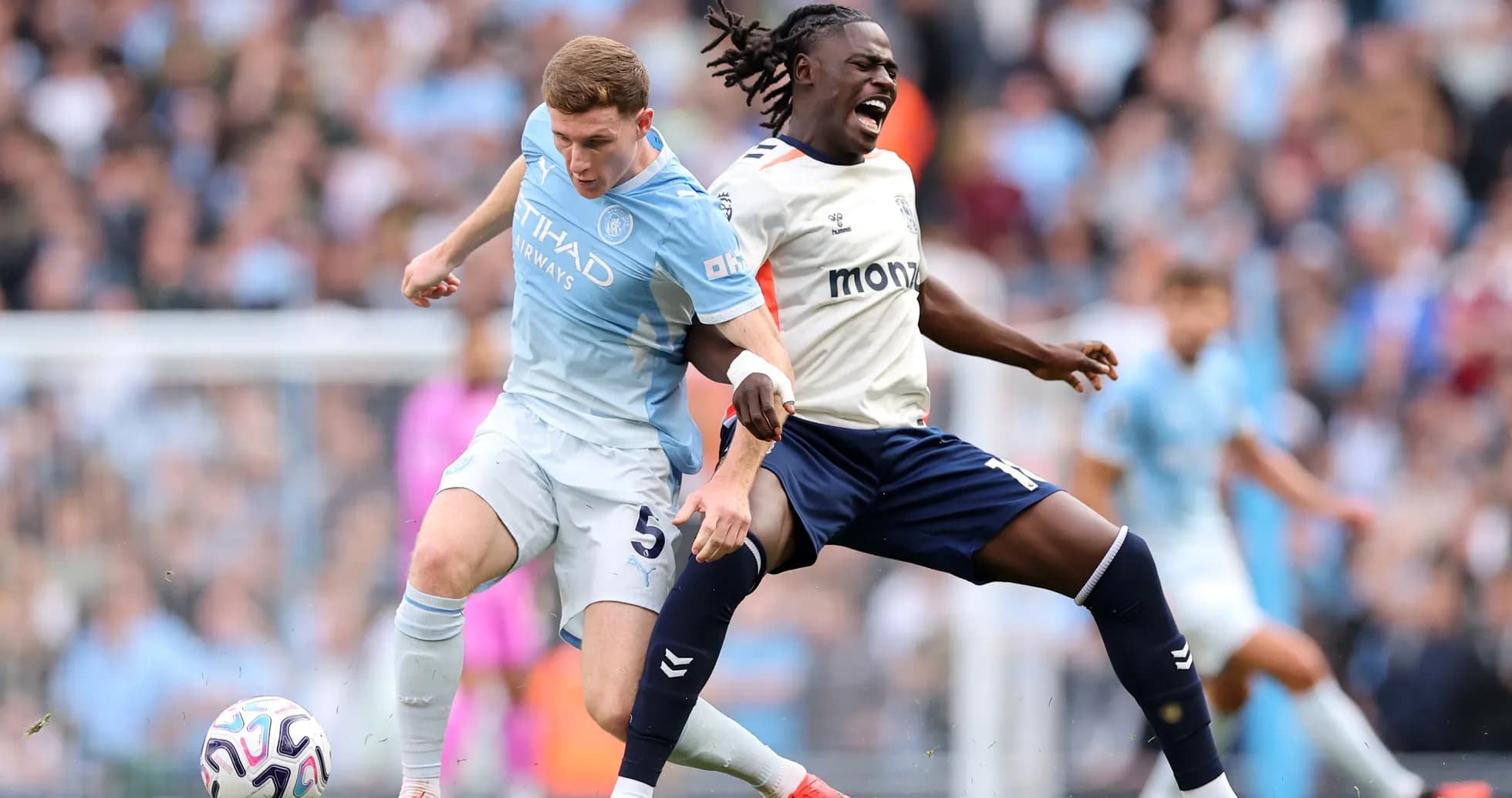
Under a grey Manchester sky at the Etihad Stadium, this finished as a narrow 1–0 win for Manchester City, but the story underneath the scoreline is about two clubs moving through the same Premier League landscape at very different speeds.
After three rounds of the regular season, City sit top of the table in 1st place with 9 points, a total goal difference of +5 from 7 goals for and 2 against. Coventry, rooted in 20th with 0 points and a total goal difference of -5 (0 scored, 5 conceded), arrive as a side still searching for a foothold at this level. The final scoreline here matches the broader statistical DNA: City efficient and largely controlled, Coventry resilient but toothless.
I. The Big Picture – Structures and Seasonal Identities
Enzo Maresca stayed loyal to the template that has underpinned City’s perfect start: a 4-2-3-1 that often morphs into a 3-2-5 in possession. Gianluigi Donnarumma started behind a back four of A. Khusanov, Rúben Dias, Marc Guéhi and Joško Gvardiol. In front, Enzo Fernández and E. Anderson formed the double pivot, with Antoine Semenyo, Rayan Cherki and Iliman Ndiaye supporting Erling Haaland.
The season numbers explain why this shape is trusted. Heading into this game, City had scored a total of 7 goals in 3 league matches, with an overall average of 2.3 goals per game. At home, they had 3 goals in 2 fixtures, averaging 1.5 per match at the Etihad, while conceding only 1 (0.5 per home game). Away, they had been more explosive: 4 goals in 1 outing, an away average of 4.0. Defensively, they had allowed just 2 goals in total, an overall average of 0.7 per game.
Coventry’s 3-4-2-1 under Frank Lampard was more pragmatic, almost a 5-4-1 out of possession. C. Rushworth was protected by a back three of A. Amenda, B. Thomas and Ethan Pinnock, with M. van Ewijk and J. Dasilva as wing-backs. The central screen of F. Onyeka and Matt Grimes sat behind J. Rudoni and E. Mason-Clark, with Taiwo Awoniyi alone up front.
Their season metrics are stark. Heading into this game, Coventry had failed to score in all 3 league fixtures, with a total goals-for tally of 0 and an overall average of 0.0. At home and on their travels, that average remained 0.0. Defensively, they had conceded 5 in total, an overall average of 1.7 per game, split as 1.0 at home and 2.0 away. They had yet to keep a clean sheet, and had failed to score in every single match.
II. Tactical Voids – Absences and Discipline
Both sides came into this fixture with notable absentees that shaped their options. For City, J. Doku was ruled out with a calf injury, removing a direct, touchline-hugging winger who would have stretched Coventry’s back line and attacked isolated defenders one-versus-one. In his absence, Maresca leaned more on fluidity between Semenyo, Cherki and Ndiaye, prioritising rotations and interior overloads rather than pure wing dribbling.
Coventry’s list of missing players was longer and more structurally damaging. Y. Gboho was unavailable due to transfer negotiations, K. Kesler-Hayden and H. Wright were out with muscle injuries, L. Woolfenden with a knee injury, and S. Mfuni was absent due to a loan agreement. That stripped Lampard of depth at full-back or wing-back, a potential ball-carrying forward option, and another centre-back profile. It explains why the bench leaned on versatile pieces like Caleb Marfo Yirenkyi, G. Hamer and B. Thomas-Asante rather than like-for-like defensive replacements.
Disciplinary trends added another layer. City’s yellow cards this season have been evenly spread, with 25.00% of their cautions arriving between 31–45 minutes, another 25.00% between 46–60, 25.00% between 76–90, and 25.00% in the 91–105 window. That pattern hints at a side that occasionally pays for tactical fouls at the end of each phase of the game rather than one with a single hot-headed period.
Coventry, by contrast, have shown a more volatile early-game profile: 50.00% of their yellows have come between 16–30 minutes, with late-game frustration also evident via 25.00% of bookings between 76–90 and 25.00% between 91–105. Caleb Marfo Yirenkyi, who has 1 yellow card in 3 appearances, embodies that edge in midfield duels. Crucially, neither side has seen a red card this season, and there are no penalties scored or missed for either team, so spot-kicks have not yet shaped their campaigns.
III. Key Matchups – Hunter vs Shield, Engine Room vs Enforcer
The headline duel was always going to be Erling Haaland against Coventry’s defensive structure. Heading into this fixture, Haaland had 3 goals in 3 league appearances, with 13 shots (8 on target) and a rating of 7.8. His presence is the “Hunter” in this narrative, constantly testing the line, attacking crosses and finishing moves.
Coventry’s “Shield” is less about individuals and more about collective compactness. Their total defensive record – 5 conceded in 3 – is not catastrophic given their schedule, but on their travels they had already allowed 4 goals in 2 away games. The key for Lampard was to compress the central channels where Haaland, Cherki and Ndiaye operate. Pinnock’s positioning and B. Thomas’s covering runs were central to that plan, with Onyeka dropping in to crowd the zone around the edge of the box.
In the engine room, Enzo Fernández and E. Anderson faced the Coventry pairing of Onyeka and Grimes. Fernández’s role as City’s metronome is underlined by the team’s control statistics: City had failed to score in 0 matches this season, and their clean-sheet count of 1 at home and 0 away shows they dominate games rather than sit deep. Anderson’s presence alongside him allowed Semenyo and Cherki to push higher and more aggressively between the lines.
Cherki, in particular, is emerging as the creative axis. With 2 goals and 2 assists in 3 appearances, 10 key passes and a pass accuracy of 92%, he is both a scorer and a supplier. He has also blocked 2 shots this season, underlining his willingness to contribute defensively. On the flanks and half-spaces, Semenyo’s 2 assists, 6 key passes and 15 dribble attempts (4 successful) make him the vertical runner that pins wing-backs and opens central pockets.
For Coventry, creativity is a collective problem. None of their top statistical profiles show goals or assists in the league so far, and Awoniyi’s isolation in the 3-4-2-1 here mirrored their season trend: a side that can organise without the ball but struggles to turn transitions into clear chances.
IV. Statistical Prognosis – What This Game Tells Us
Following this result, the numbers harden the narrative. City’s total record becomes 3 wins from 3, with 7 goals for and 2 against, keeping them at the summit and reinforcing a profile of controlled, sustainable dominance. Their home record – 2 wins from 2, 3 scored, 1 conceded – paints the Etihad as a venue of patient suffocation rather than constant chaos.
Coventry, meanwhile, extend their total run to 3 defeats from 3, 0 scored and 5 conceded. On their travels, that means 2 away losses, 0 goals for and 4 against, underlining that their issues are most acute when they must absorb pressure for long spells.
Without xG figures, we lean on structural evidence: City generate volume and quality through Cherki’s creativity and Haaland’s finishing, while conceding very few chances thanks to a back line marshalled by Dias and Gvardiol – the latter already contributing 1 goal, 1 assist, 7 tackles, 1 blocked shot and 5 interceptions this season. Coventry, by contrast, are yet to show any consistent route to goal, and their tactical energy is being spent almost entirely on containment.
The tactical preview this match offered for the rest of the campaign is clear. Manchester City look built for a long, controlled title push, with multiple creators and a defence that rarely breaks shape. Coventry, unless they can add punch to the front line and get key absentees back, risk becoming a team defined by valiant defensive shifts and narrow defeats – a storyline that, over 38 matches, usually ends exactly where the table currently has them.
Related News
Chelsea vs Hull City Stats: Head-to-head Record Before September 2026 Match
Liverpool vs Fulham Stats: Head-to-head Record Before Match
Nottingham Forest vs Tottenham: Tactical Analysis of Premier League Clash

Troy Deeney's Premier League Team of the Week: Isak, Konsa, Mitchell, Barnes Shine
Ipswich vs Liverpool: Tactical Insights from the 2–0 Defeat
Arsenal vs Chelsea Predicted Lineups: Team News and Tactical Analysis