
Manchester City's Uncertain Future After Key Departures
The Etihad has known bad nights before. This one felt different.
Under the floodlights, with the sting of a 0–3 Community Shield defeat to Arsenal still hanging in the air, Manchester City’s home suddenly looked less like the fortress of a golden era and more like a stadium preparing for a long goodbye. This wasn’t a pre-season blip. It was a statement, and not from the champions.
For more than a decade, City have been the model. A machine. Now, piece by piece, that machine is being stripped of its core parts.
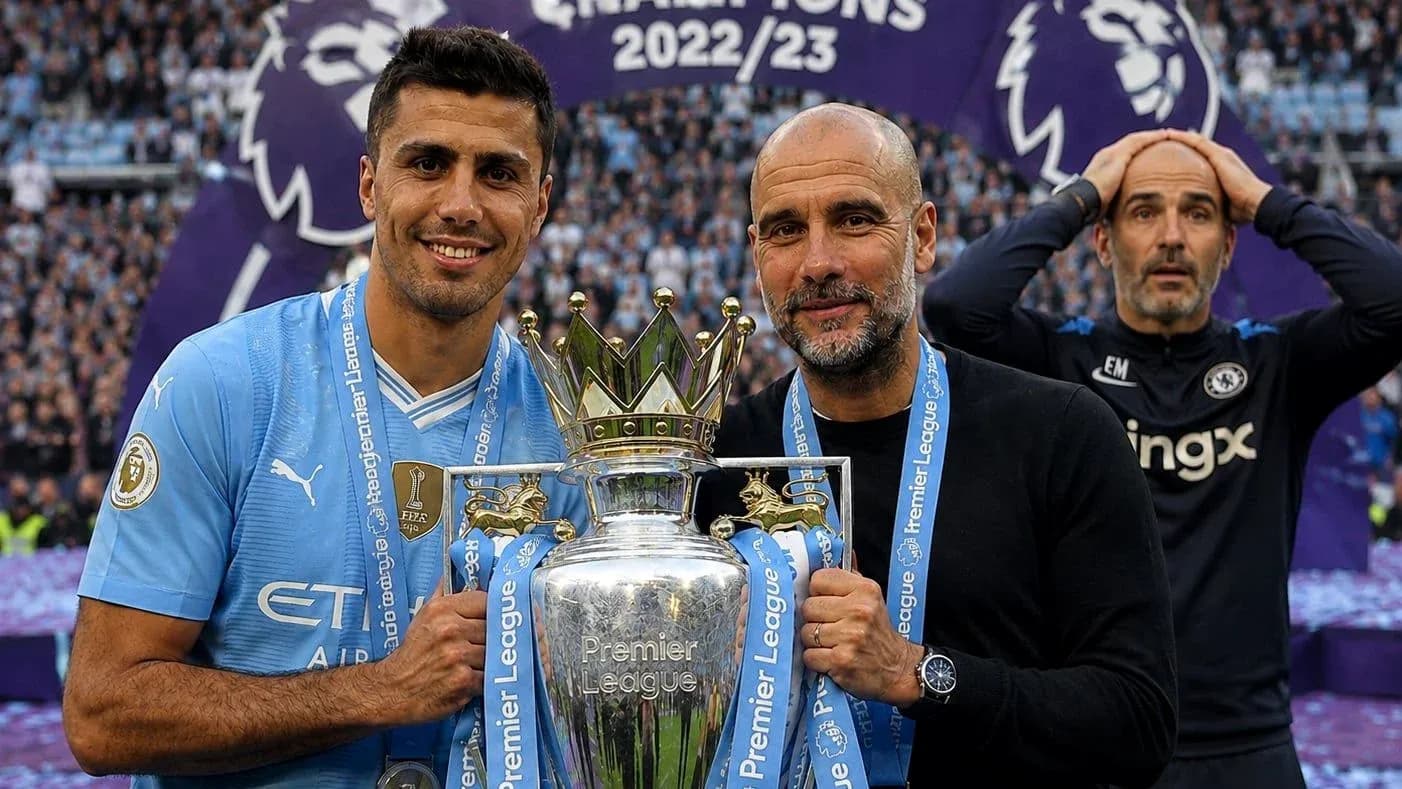
Txiki Begiristain has gone. Pep Guardiola will follow. Rodri, the on‑field metronome, is edging towards the exit. Three pillars, one project, all shaking at once. The question echoing around English football is brutal in its simplicity: can City avoid becoming the next Manchester United?
United never truly recovered from the day Sir Alex Ferguson walked away. What followed at Old Trafford was a decade of drift: managers changing, money burned, identity lost. City, for years, were the antithesis of that chaos. But the warning signs are now painted in sky blue.
The first pillar falls
The first crack came quietly. Begiristain, the architect behind City’s rise into a modern super-club, decided more than a year ago that his time was up. No drama, no headlines. Just a controlled handover to Hugo Viana and a belief that the structure would hold.
Begiristain’s legacy is written in numbers as much as trophies. Erling Haaland for around £60 million. Rodri for roughly £70 million. Big fees, yes, but balanced by sharp sales and a coherent squad plan. Every move had a purpose.
Viana’s early work has already broken that pattern. Over £130 million spent on just two signings this summer, with nothing like the same sense of precision. This isn’t a minor administrative tweak. It’s a shift in philosophy. United went through the same change after Ferguson and David Gill departed: from targeted building to scattergun spending.
City’s hierarchy remains in place on paper. Ferran Soriano still oversees the wider project. The ownership is stable and rich. Yet the departure of the sporting director who defined the club’s transfer identity has already altered the way City operate. That’s not a theoretical risk. It’s visible in the market.
Life after Pep
If Begiristain’s exit was discreet, Guardiola’s looming departure feels seismic.
He has been more than a coach at City. He has been the system. His tactical vision, his relentless standards, his control over every footballing detail – all of it created an environment where he was, in effect, untouchable. Win or lose, Pep called the shots. No one else at this club will ever have that power again.
Enzo Maresca knew what he was walking into, but knowing and living it are not the same. A bright, modern coach with titles at Leicester City and Chelsea on his CV, he arrived with a clear idea of how he wants to play. His first real examination, though, ended with Arsenal tearing through his side and leaving a heavy defeat on the scoreboard and a heavier question in the air.
Under Guardiola, City played with a certainty that crushed opponents before a ball was kicked. Teams arrived at the Etihad already half beaten by the aura. That psychological grip has started to loosen. When Pep goes, the style goes with him, and so does that suffocating inevitability.
United discovered the cost of losing a manager who had become an institution. One experiment followed another, each promising a new dawn, each swallowed by the shadow of what came before. City are staring at the same cliff edge.
Rodri: the most dangerous loss of all
If there is one departure that truly threatens the team on the pitch, it is Rodri’s.
Few midfielders in world football can change a side’s entire level the way he does. With him, City look like champions. Without him, they look alarmingly ordinary. That’s not theory; it has already been tested. His previous absences exposed a midfield that suddenly lacked balance, control and discipline.
Rodri doesn’t just pass and intercept. He sets the tempo, plugs gaps, dictates where the game is played. He is the anchor that allows the full-backs to invert, the centre-backs to step into midfield, the wingers to stay high. Take him out, and the whole structure starts to wobble.
His expected exit would be a body blow. Replacing his influence in one summer is close to impossible. History is full of teams who lost their pivotal man and never truly looked the same again. City, for all their resources, are unlikely to be the exception.
A rebuild under pressure
This is where the story tightens for Maresca.
He must build a new identity while the club still demands instant success. There is no grace period at this level, not for a team that has just dominated English football. The Community Shield defeat does not decide a season, but it did strip away the illusion that City could simply glide from one era into the next.
The balance that once defined them wasn’t there. The solidity that used to suffocate big games was missing. For the first time in years, City looked like a team searching for answers rather than imposing them.
If early-season results follow the same pattern, the pressure will spike. What starts as a transition could spiral into something far more drastic: a near-complete rebuild under the glare of weekly scrutiny. That is exactly how United’s long slide began after 2013 – one season of adjustment turning into years of upheaval.
City still hold cards their rivals did not. The owners are not going anywhere. The infrastructure is elite. The financial planning, at least in theory, remains strong. Those advantages give them a chance to manage this transition with less damage than United endured.
But the first real sign of vulnerability arrived against Arsenal. The fear of repeating that Old Trafford saga is no longer an abstract warning. It’s a live concern.
The era shaped by Txiki, Pep and Rodri turned Manchester City into a modern powerhouse. Replicating that combination of vision, coaching genius and on‑field authority may prove impossible.
The next few months will reveal whether this is just turbulence at the end of a dynasty – or the moment City step into the same long, uncertain tunnel their greatest rivals have been trying to escape for more than a decade.
Related News
Getafe Initiates Talks for Liverpool's Bajcetic Amid Injury Struggles
Lucy Bronze Stays at Chelsea for One More Year
Barcelona's Pursuit of Julian Alvarez Hits Stalemate
Manchester City's Uncertain Future After Key Departures
Liverpool make €135m move for Barcola amid PSG negotiations
Blackburn Rovers Show Grit in Thrilling 2-2 Draw Against Wolves