
Manchester City: Navigating Life After Pep Guardiola
For the first time in a decade, Manchester City start a season without Pep Guardiola prowling the technical area.
The Spaniard’s exit slams shut the most gilded era the club has ever known: six Premier League titles, one Champions League, and a style of football that bent the league to his will. The question now is not what City were under Guardiola. It’s what they become without him.
Enzo Maresca walks straight into that storm.
Maresca after Pep: continuity under pressure
Maresca inherits a club built in Guardiola’s image from top to bottom. Training ground, recruitment, academy, senior squad – all wired to one man’s idea of how the game should be played.
The comparisons to Manchester United’s collapse after Sir Alex Ferguson left in 2013 were inevitable, and they arrived early. City are desperate to avoid the same fate.
Maresca offers something City crave: continuity with a twist. He was on Guardiola’s staff during the treble season, then went out to prove himself at Leicester and Chelsea. This is not a total shot in the dark; the hierarchy know his methods, and he knows the building.
The expectation is simple and brutal. Keep the ball. Dominate games. Win titles.
In possession, City should still look familiar: controlled, positional, suffocating. But Maresca has to stamp his own identity on a squad that finished runners-up last season and is used to being pushed – and protected – by a giant of the modern game.
He also brings an edge. He has a reputation for clashing with players and staff when standards slip. In a dressing room full of established stars and big egos, that can sharpen focus. It can also blow up fast.
The first real glimpse of the Maresca era was ugly. Arsenal tore City apart 3-0 in the Community Shield, exposing a team that looked short of rhythm and belief. For a club that expects to challenge for the title immediately, it was a jolt.
On Sunday, at home to Bournemouth, the serious business begins.
Life after Rodri: filling an impossible void
If Guardiola was the architect, Rodri was the engine room.
For years, he dictated City’s tempo with his passing, positioning and defensive intelligence. This summer he helped drive Spain to the World Cup title and walked away with the Golden Ball. Then he walked out of Manchester, joining Barcelona in a move that rips out the core of City’s midfield.
There is no like-for-like replacement because there is no like-for-like Rodri. City know that.
They have tried to reinforce the middle of the pitch by spending big on Elliot Anderson from Nottingham Forest. The reported £116m fee underlines how desperate they are to reload in midfield. Anderson brings energy, pressing, ball-winning and forward thrust. He wants to break lines, carry the ball, arrive in the box.
What he is not, at least not yet, is Rodri: the metronome, the screen, the calm in chaos.
City are also expected to push for 18-year-old Ayyoub Bouaddi from Lille, a highly rated but raw talent. He is one for the future, not someone you hand the keys to a title defence on day one.
So Maresca faces a tactical puzzle. There is probably no better holding midfielder in world football than Rodri. You don’t replace him with one player. You spread his responsibilities across a younger, more dynamic group and hope the structure holds.
If it doesn’t, City’s control – the foundation of their dominance – starts to crack.
Game management: can Maresca stop the leaks?
Last season’s title challenge didn’t just fade. It leaked away, point by point.
City dropped 17 points from winning positions. For a side built on control, that is a damning number. They didn’t just fail to kill games; they let them slip.
Maresca’s reputation for relative pragmatism might help. He is more willing than Guardiola, at times, to shut things down rather than keep chasing the perfect pattern.
But the squad has shifted. John Stones, Bernardo Silva and Nathan Ake have all departed, removing three players who understood City’s structure inside out and could slow a game to their preferred pace.
Whether the new arrivals can deliver a calmer, more controlled approach is one of the key tactical questions of the season. Maresca must tighten game management without strangling the attacking fluency that makes City so dangerous.
Get that balance wrong, and those 17 lost points start to look like a warning, not an anomaly.
Haaland, goals and the burden of a one-man spearhead
Erling Haaland remains the most terrifying sight for Premier League defenders: a blur of power, movement and ruthless finishing.
When City click, he is almost unplayable. His presence alone forces back lines to drop, distort and panic.
But last season also showed the risk of leaning too heavily on one striker. If the supply line stutters, if the patterns behind him lose sharpness, Haaland can be isolated. The goals dry up. The title charge wobbles.
Omar Marmoush offers support but not symmetry. He is a useful forward, a solid option, but nowhere near Haaland’s level. He cannot carry a title bid on his own if the Norwegian is injured, off-form or simply starved of service.
Maresca’s task is clear: diversify the attack. Make City less predictable, less dependent on one man’s finishing. That means more goals from midfield, more threat from wide areas, more variety in how they construct chances.
If City become a team that only truly scares opponents when Haaland is on song, they are vulnerable.
World Cup fatigue and a restless summer
As if a managerial handover and major departures were not enough, City also carry the weight of a deep World Cup run.
A significant chunk of the squad went far into the tournament, including Haaland and Doku, with six first-team players still involved in the final week. That has sliced into Maresca’s preseason plans, leaving him with fewer bodies on the training pitch and less time to drill his ideas.
The impact was visible at Wembley. Against a fresher, sharper Arsenal in the Community Shield, City looked flat, blunt and short of intensity.
“I don’t know if it was physical condition, we had many players at the World Cup,” Maresca admitted. “After the first goal the reaction was very good, but after the second goal it was more complicated.”
It sounded like a manager who knows he is playing catch-up before the season has even started.
The Etihad has grown used to certainty: same manager, same style, same outcome – trophies. That comfort has gone.
Maresca steps into a dressing room that has lost its midfield heartbeat, its defensive brains trust and its long-time leader on the touchline. He still has Haaland. He still has elite talent all over the pitch. He still has a squad expected to fight for the title from day one.
What he does not have is time for excuses.
On Sunday, against Bournemouth, the new era begins. The only real question is whether City are about to prove their dynasty outlives Guardiola – or discover just how much of it was built on one man.
Related News
Ipswich's Premier League Challenge with Gary O’Neil and Daizen Maeda
Rashford Takes Man Utd No9 as Carrick Era Begins
Liverpool's Title Hopes: Predictions and Concerns for the Season
Marcus Rashford Takes Manchester United No.9 Shirt as Carrick Supports Revival
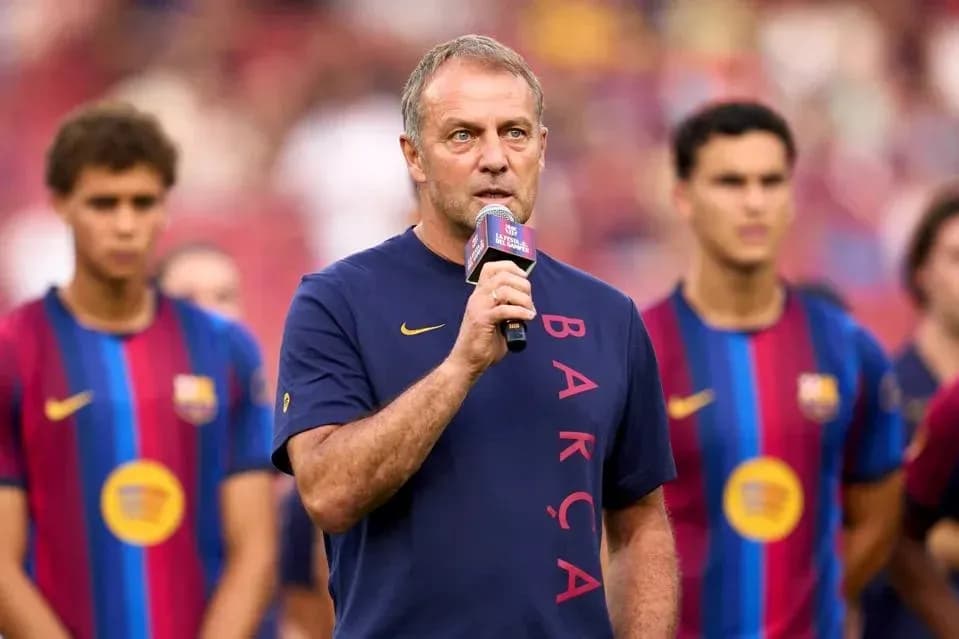
Hansi Flick's New Midfield Star: Xavi Espart Steps Up
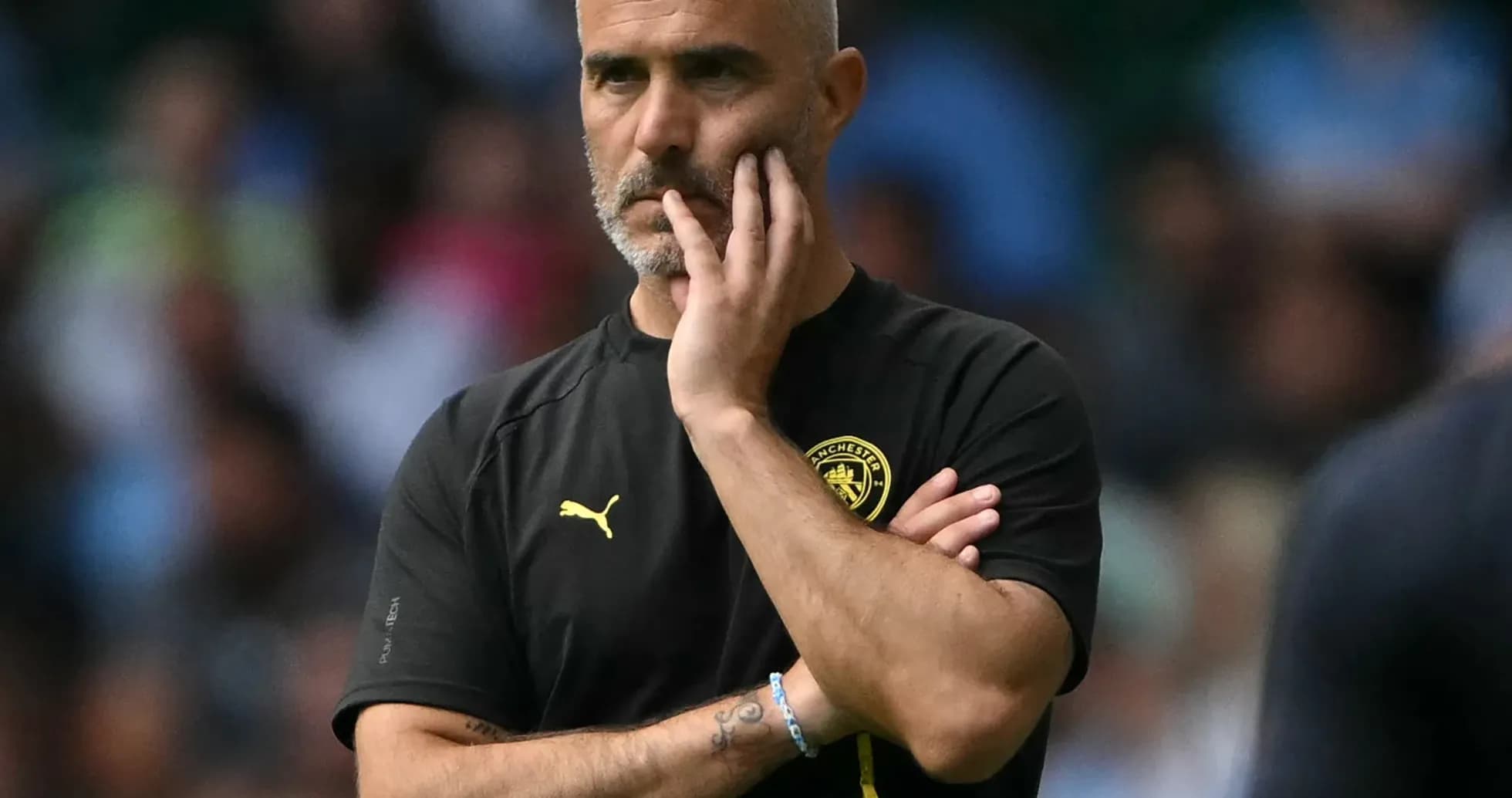
Manchester City: Navigating Life After Pep Guardiola