
Manchester Derby Analysis: United vs City Performance Insights
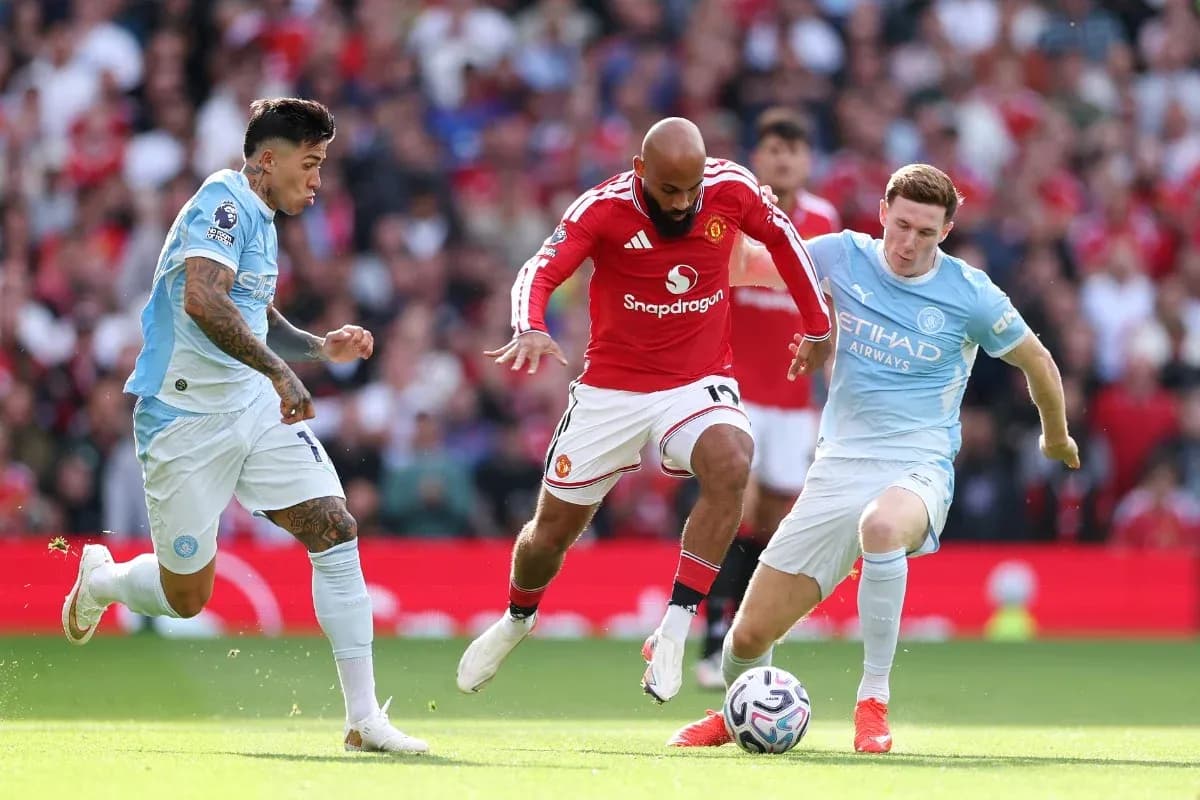
Old Trafford under grey Manchester skies has rarely felt this starkly divided. On the pitch, the Premier League table told its own story: Manchester United arriving in Round 4 as a mid‑table side in 13th with 4 points, Manchester City striding in as flawless contenders in 2nd with 12 points from 4 wins. The 0–1 full-time scoreline felt less like a shock and more like the natural extension of the season’s early DNA.
Heading into this game, United’s campaign had been one of volatility. Overall they had scored 7 and conceded 7, a goal difference of 0 that perfectly captured their balance of promise and fragility. At Old Trafford, they had been more expansive: 5 goals for and 3 against in 2 home matches, averaging 2.5 goals scored and 1.5 conceded at home. City, by contrast, were ruthlessly controlled: 8 scored and only 2 conceded overall, a goal difference of 6, with their away record particularly ominous — 5 goals for and just 1 against on their travels, an average of 2.5 scored and 0.5 conceded away.
Both managers leaned into a mirrored 4-2-3-1, but the personnel told us how each side intended to live within that shape. Michael Carrick’s United were a blend of necessity and ambition. Injuries stripped away structural pillars: Luke Shaw’s absence removed the natural left-footed outlet and overlapping threat; Matthijs de Ligt and Manuel Ugarte, both missing, denied United a dominant aerial defender and a true destroyer in midfield. C. Baleba and A. Diallo were also unavailable, further thinning depth and variety. Even veteran goalkeeper Tom Heaton was out, leaving S. Lammens to anchor the last line.
In that context, the back four of Diogo Dalot, H. Maguire, Lisandro Martínez and P. Dorgu was as much about survival as control. Maguire, already one of the league’s leading card collectors with 2 yellow cards in 4 appearances, carried both responsibility and risk. His profile this season — 34 duels contested and 21 won, 5 interceptions and 1 blocked shot — underlines a defender constantly engaged, often on the edge. Ahead of them, the double pivot of Y. Tielemans and K. Mainoo was tasked with threading a delicate needle: protect a vulnerable back line while also feeding a gifted but defensively light trio of B. Mbeumo, Bruno Fernandes and M. Rashford behind Matheus Cunha.
City’s mirror system under Enzo Maresca was far more stable. The back four of Matheus Nunes, M. Guéhi, Rúben Dias and J. Gvardiol sat in front of G. Donnarumma, a unit that had conceded just 2 goals in 4 league matches and produced 2 clean sheets overall. With goals against averaging 0.5 both home and away, this was a defence built on controlled distances rather than last-ditch heroics. In midfield, E. Fernández and E. Anderson formed a functional core, but the real artistry lay ahead: P. Foden, R. Cherki and A. Semenyo orbiting around Erling Haaland.
The absences were asymmetrical. City missed J. Doku’s directness through a calf injury, but their creative burden was already being shared effectively. Cherki entered the derby with 2 goals and 2 assists in just 220 minutes, while Foden and Semenyo had each contributed 2 assists, part of a City side that had failed to score in none of their league games so far. United, by contrast, were without multiple first-choice options in every line except the attacking midfield band.
The tactical voids this created were most evident in United’s left side. Without Shaw, P. Dorgu’s remit became overloaded: defend space against Semenyo and Foden’s rotations while also providing width to free Rashford inside. Any mistiming risked exposing Maguire, whose aggressive style and existing card history made him a prime candidate to be targeted by City’s movement. United’s yellow-card profile this season — a late-game surge with 50.00% of their yellows arriving between 76-90 minutes — hinted at a team that increasingly defends on the edge as legs tire and structure frays.
City’s disciplinary story was different but no less relevant. Their yellows also clustered late, with 42.86% between 76-90 minutes, but they carried an extra edge: a red card already this season for Foden. That red, alongside his 1 yellow, frames him as both creative outlet and emotional flashpoint. In a derby context, managing his temperament was as important as exploiting his 7 key passes and 2 assists so far.
The key matchups were clear. “Hunter vs Shield” was Haaland against United’s central pairing of Maguire and Martínez. Haaland arrived as the league’s most clinical spearhead: 4 goals from 15 shots, 9 on target, backed by 30 duels contested and 17 won. United’s defence, conceding an overall average of 1.8 goals per match and still without a clean sheet, had to withstand not just his penalty-box presence but the constant threat of City’s supply line. Maguire’s 1 blocked shot and 5 interceptions this season show his ability to read danger, but against Haaland the margin for error shrinks to nothing.
In the “Engine Room”, Bruno Fernandes stood as United’s conductor. With 3 goals and 1 assist, 262 passes at 85% accuracy, and 9 key passes, he has been both scorer and creator, also perfect from the spot with 1 penalty scored from 1 overall. His duel with E. Fernández and E. Anderson was about territory and rhythm: if Bruno could receive between City’s lines, United’s home scoring average of 2.5 offered a route to hurt even this City defence. But if City’s double pivot pinned him back, United risked long spells where Cunha was isolated and Rashford forced to chase lost causes.
On the flanks, the interplay of Cherki, Foden and Semenyo against Dalot and Dorgu threatened to tilt the pitch. Cherki’s blend of 2 goals, 2 assists, 10 key passes and 5 successful dribbles made him City’s most unpredictable half-space presence. Semenyo, with 2 assists, 7 key passes and 47 duels contested, brings relentless running and contact — the kind of profile that draws late fouls from tiring full-backs. This dovetailed uncomfortably with United’s tendency to pick up yellows in the final quarter of matches.
Statistically, the prognosis before a ball was kicked pointed one way. City’s overall scoring average of 2.0 per match, combined with conceding just 0.5, contrasted sharply with United’s more chaotic 1.8 scored and 1.8 conceded. United had already failed to score twice overall this season, while City had not drawn a blank once. With both sides wedded to 4-2-3-1, the difference lay not in the chalkboard but in the reliability of the pieces.
In the end, the 0–1 scoreline at Old Trafford felt like a crystallisation of those trends. United’s patched-together spine fought, but City’s superior structure, sharper attacking trident and defensive parsimony prevailed. Following this result, the trajectory of both squads diverged further: United still searching for balance amid absences and disciplinary edges, City looking every inch a side whose numbers, and narrative, belong at the top of the Premier League.
Related News

Fulham vs Manchester United Stats: Head-to-head Record and Insights
Bournemouth vs Liverpool Stats: Head-to-Head Record and Recent Meetings
Is Home Advantage in the Premier League Declining? Leeds Break the Trend with a Big Win

Why Premier League Clubs Haven't Signed Victor Osimhen Yet: Andy Cole Weighs In
Sunderland vs Arsenal: Tactical Insights from Premier League Clash
Tottenham Hotspur's Struggles Continue in 0-0 Draw Against Everton